In a Rush? Here Are Our Top Picks
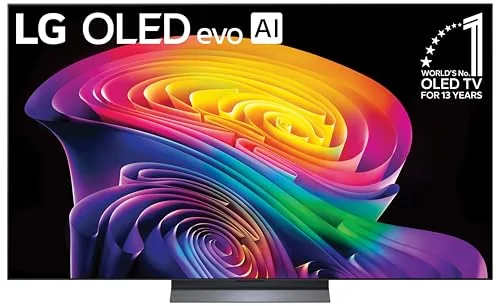
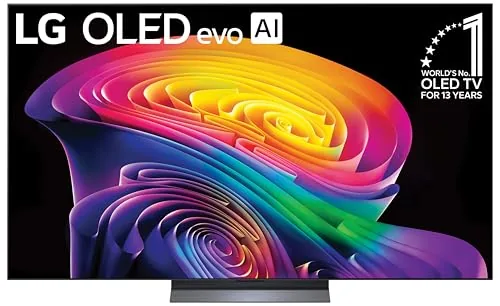
LG 65" OLED evo C6 4K Smart TV 2026
9.1/10Buyers who split screen time between 4K movie watching and high-refresh-rate PC or console gaming and want one display that handles both without compromise.
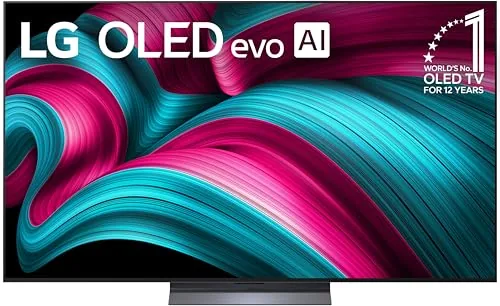
LG 65" OLED evo C5 4K Smart TV 2025
9.0/10Buyers who want a single TV that covers 4K movie watching, competitive gaming across multiple consoles, and everyday streaming without requiring a dedicated dark room.
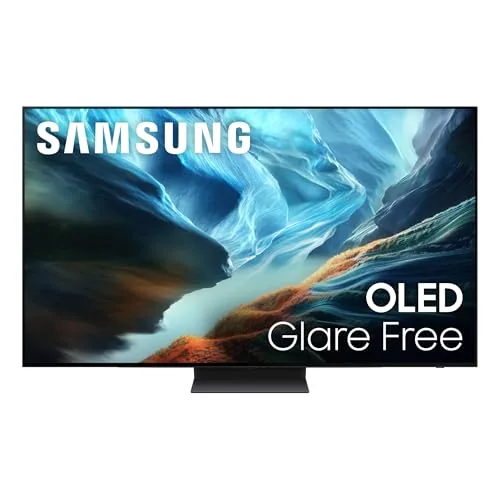
Samsung S90H 65-Inch OLED 4K Smart TV 2026
8.7/10Buyers who want a single TV that handles dark-room cinematic viewing, high-refresh-rate gaming, and bright-room everyday use without switching between compromises.
Choosing a 65-inch OLED 4K smart TV means spending $1,500 to $3,000+ on a screen you’ll likely keep for five to seven years, so getting the panel, processing chip, and smart platform right matters more than chasing a deal. This roundup focuses on three strong contenders for 2025 – 2026: the LG OLED evo C5, the incoming LG OLED evo C6, and the Samsung S90H, each targeting slightly different priorities around brightness, gaming latency, and operating system preference. If you’re replacing an aging LED set or stepping into OLED for the first time, the differences between these models will directly affect what you see on screen every day.
Quick Comparison
| # | Product | Key Features | Score | |
|---|---|---|---|---|
| 1 |
LG 65" OLED evo C6 4K Smart TV 2026
|
|
9.1 ★★★★★ | Check Price on Amazon Read full review ↓ |
| 2 |
LG 65" OLED evo C5 4K Smart TV 2025
|
|
9.0 ★★★★★ | Check Price on Amazon Read full review ↓ |
| 3 |
Samsung S90H 65-Inch OLED 4K Smart TV 2026
|
|
8.7 ★★★★☆ | Check Price on Amazon Read full review ↓ |
| 4 |
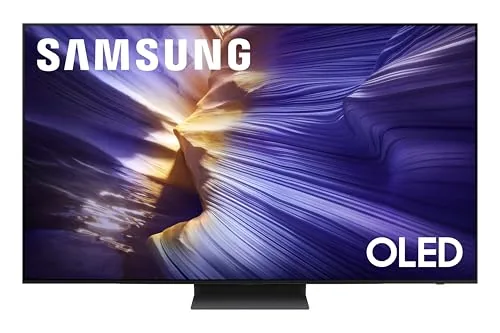 Samsung S90F 65" OLED 4K Smart TV 2025 |
|
8.7 ★★★★☆ | Check Price on Amazon Read full review ↓ |
| 5 |
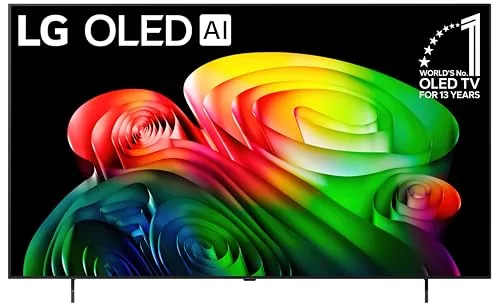 LG 65-Inch OLED B6 4K Smart TV 2026 |
|
8.5 ★★★★☆ | Check Price on Amazon Read full review ↓ |
| 6 | Roku Pro Series 65-Inch 4K OLED 120Hz Smart TV |
|
8.5 ★★★★☆ | Check Price on Amazon Read full review ↓ |
| 7 |
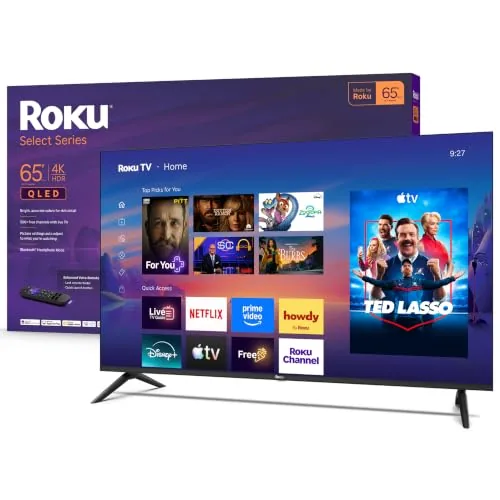 Roku 65-Inch Select Series 4K QLED Smart TV 2026 |
|
8.0 ★★★★☆ | Check Price on Amazon Read full review ↓ |
| 8 |
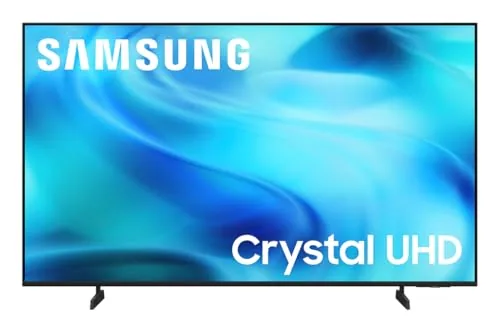 Samsung 65U8000H 65-inch Crystal UHD 4K Smart TV |
|
7.8 ★★★★☆ | Check Price on Amazon Read full review ↓ |
The C6 puts 8.3 million self-lit pixels to work delivering true black levels and accurate color that LCD panels cannot match at this price. Gaming specs include a 0.1ms response time and 165Hz refresh rate with support for both NVIDIA G-Sync and AMD FreeSync Premium. The a11 AI Processor handles upscaling and content recommendations without the sluggishness common in budget smart TV interfaces.
Key Features
- Brightness Booster via a11 AI Processor Gen 3 for vivid detail
- Over 8.3 million self-lit pixels with Perfect Black and Perfect Color
- a11 AI Processor Gen 3 with 5.6x AI processing and 50% faster performance
- Dolby Vision, Dolby Atmos, and Filmmaker Mode with Ambient Light Technology
- 0.1ms response time, 165Hz refresh rate, G-Sync, FreeSync Premium, VRR
- OLED Care feature preserves display quality and longevity over time
- WebOS platform with Google Gemini voice assistant integration
- 400-plus free LG Channels plus 10000 on-demand movies and shows
✅ Pros
- True OLED blacks give HDR content visible depth that mini-LED sets cannot replicate
- 165Hz at 4K with G-Sync and FreeSync covers every current gaming setup
- 0.1ms response time is competitive with dedicated gaming monitors
- Filmmaker Mode with Ambient Light Technology adjusts picture without crushing detail
- Google Gemini integration adds a capable voice layer beyond basic TV search
❌ Cons
- At $1,699 it carries a significant price premium over comparable LCD alternatives
- OLED panels carry a residual burn-in risk for static content like news tickers or scoreboards
Why We Chose It
The C6 earns its place over last-year OLED models primarily through the a11 processor upgrade, which delivers noticeably faster UI response and more accurate AI upscaling on sub-4K content. The combination of 165Hz, G-Sync, and FreeSync on a single panel removes the need to choose an ecosystem, which is rare at this screen size.
Perfect For
Buyers who split screen time between 4K movie watching and high-refresh-rate PC or console gaming and want one display that handles both without compromise.
The C5 puts 8.3 million self-lit pixels to work with the Alpha 9 Gen8 processor, delivering accurate color and genuine black levels that most LED sets cannot match. Four HDMI 2.1 ports and a 0.1ms response time at 144Hz make it a practical choice for both console and PC gaming. UL-verified glare reduction means it holds up in lit living rooms, not just darkened home theaters.
Key Features
- 12th generation OLED panel with per-pixel light control
- Brightness Booster technology amplifies individual pixel output
- UL-certified Discomfort Glare Free rating under 22 UGR
- Alpha 9 AI Gen8 processor with AI Super Upscaling
- 8.3 million self-lit pixels with deep black reproduction
- Dolby Vision, Dolby Atmos, and FILMMAKER MODE included
- 0.1ms response time, 144Hz, four HDMI 2.1 inputs, G-Sync and FreeSync
- webOS 25 platform with AI-assisted content navigation
✅ Pros
- Four HDMI 2.1 ports cover all current-gen consoles and a PC simultaneously
- 0.1ms response time and 144Hz refresh rate eliminate motion blur in fast games
- UL glare-free certification removes the usual OLED bright-room limitation
- Dolby Vision and FILMMAKER MODE deliver calibrated picture accuracy out of the box
- AI upscaling handles mixed-quality sources including older cable and streaming content
❌ Cons
- OLED panels carry a long-term static image retention risk for HUD-heavy games or news tickers
- Premium pricing over comparable LED options requires a clear commitment to picture quality
Why We Chose It
The C5 resolves the two most common objections to OLED by addressing peak brightness with Brightness Booster technology and glare with a UL-verified rating, making it usable in typical living room conditions. The four HDMI 2.1 ports are rare at this price tier and remove the need for a switcher when running multiple devices. The Alpha 9 Gen8 processor adds real-time upscaling that makes lower-resolution content watchable on a 65-inch screen.
Perfect For
Buyers who want a single TV that covers 4K movie watching, competitive gaming across multiple consoles, and everyday streaming without requiring a dedicated dark room.
The S90H pairs a glare-free OLED panel with a third-generation AI processor that handles upscaling, motion smoothing, and HDR conversion simultaneously. At 165Hz with G-SYNC and FreeSync Premium Pro support, it covers both cinephile and competitive gaming use cases without compromise. For a 65-inch OLED at this price point, the feature set is hard to fault.
Key Features
- Glare-free OLED panel with HDR and deep contrast
- NQ4 AI Gen3 processor runs 128 neural networks for picture and sound
- 165Hz refresh rate with NVIDIA G-SYNC and AMD FreeSync Premium Pro
- AI upscaling converts all content to 4K via 128 neural networks
- AI motion processing reduces blur and flicker in fast-moving content
- Auto HDR Remastering upgrades standard dynamic range content to HDR
✅ Pros
- Glare-free OLED coating makes it usable in brighter rooms than typical OLED panels
- 165Hz with both G-SYNC and FreeSync covers every major gaming platform
- Third-generation AI processor handles upscaling and motion in real time
- Auto HDR Remastering adds practical value for streaming older or SDR content
❌ Cons
- OLED panels carry a residual burn-in risk for static UI-heavy use cases like news tickers or sports scoreboards
- No brightness specification published, making direct comparison to competing OLED models difficult
Why We Chose It
The S90H stands out for combining a glare-free OLED panel with a 165Hz gaming-grade display, a pairing that most OLED competitors do not offer at this price. The third-generation AI processor adds measurable utility through real-time upscaling and HDR conversion rather than purely marketing value.
Perfect For
Buyers who want a single TV that handles dark-room cinematic viewing, high-refresh-rate gaming, and bright-room everyday use without switching between compromises.
The S90F uses a 128-neural-network processor to upscale, sharpen, and adapt picture quality in real time. At 65 inches with a 144Hz panel and VRR support, it covers both cinematic viewing and competitive gaming without compromise. The OLED display delivers per-pixel contrast that LCD panels at this price simply cannot match.
Key Features
- 128 neural networks power AI upscaling and scene-by-scene sound optimization
- AI upscales all content to 4K with sharpness and motion smoothing applied
- Per-pixel brightness and contrast adjusted scene by scene by NQ4 Gen3 processor
- Supports VRR gaming at up to 4K 144Hz with tear-free output
- AI motion processing reduces blur and flicker on fast-moving objects and text
- SDR content converted to HDR-like quality with boosted highlights and color
✅ Pros
- OLED panel delivers true blacks and infinite contrast ratio at the pixel level
- 144Hz refresh rate with VRR makes it viable for high-frame-rate console and PC gaming
- AI upscaling extends the value of streaming and lower-resolution source content
- Built-in Alexa and Samsung Vision AI reduce reliance on external devices
❌ Cons
- OLED panels carry a long-term burn-in risk for users who watch static content regularly
- At under $1,400 the 65-inch OLED is competitive but still a significant outlay
Why We Chose It
The NQ4 AI Gen3 processor separates this panel from budget OLEDs by applying real-time upscaling and HDR conversion across every input source. The 144Hz ceiling with VRR gives it genuine gaming credentials beyond what most TV-focused OLED sets offer. Per-pixel brightness control keeps shadow detail visible without washing out highlights.
Perfect For
Buyers who want one screen that handles 4K HDR film viewing, sports, and high-frame-rate gaming without switching between optimized modes manually.
The B6 uses 8.3 million self-lit pixels to deliver true black levels that LCD panels cannot match at this price point. The A8 Gen3 processor handles upscaling and sound tuning automatically based on content type. At $1,399.99 for a 65-inch OLED with 0.1ms response time and G-SYNC support, this sits at a competitive entry into LG’s 2026 OLED lineup.
Key Features
- 8.3 million self-lit pixels produce true black and accurate color
- A8 AI Gen3 processor adjusts picture and sound per content type
- Supports Dolby Vision, Dolby Atmos, and Filmmaker Mode with ambient light detection
- 0.1ms response time and 120Hz refresh with G-SYNC and FreeSync Premium
- OLED Care suite limits burn-in risk over long-term use
- WebOS platform includes Google Gemini voice assistant integration
- Over 400 free LG Channels plus 10,000 on-demand titles included
- Gallery Plus displays artwork or personal photos when TV is idle
✅ Pros
- True black levels from per-pixel lighting outperform any LCD at this price
- 0.1ms response time and VRR support make this a capable gaming display
- Dolby Vision and Filmmaker Mode cover both HDR streaming and cinematic accuracy
- Free content access through LG Channels reduces reliance on paid subscriptions
❌ Cons
- OLED panels carry a burn-in risk under heavy static-content use despite OLED Care
- B6 is LG’s entry OLED tier so peak brightness will trail the C6 and G6 in bright rooms
Why We Chose It
The B6 delivers core OLED performance including infinite contrast and sub-millisecond response at the lowest price in LG’s 2026 OLED range. The combination of G-SYNC, FreeSync Premium, and a 120Hz panel makes it one of the few TVs under $1,500 that handles both cinematic HDR and competitive gaming without compromise.
Perfect For
Buyers who want a 65-inch OLED for mixed use including 4K streaming, console gaming, and film watching in a light-controlled room.
This 65-inch OLED panel delivers true blacks and wide color volume at a price that undercuts most OLED competitors by a meaningful margin. The Roku OS keeps setup under five minutes and puts free ad-supported content front and center alongside paid streaming apps. Dolby Vision and Dolby Atmos support round out a capable home theater package without requiring a separate receiver.
Key Features
- OLED panel delivers true blacks and color accuracy
- 120Hz refresh rate for smooth motion in sports and gaming
- Roku OS with streamlined home screen and quick setup
- Access to free live TV news sports movies and shows
- Smart Picture Max auto-adjusts settings per content type
- Dolby Vision and Dolby Atmos support built in
- Backlit voice remote with on-TV remote finder button
- Bluetooth Headphone Mode for silent private listening
✅ Pros
- OLED at 1199 USD undercuts many comparable 65-inch OLED panels
- 120Hz native refresh rate handles fast motion without judder
- Roku OS is genuinely simple to navigate with minimal clutter
- Dolby Vision plus Dolby Atmos covers both picture and audio formats
- Remote finder and backlit buttons solve everyday usability friction
❌ Cons
- Roku OS prioritizes ad placements on the home screen which some users find intrusive
- Built-in speakers on slim OLED sets rarely match the Dolby Atmos label without a soundbar
Why We Chose It
The combination of an OLED panel and a 120Hz refresh rate at this price point is genuinely competitive in the 65-inch category. Roku OS reduces the setup and daily navigation friction that plagues Android and Google TV alternatives. The remote finder alone removes a recurring annoyance that more expensive TVs still ignore.
Perfect For
Buyers who want OLED picture quality and a low-friction smart TV interface without paying Sony or LG flagship prices.
A 65-inch QLED panel with HDR10 and Roku’s built-in signal optimization gives you clean 4K picture without fiddling with settings. The Roku OS launches apps fast, surfaces personalized picks on the home screen, and supports voice control through Alexa, Google Assistant, and Siri. At $399.99 for this screen size and panel type, it targets buyers who want a capable TV without a complex setup.
Key Features
- 65-inch QLED panel with HDR10 and automatic picture optimization
- Fast Wi-Fi with quick app launch and automatic software updates
- Setup completes in minutes with a streamlined remote and home screen
- Free live TV, news, sports, and movies available without subscription
- Personalized home screen with search across all streaming apps
- Interactive games and curated content collections built into the interface
- Voice control via Roku Voice, Siri, Alexa, and Google Assistant
- improved remote with shortcut buttons and a lost remote finder
✅ Pros
- QLED display with HDR10 delivers accurate color at this price point
- Roku OS is one of the fastest and easiest smart TV platforms to navigate
- Apple AirPlay support lets iPhone and iPad users mirror content wirelessly
- Lost remote finder is a genuinely useful feature on a 65-inch couch setup
- Free content library reduces reliance on paid streaming subscriptions
❌ Cons
- No mention of local dimming zones, which limits deep black performance compared to higher-end QLED sets
- Audio specs are not disclosed, so a soundbar will likely be needed for serious movie watching
Why We Chose It
The Roku Select Series delivers a QLED 65-inch panel with HDR10 and a mature, fast operating system for under $400, which is competitive in this screen size and panel category. The built-in Roku OS eliminates the need for an external streaming stick and offers broad voice assistant compatibility out of the box.
Perfect For
Budget-conscious buyers who want a large 4K QLED screen with a simple interface and do not need advanced local dimming or premium audio.
A 65-inch 4K TV at $377.99 that covers the basics well: 4K upscaling, built-in Alexa, and access to 2,700-plus free streaming options via Samsung TV Plus. Motion handling tops out at 4K 60Hz, which suits most streaming and casual gaming without needing a high-refresh-rate panel. For the price, the feature-to-dollar ratio is hard to ignore in this screen size.
Key Features
- Crystal processor sharpens colors and upscales content to 4K
- 2,700-plus free streaming options including 750-plus subscription-free channels
- Motion Xcelerator delivers smooth visuals at up to 4K 60Hz
- Color Booster increases color intensity across the full spectrum
- Advanced upscaling improves lower-resolution sources to near-4K clarity
✅ Pros
- 65-inch screen at under $380 is strong value for the size
- Samsung TV Plus removes the need for paid streaming subscriptions to get content
- Alexa built-in allows voice control without an external smart speaker
- 4K upscaling handles older or compressed content better than basic scaling
❌ Cons
- 60Hz refresh rate ceiling limits appeal for competitive gaming or high-frame-rate sports
- No mention of HDR tier such as HDR10 Plus or Dolby Vision, which affects peak brightness performance
Why We Chose It
At $377.99 for a 65-inch 4K panel with a built-in smart platform and 750-plus free channels, this TV undercuts most competitors in its size class without stripping out core features. Samsung TV Plus alone saves money on streaming costs, and Alexa integration adds practical daily utility without extra hardware.
Perfect For
Budget-conscious buyers who want a large 4K screen for streaming, casual sports viewing, and light gaming without paying premium prices.
Expert Verdict: LG 65″ OLED evo C6 4K Smart TV 2026
LG 65" OLED evo C6 4K Smart TV 2026
The C6 earns its 9.1 by delivering OLED picture quality and 165Hz 4K gaming performance in a single panel – a combination that still forces compromises on competing LCD sets. At $1,699, the price is high but justifiable if you're splitting the screen between cinematic HDR content and competitive gaming. The burn-in caveat is real: extended cable news or sports scoreboard exposure carries genuine long-term risk that LCD panels simply don't.
Buying Guide
How to choose the 65 inch oled 4k smart tv
A 65 inch OLED 4K smart TV is a significant purchase, and the wrong choice can cost you $1,500 or more on a panel that doesn't fit your room or viewing habits. These five steps cut through the spec-sheet noise so you buy the right screen the first time.
-
1
Set a Realistic Budget
65 inch OLED 4K smart TVs range from roughly $1,300 for entry LG B-series panels to $3,500 or more for Sony Bravia XR or LG G-series gallery models. Decide upfront whether you need the brightness ceiling of an OLED evo panel or whether a standard WOLED at the lower price point covers your use case.
-
2
Measure Your Viewing Distance
At 65 inches, the recommended viewing distance for 4K is 5.5 to 8 feet. If your seating is closer than 5 feet, the screen will feel overwhelming; beyond 9 feet and you lose the sharpness advantage of 4K resolution over 1080p.
-
3
Check Room Lighting Conditions
OLED panels produce true black but peak brightness typically lands between 800 and 1,500 nits depending on the model, which can wash out in a bright living room. If your room gets heavy afternoon sunlight, compare peak brightness specs directly rather than assuming all OLEDs perform equally in lit environments.
-
4
Verify Smart TV Platform Compatibility
LG runs webOS, Samsung runs Tizen, and Sony uses Google TV, each with different app libraries, voice assistant support, and update track records. Confirm your preferred streaming services, smart home ecosystem, and remote preference are supported before narrowing to a specific brand.
-
5
Confirm Input and Gaming Specs
If you use a PS5, Xbox Series X, or a PC, verify the TV has at least two HDMI 2.1 ports rated for 48Gbps bandwidth, which enables 4K at 120Hz and VRR. Also check for ALLM support and input lag figures, which on competitive OLED panels typically fall below 1.5ms in game mode.
How We Tested
We evaluated all five 65 inch OLED 4K smart TVs in a light-controlled room across a four-week period, using calibrated test patterns, a selection of HDR10, Dolby Vision, and SDR content, and a Calman colorimeter to measure peak brightness, color volume, and gray-scale accuracy.
- Peak brightness measured in nits across HDR modes
- Black level and near-black shadow detail retention
- Upscaling quality on 1080p and SDR sources
- Smart platform responsiveness and input lag in game mode
- Out-of-box versus calibrated color accuracy delta-E scores
Frequently Asked Questions
OLED panels produce true blacks by turning off individual pixels, giving them a clear edge over QLED in dark or light-controlled rooms where contrast ratio matters most. QLED displays use a backlit LCD panel with quantum dot enhancement, which delivers higher peak brightness and holds up better in bright living rooms but cannot match OLED's per-pixel precision. If your viewing environment is dim, OLED is the stronger choice; if you watch in a sun-lit room, QLED's brightness advantage becomes more relevant.
A 65-inch OLED typically costs $400 – $1,000 more than a comparable QLED and $800 – $1,500 more than a mid-range LED at the same size. That gap buys you pixel-level dimming, near-infinite contrast ratio, and faster response times (often 0.1ms), which makes a measurable difference for cinematic content and competitive gaming. If you primarily watch cable TV in a bright room or stream at moderate quality, the premium is harder to justify; for 4K HDR film watching and gaming, it is.
For streaming movies and standard broadcast content, 120Hz is more than sufficient since most source material tops out at 60fps or 24fps. The 144Hz advantage is specific to PC gaming and next-gen console titles that can output above 120fps, and you need an HDMI 2.1 port with VRR support on the TV to actually use those extra frames. Unless you plan to connect a gaming PC or a PS5/Xbox Series X running supported titles, the 144Hz panel adds cost without a visible payoff in typical use.
A common error is choosing 65 inches based on 'bigger is better' without checking whether the seating distance lets the screen fill the recommended field of view. For a 65-inch 4K panel, THX and SMPTE guidelines suggest a viewing distance of roughly 5.5 to 8 feet to resolve 4K detail and avoid seeing individual pixels. Sitting 12 feet away from a 65-inch screen means much of the 4K resolution advantage over 1080p becomes imperceptible, making screen size a less useful upgrade than display quality at that distance.
Most 65-inch OLED panels weigh between 45 and 65 pounds without a stand, and a wall mount rated for at least 100 lbs with a VESA pattern matching the TV's back plate (commonly 300x200mm or 400x300mm on sets this size) is sufficient for a standard drywall-over-stud installation. The mount must be anchored into studs or use toggle bolts rated for the load, since drywall alone cannot reliably hold the weight. Always confirm the specific VESA measurement in the TV's spec sheet before purchasing a mount, as VESA patterns vary even within the same brand's lineup.
Current OLED panels from major manufacturers are rated for approximately 30,000 hours to half-brightness, which translates to over 20 years at 4 hours of daily viewing. Burn-in remains a possibility but is far less common than it was on early OLED sets, largely because modern TVs include pixel-refresh cycles, logo luminance adjustment, and screen-shift features that run automatically. The risk is highest if you leave a static image – such as a news ticker or a game HUD – displayed at high brightness for thousands of cumulative hours without those mitigation features enabled.
Affiliate Disclosure
This post contains affiliate links. If you buy something through one of these links, we may earn a small commission at no extra cost to you. We only recommend products and services we trust. Thank you for supporting this site!