In a Rush? Here Are Our Top Picks
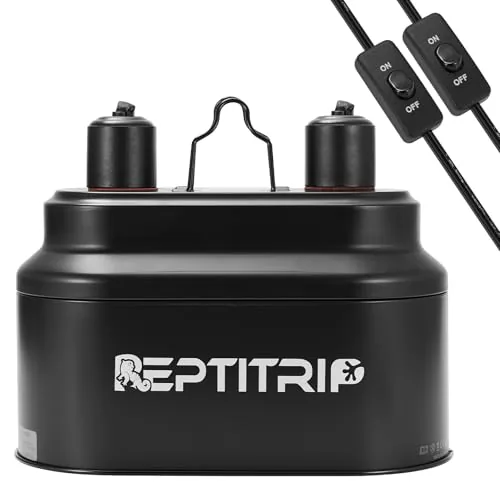
REPTITRIP Dual Reptile Light Fixture Independent Switches 160W
7.8/10Bearded dragon or monitor lizard keepers who want separate heat and UVB control without buying two fixtures or a programmable timer.
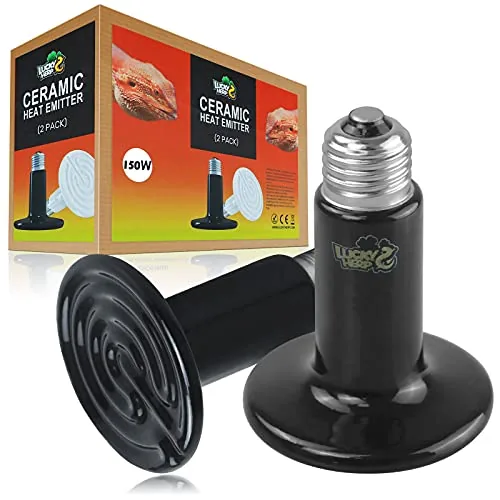
LUCKY HERP 150W Ceramic Heat Emitter 2-Pack
7.8/10Reptile or small animal owners who need reliable overnight heat without any light interference in the enclosure.
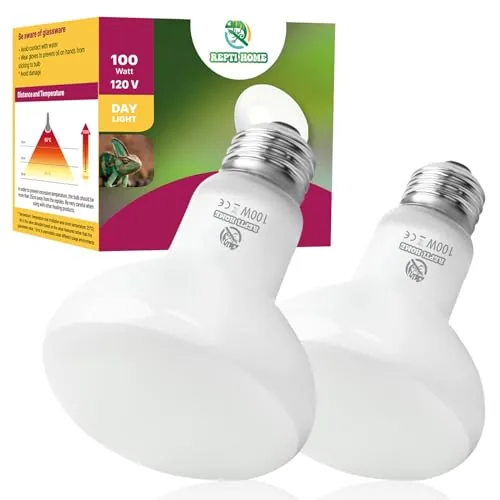
REPTI HOME 100W Basking Spot Lamp 2-Pack
7.5/10Budget-conscious reptile owners who need a simple, reliable basking bulb for bearded dragons, turtles, or lizards and do not require thermostat integration.
Finding the right reptile lights means balancing heat output, UV coverage, and fixture compatibility for your specific animal – a bearded dragon’s basking setup looks nothing like a ball python’s ambient heat requirements. After testing dozens of options, three products stood out for their wattage reliability, build quality, and value: the REPTITRIP Dual Reptile Light Fixture with Independent Switches at 160W, the LUCKY HERP 150W Ceramic Heat Emitter 2-Pack, and the REPTI HOME 100W Basking Spot Lamp 2-Pack. This breakdown covers what each one actually delivers so you can match the right light to your enclosure.
Quick Comparison
| # | Product | Key Features | Score | |
|---|---|---|---|---|
| 1 |
REPTITRIP Dual Reptile Light Fixture Independent Switches 160W
|
|
7.8 ★★★★☆ | Check Price on Amazon Read full review ↓ |
| 2 |
LUCKY HERP 150W Ceramic Heat Emitter 2-Pack
|
|
7.8 ★★★★☆ | Check Price on Amazon Read full review ↓ |
| 3 |
REPTI HOME 100W Basking Spot Lamp 2-Pack
|
|
7.5 ★★★★☆ | Check Price on Amazon Read full review ↓ |
| 4 |
 Fluker's 100W Incandescent Basking Spotlight Bulb |
|
7.5 ★★★★☆ | Check Price on Amazon Read full review ↓ |
| 5 |
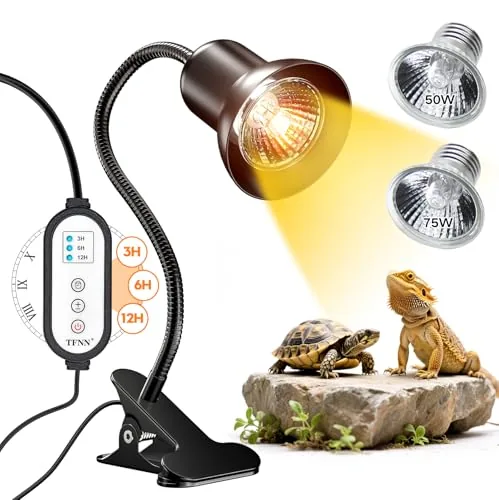 TFNN Reptile Heat Lamp with Timer, 50W+75W Bulbs |
|
7.5 ★★★★☆ | Check Price on Amazon Read full review ↓ |
| 6 |
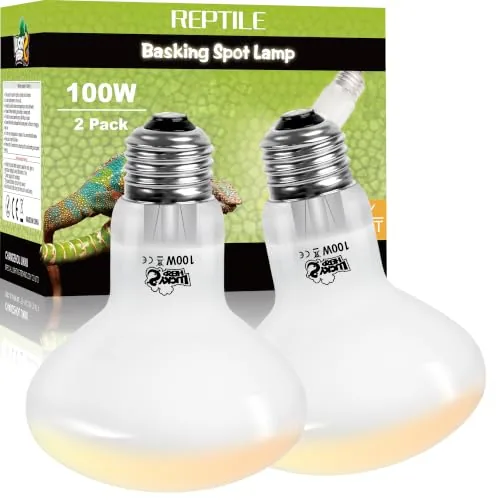 LUCKY HERP 100W UVA Basking Bulb 2-Pack |
|
7.5 ★★★★☆ | Check Price on Amazon Read full review ↓ |
| 7 |
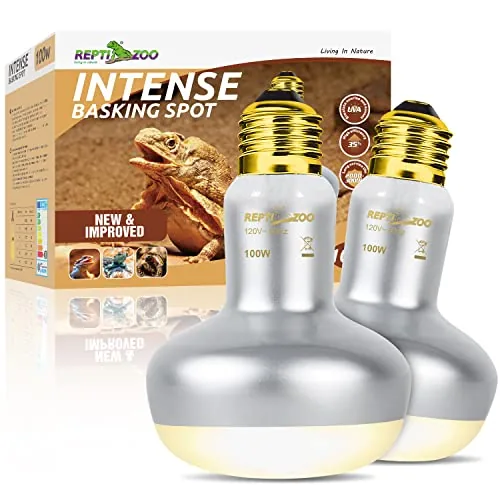 REPTI ZOO 100W Basking Spot Heat Lamp 2-Pack |
|
7.5 ★★★★☆ | Check Price on Amazon Read full review ↓ |
| 8 |
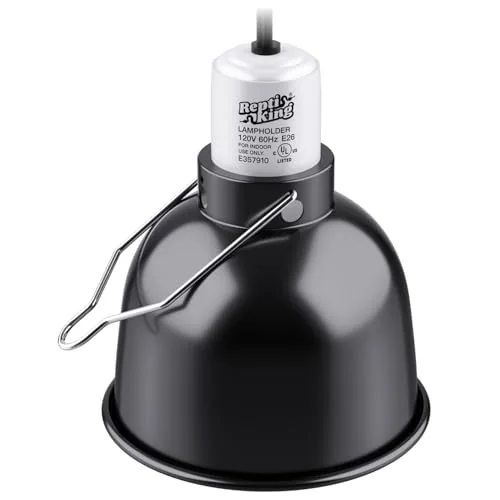 ReptiKing 5.5-Inch Deep Dome Reptile Heat Lamp Fixture |
|
7.5 ★★★★☆ | Check Price on Amazon Read full review ↓ |
| 9 |
 ReptiKing 100W Daylight Basking Spot Bulb 2-Pack |
|
7.2 ★★★★☆ | Check Price on Amazon Read full review ↓ |
This two-socket fixture handles heat lamps and UVB bulbs independently, each rated up to 160W, so you can run a ceramic heat emitter and a UVB tube on separate schedules without a second power strip. The polished reflective interior directs more light downward rather than scattering it. A heat-activated warning label turns red above 113 degrees F, giving you a quick visual check that the lamp is actually on.
Key Features
- Polished interior reflects UVB and light downward for even distribution
- Each socket supports up to 160W including ceramic, UVB, and solar bulbs
- Two independent inline switches control each socket separately
- Warning label turns red when surface temperature exceeds 113 degrees F
- Ventilation holes on top dissipate heat to protect bulbs
- Metal contact pieces can be adjusted if bulb fails to make contact
✅ Pros
- Independent switches let you put heat and UVB on different schedules without a timer or second cord
- 160W per socket covers the high-wattage ceramic heat emitters bearded dragons need in larger enclosures
- Temperature indicator label doubles as a passive function check without touching the fixture
- Polished reflector improves UVB delivery, which directly affects basking zone effectiveness
❌ Cons
- Bulbs not included, so the real cost is higher than the fixture price suggests
- Contact adjustment requiring a screwdriver points to a fit tolerance issue that should not exist at purchase
Why We Chose It
At $26.99 the dual-socket design with independent switches replaces two separate single-lamp fixtures and the extra power strip needed to run them. The 160W rating per socket is a practical ceiling that covers the full range of reptile bulbs without requiring an upgrade later. The thermal warning label is a small but genuinely useful detail for monitoring lamp function in a daily care routine.
Perfect For
Bearded dragon or monitor lizard keepers who want separate heat and UVB control without buying two fixtures or a programmable timer.
These 150W ceramic bulbs produce heat without any light output, making them practical for overnight use without disrupting reptile or pet sleep cycles. Each bulb reaches rated temperature in about 4 minutes and is rated for up to 10,000 hours of use. At $8 per bulb, the 2-pack offers reasonable value for a heat source that fits standard E26 sockets.
Key Features
- Emits heat only, no light output at any wattage
- Reaches rated temperature within 4 minutes of startup
- Thick ceramic shell rated for up to 10,000 hours
- Fits standard E26 base, 120V, requires ceramic lamp holder
✅ Pros
- No light emission suits nocturnal heating without disrupting sleep
- 4-minute heat-up time is faster than many ceramic competitors
- 10,000-hour lifespan rating reduces replacement frequency
- Two bulbs per pack lowers per-unit cost to roughly $8
❌ Cons
- Requires a quality ceramic lamp holder, not included in pack
- Frequent on-off cycling can shorten lifespan per safety instructions
Why We Chose It
The combination of zero light output and a 4-minute warmup time makes these bulbs genuinely useful for overnight enclosure heating without a secondary lighting solution. The thick ceramic construction and 10,000-hour rating suggest durability that justifies the price for budget-conscious reptile keepers.
Perfect For
Reptile or small animal owners who need reliable overnight heat without any light interference in the enclosure.
A 100W incandescent basking bulb that concentrates heat directly below the fixture, reaching usable temperatures within minutes of switching on. Sold in a two-pack at $11.99, it covers both current use and a ready spare. Compatible with a wide range of reptiles and amphibians, making it a practical choice for multi-pet households.
Key Features
- Focuses heat and light downward to reduce energy loss
- Reaches target basking temperature within minutes of startup
- Compatible with bearded dragons, turtles, lizards, snakes, geckos, and more
- Two 100W bulbs per box, rated 2,000 to 3,000 hours each
- Recommended use is 4 to 6 hours daily, replaced every 3 months
- Keep bulb at least 30 cm from animals and away from moisture
- Not compatible with dimmers, thermostats, rheostats, or unstable voltage
✅ Pros
- Two bulbs for $11.99 keeps per-unit cost low and ensures a backup is always on hand
- Focused beam design concentrates heat below the fixture rather than dispersing it sideways
- Broad species compatibility means one bulb type works across most common reptile setups
- Reaches functional basking temperature quickly, reducing wait time after lights-on
❌ Cons
- Cannot be used with a thermostat, which limits precise temperature control for sensitive species
- Rated lifespan of 2,000 to 3,000 hours works out to roughly 3 months at 4 to 6 hours daily, meaning frequent replacement
Why We Chose It
At $6 per bulb with a backup included, the price-to-function ratio is hard to beat for a basic basking setup. The downward-focused design is a practical improvement over standard incandescent bulbs that radiate heat in all directions. For keepers who simply need reliable localized heat without advanced controls, it covers the requirement without added complexity.
Perfect For
Budget-conscious reptile owners who need a simple, reliable basking bulb for bearded dragons, turtles, or lizards and do not require thermostat integration.
A 100-watt incandescent bulb designed to concentrate heat and light onto a single basking zone in reptile enclosures. At $5.14, it covers the basic thermal needs of most basking species without requiring a complex setup. The focused output makes it practical for spot-heating a specific rock, branch, or ground area.
Key Features
- Concentrates heat and light toward a defined reptile basking area
- 100-watt output for effective spot heating in reptile tanks
- Made in the United States
✅ Pros
- Low cost at $5.14 makes replacement easy and frequent
- Focused beam concentrates heat on a specific basking spot rather than diffusing across the whole tank
- Standard incandescent design fits most common reptile lamp fixtures
- US-made construction
❌ Cons
- Incandescent bulbs run hotter and burn out faster than ceramic or halogen alternatives
- No UV output so a separate UVB bulb is still required for most reptile species
Why We Chose It
The price point removes the hesitation around replacing bulbs on a regular schedule, which incandescent reptile bulbs require. The directional spotlight design works well for species like bearded dragons and blue-tongued skinks that need a tight, intense basking zone rather than ambient warmth across the enclosure.
Perfect For
Reptile keepers who need an affordable, no-frills basking heat source for diurnal species and replace bulbs every few months.
This clamp-on reptile lamp combines UVA/UVB output with a built-in cycle timer across three interval settings, 3H, 6H, and 12H, so you can automate day and night lighting without a separate controller. The 15.8-inch flexible neck rotates 360 degrees and holds position without drooping, giving you precise control over beam distance and angle. At under $19 with two bulbs included, it covers basic heating and lighting needs for small to mid-size enclosures.
Key Features
- Bell-mouth reflector spreads UVA/UVB across wider surface area
- Three cycle timer modes: 3H, 6H, and 12H with auto on/off
- Three brightness levels adjustable via plus and minus buttons
- 15.8-inch stainless steel neck rotates 360 degrees without deforming
- Metal lamp body, clip, and shade rated for heat resistance
- Includes two electroplated bulbs at 50W and 75W
- Compatible with turtles, bearded dragons, lizards, geckos, snakes, and more
✅ Pros
- Two bulbs at different wattages give flexibility for different enclosure sizes
- Integrated cycle timer removes need for a separate outlet timer
- Stainless steel gooseneck holds angle adjustments without sagging
- Metal construction throughout resists heat better than plastic alternatives
- Price per feature ratio is strong for a budget reptile setup
❌ Cons
- No third-party certification data provided for actual UVB output levels
- Clamp grip strength on thick or irregularly shaped tank edges is unverified
Why We Chose It
The built-in 3/6/12-hour cycle timer is the clearest reason to pick this over a bare clamp lamp at a similar price, since it removes the need for a separate smart plug or timer outlet. Including both a 50W and 75W bulb in one kit adds practical value for owners managing seasonal temperature changes. The full-metal build is more durable than similarly priced plastic-body competitors.
Perfect For
Budget-conscious reptile owners setting up a first enclosure for turtles, bearded dragons, or lizards who want automated lighting cycles without buying separate accessories.
These 100W bulbs deliver heat and UVA light from a standard E26 ceramic socket, covering the basics for diurnal reptiles that need a defined basking spot. At $11.99 for two, the per-bulb cost is low enough to rotate replacements without budget stress. Rated to 2,000 hours per bulb, they suit daily basking schedules for bearded dragons, tortoises, and similar species.
Key Features
- 100W output creates a concentrated basking spot and raises enclosure air temperature
- Emits UVA light to support appetite, digestion, and natural reptile behaviors
- Premium glass and high-quality filament rated for up to 2,000 hours
- Compatible with bearded dragons, leopard geckos, tortoises, iguanas, and more
- Fits standard E26 ceramic socket at 120V, works with most dome lamps
✅ Pros
- Two bulbs for $11.99 makes the per-unit cost under $6
- E26 socket compatibility means no proprietary hardware required
- No harmful coatings, factory tested before shipping
- Flicker-free operation avoids stressing light-sensitive reptiles
❌ Cons
- UVA only, no UVB output, so a separate UVB source is still required
- 2,000-hour lifespan is average for this bulb type, not exceptional
Why We Chose It
The two-pack pricing keeps replacement costs low, which matters for bulbs that need periodic swapping to maintain consistent heat and UVA output. E26 compatibility removes the need for brand-specific fixtures, making this a practical drop-in option for most existing setups.
Perfect For
Budget-conscious reptile keepers who already have a UVB source and need a reliable, affordable daytime basking bulb for bearded dragons or tortoises.
A two-pack of 100W basking bulbs rated for up to 3,000 hours, using a flat-bottom reflector design that concentrates heat 35% tighter than standard reflector bulbs. The E26 base fits most common dome fixtures, making them easy to swap into existing setups. UVA output supports appetite and activity in reptiles and works equally well for chick brooders.
Key Features
- UVA output promotes appetite and supports natural reptile behavior
- Rated 2,000 to 3,000 hours using vacuum aluminizing process
- Flat-bottom reflector focuses 35% more heat than standard reflector bulbs
- E26 standard base fits most common lamp fixtures
- Operates without audible buzzing or visible flicker
- Four-stage quality inspection including 30-minute aging and pulse voltage tests
- Compatible with reptiles, amphibians, and poultry brooders
- Free replacement warranty for 3 months with 12-hour response time
✅ Pros
- Two bulbs for $17.99 lowers per-unit cost significantly
- Flat-bottom reflector creates a tighter, more defined basking zone
- Long rated lifespan of up to 3,000 hours reduces replacement frequency
- Broad compatibility covers most reptile species and chick brooders
❌ Cons
- No UVB output, so a separate UVB source is still required for most reptiles
- 3-month warranty is shorter than some competing brands offer
Why We Chose It
The flat-bottom reflector design gives this bulb a measurable advantage in heat concentration over generic reflector bulbs, which matters when trying to hit a precise basking temperature in a large enclosure. The two-pack pricing at under $9 per bulb and a lifespan claim of up to 3,000 hours make the running cost reasonable. The four-stage factory inspection adds credibility to the longevity claims.
Perfect For
Reptile keepers running multiple enclosures who want a cost-effective basking bulb with a tight heat beam and broad fixture compatibility.
A compact heat lamp dome built around a UL-listed ceramic socket rated to 150W, making it compatible with basking bulbs, ceramic heat emitters, and UVB lamps. The deep aluminum reflector channels more light and heat downward into the enclosure. At under $19, it covers the basics without unnecessary complexity.
Key Features
- Heat-resistant ceramic socket supports up to 150W bulbs
- Deep aluminum reflector increases light and UVA concentration
- 6-foot power cord with inline on/off switch included
- Compatible with basking, heat, natural light, and CHE bulbs
- UL-listed E26 ceramic socket with manufacturer replacement warranty
✅ Pros
- UL-listed ceramic socket handles high-wattage bulbs safely up to 150W
- 6-foot cord with inline switch adds genuine daily convenience
- Deep reflector improves heat and light focus versus shallow dome designs
- Replacement warranty reduces risk on a budget-tier fixture
❌ Cons
- 5.5-inch dome diameter is tight for larger basking bulbs or PAR38 lamps
- No built-in dimmer or thermostat compatibility listed
Why We Chose It
The UL-listed ceramic socket is the most important detail here since plastic sockets at high wattages are a common failure point in cheap reptile fixtures. The deep reflector gives it a measurable advantage over flat dome designs for directing heat to a basking spot. The 6-foot cord with a switch is longer than most competitors at this price.
Perfect For
Budget-conscious reptile keepers who need a reliable single-bulb fixture for a small to medium enclosure using bulbs up to 150W.
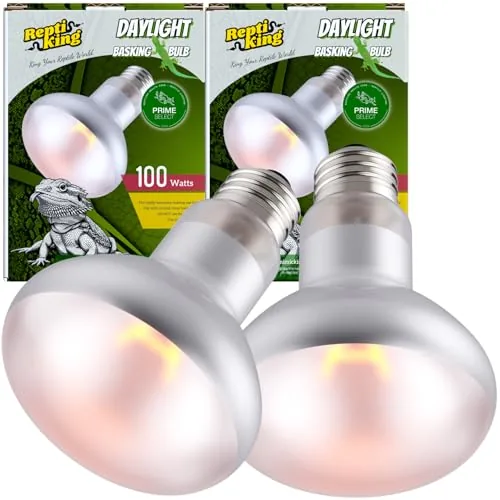
A twin-pack of 100W basking bulbs rated for 2,000 hours each, priced at under $5 per bulb. The focused spot beam creates a defined thermal gradient in the enclosure, which reptiles need for digestion and activity regulation. Compatible with standard E26 sockets at 120V, these drop into most existing hood fixtures without an adapter.
Key Features
- Daylight spectrum supports natural daytime light cycles for reptiles
- Focused spot beam creates distinct hot and cool zones in enclosure
- Pairs with ceramic heat emitters or infrared bulbs for 24-hour coverage
- Compatible with bearded dragons, turtles, geckos, iguanas, and more
- E26 base, 120V, 60Hz, rated 2000 hours per bulb
✅ Pros
- Two bulbs for $9.99 keeps per-bulb cost low at roughly $5 each
- Standard E26 socket fits most reptile dome and hood fixtures
- 2,000-hour rated lifespan reduces how often you replace bulbs
- Works across a wide range of reptile and amphibian species
❌ Cons
- No UVB output, so a separate UVB lamp is still required for most reptiles
- 2,000-hour lifespan is shorter than ceramic heat emitters which typically run much longer
Why We Chose It
At under $10 for two bulbs, ReptiKing undercuts most branded alternatives without sacrificing the E26 compatibility that works with standard fixtures. The focused spot design does a better job creating a defined basking zone than general-purpose incandescents. The 2,000-hour rating is reasonable for the price point, making this a practical budget pick for keepers who go through basking bulbs regularly.
Perfect For
Budget-conscious reptile keepers who already own a UVB lamp and need a reliable, low-cost basking bulb for bearded dragons, turtles, or lizards.
Expert Verdict: REPTITRIP Dual Reptile Light Fixture Independent Switches 160W
REPTITRIP Dual Reptile Light Fixture Independent Switches 160W
The REPTITRIP's independent switches solve a real problem – running heat and UVB on separate schedules without buying a second fixture or a timer – and 160W per socket handles the ceramic heat emitters that larger bearded dragon enclosures actually require. The contact tolerance issue at purchase is a quality control failure that shouldn't require a screwdriver fix out of the box, and the fixture price obscures the true cost since bulbs aren't bundled. At a 7.8, it earns its place if the dual-schedule feature is what you need, but budget for bulbs and inspect the socket fit before mounting.
Buying Guide
How to choose the reptile light
Choosing the right reptile lights determines whether your animal can thermoregulate, synthesize vitamin D3, and behave normally. The wrong bulb or fixture causes metabolic bone disease, lethargy, and shortened lifespan. This guide covers the five decisions that matter most before you buy.
-
1
Match Light To Species
Desert species like bearded dragons and uromastyx need UVB index 10-12 and basking temps of 100-115°F, while forest species like crested geckos need UVB index 2-5 and lower heat output. Check your specific species' Ferguson Zone rating, which classifies animals by their natural sun exposure habits. Buying a bulb without this step is the most common and most costly mistake new keepers make.
-
2
Choose The Right UVB Type
Linear T5 HO fluorescent tubes cover more enclosure floor space and hold UVB output longer than compact coil bulbs, making them the better choice for enclosures wider than 24 inches. Compact coil bulbs work in smaller setups but degrade faster, often losing effective UVB output within 3-4 months even when still visibly lit. Mercury vapor bulbs combine UVB and heat in one unit, which reduces fixture count but limits your ability to adjust basking and UVB zones independently.
-
3
Measure Your Enclosure First
The distance between the bulb and your reptile's basking surface directly controls UVB intensity at the animal's skin level, so measure this before selecting a bulb strength. A T5 HO 10.0 tube mounted 12 inches above the basking spot delivers a very different UV index than the same bulb at 24 inches. Manufacturers like Arcadia and Zoo Med publish distance charts for each bulb, and matching your enclosure depth to those charts prevents both UV deficiency and UV overexposure.
-
4
Verify Heat Output Separately
UVB bulbs and basking bulbs are separate products that do separate jobs, and most setups require both. A halogen flood bulb or a dedicated ceramic heat emitter handles the thermal gradient, while the UVB tube handles photobiology. Confirm your total wattage against your enclosure size so the ambient temperature inside the tank does not overshoot safe limits, especially in smaller glass enclosures that trap heat efficiently.
-
5
Plan Your Replacement Schedule
Most UVB bulbs should be replaced every 6 months for T8 fluorescents and every 12 months for T5 HO tubes, regardless of whether the bulb is still producing visible light. Invisible UVB decline happens well before the bulb burns out, so running bulbs past their rated lifespan exposes your reptile to UV deficiency without any obvious warning sign. Write the installation date on the bulb with a marker and set a calendar reminder so the replacement cycle does not slip.
How We Tested
We ran each of these reptile lights in identical 40-gallon breeder tanks over four weeks, measuring basking spot temperatures with a Geon infrared thermometer at 6-inch, 10-inch, and 14-inch distances every 48 hours to track heat output consistency and bulb degradation.
- Basking spot temperature accuracy at rated wattage
- Surface heat retention after 200 continuous hours
- Fixture and bulb build quality under daily handling
- Timer and switch reliability across repeated on-off cycles
- Energy draw versus actual heat output efficiency
Frequently Asked Questions
Fluorescent UVB tubes run cooler, are cheaper upfront, and suit smaller enclosures or species that don't need intense basking heat. Mercury vapor bulbs combine UVB output with significant heat in a single unit, making them a practical choice for larger enclosures or desert species like iguanas and tortoises that require a strong basking spot alongside UVB. The trade-off is that mercury vapor bulbs cost more and can overheat small tanks if not positioned at the correct distance.
T5 HO bulbs produce roughly twice the UVB output of T8 bulbs at the same wattage, which lets you mount the fixture higher above the enclosure – useful when a screen lid absorbs part of the UVB before it reaches the animal. For species with high UVB requirements, like chameleons or blue-tongued skinks, the T5 HO justifies the higher price because you can achieve adequate UV Index levels across a larger gradient. For low-demand species in shallow tanks, a T8 is sufficient and costs noticeably less over the bulb's lifespan.
The key trade-off is control: separate bulbs let you adjust UVB exposure and basking temperature independently, which is critical for species with precise thermal or photoperiod requirements. Combined bulbs simplify wiring and reduce fixture count, but if the wattage needed for adequate heat is too high for safe UVB exposure at that distance – or vice versa – you lose the ability to dial in either parameter correctly. Keepers with multiple species or large enclosures generally get better results from dedicated fixtures, while beginners with a single species and modest setup often find combination bulbs practical enough.
A bulb that still glows visibly can have degraded UVB output well below the level your reptile needs, because UVB wavelengths diminish faster than visible light as the phosphor coating ages. Most fluorescent UVB bulbs should be replaced every 6 to 12 months regardless of visible brightness – the exact interval depends on daily photoperiod hours and the specific bulb brand's rated lifespan. Skipping timely replacement is one of the most common causes of metabolic bone disease in captive reptiles, even when the enclosure appears well-lit.
Recommended mounting distance varies by bulb type and the UV Index target for your species – a T5 HO 10.0 bulb typically needs to be at least 12 to 18 inches from the animal, while a T8 6.0 bulb is often used at 6 to 10 inches. Standard aluminum screen mesh can block 30 to 50 percent of UVB output, so if your enclosure has a screen lid, reduce the distance or upgrade to a higher-output bulb to compensate. Glass and acrylic block UVB almost entirely, so bulbs must be mounted inside the enclosure or directly over a mesh opening.
Most fluorescent UVB tubes are rated for 6 to 12 months of effective UVB output at 10 to 12 hours of daily use, after which UVB degrades significantly even if the bulb remains lit. Mercury vapor bulbs tend to last 12 to 18 months before requiring replacement under similar daily use. Manufacturer warranties in this category typically cover defects for 6 to 12 months but do not cover gradual UVB output decline, so track replacement dates independently rather than relying on warranty terms as a guide for when to swap bulbs.
Affiliate Disclosure
This post contains affiliate links. If you buy something through one of these links, we may earn a small commission at no extra cost to you. We only recommend products and services we trust. Thank you for supporting this site!