Aftermarket headlight assemblies often include two distinct LED accent features: halo rings and DRL strips. Both emit light from the front of the vehicle when the ignition is on, but they achieve different visual effects, serve different purposes, and behave differently when other lighting functions activate. Understanding what separates them helps you pick an assembly that matches what you actually want from the front end of your car or truck.
What Halo Rings Are and How They Work
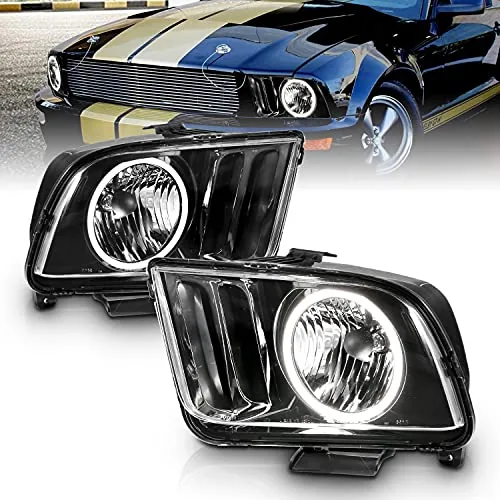
A halo ring is a circular or near-circular LED element mounted inside the headlight housing, typically surrounding the projector lens or reflector bowl. The ring itself can be anywhere from about 2.5 inches to 4 inches in diameter depending on housing size, and it emits light as a continuous or segmented loop. Early halo designs used cold cathode fluorescent lamps, but virtually every aftermarket assembly sold today uses an LED strip bent into a ring shape or a dedicated CCFL-replacement LED halo that runs on 12V DC directly from the vehicle’s accessory circuit.
The ring shape produces a distinctive annular glow that reads as a single cohesive circle from a distance. Because the element wraps 360 degrees (or close to it), there are no bright spots or dead zones along its arc when the LEDs are properly matched in output. Many assemblies wire halos to function as daytime running lights, parking lights, or both, and some allow the ring to shift color or dim when the high beam activates. The visual signature is tight and geometric, which is why it became the defining aesthetic of European luxury headlights in the early 2000s and has stayed popular in the aftermarket since.
What DRL Strips Are and How They Work
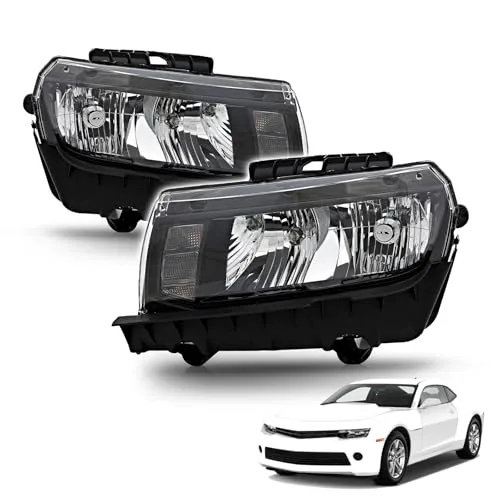
DRL strips are linear LED elements, usually mounted along the upper edge, lower edge, or inner brow of the headlight housing. Rather than forming a closed shape, they run as a straight or gently curved bar of individual diodes spaced 5 to 15mm apart depending on the design. Strip length varies by housing, but a typical passenger car assembly uses a strip between 6 and 14 inches long per side.
Because they are linear, DRL strips produce a blade-like or slash-like light signature. This suits headlight designs that have sharp, angular styling cues rather than the rounded forms that halos complement. Output per strip tends to be higher than a halo ring of comparable wiring, since the diodes face forward rather than inward, and there is no diffuser lens softening the light before it exits the housing. Some manufacturers wire DRL strips as sequential turn signals, where each diode illuminates in a sweeping pattern from inboard to outboard, adding a functional animation on top of the ambient daytime glow. The Ford Mustang aftermarket headlight options are a clear example of how sequential DRL strips have become a primary styling differentiator between assembly tiers.
Functional Differences That Matter at Installation
The wiring behavior of halos versus DRL strips often differs within the same assembly, and that matters when you are routing harnesses or diagnosing a hyperflash condition. Halo rings typically draw 5 to 15 watts per side and are wired to a constant 12V source that ties into the parking light or accessory circuit. DRL strips can draw anywhere from 8 to 25 watts per side, and assemblies that include sequential turn function require an additional signal wire tapped into the turn signal circuit.
Hyperflash is more common with DRL strips wired as turn signals than with halos, because the LED load is so far below what the factory flasher relay expects. A resistor or relay-based load equalizer usually solves it, but it adds installation time. Halos rarely cause hyperflash since they are not part of the turn circuit. Heat management also differs: a halo ring’s LED strip wraps around a curved form inside the housing, so heat dissipation depends heavily on the mounting bracket material. DRL strips are typically surface-mounted along a metal heat sink rail integrated into the housing body, which gives them a more direct thermal path out of the assembly (see the Honda Civic aftermarket headlight guide for how this plays out across specific assembly builds).
Choosing Between Them Based on Your Build
The right choice comes down to the shape language of your vehicle’s front end and how you want the accent lighting to function. Halos suit rounder housings and older body styles where the circular element echoes curves already present in the bumper or hood line. They also work well when you want a subtle, low-key ambient glow rather than a high-contrast bar of light. If your priority is a clean daytime running signature without sequential animation, a halo assembly typically delivers a more refined look at lower wiring complexity.
DRL strips suit angular, modern headlight shapes and vehicles where sequential turn signals are a priority. If you are building a track-focused car or a truck where visual aggression matters more than subtlety, the blade-like output of a DRL strip reads more assertively at distance. Some assemblies include both a halo ring and a DRL strip, using the ring as the parking light and the strip as the daytime running light and turn signal, which gives you layered functionality from one housing. Before purchasing any assembly, confirm whether the DRL strip requires a CANbus-compatible harness for your specific vehicle, since many modern platforms monitor current draw on every lighting circuit and will throw a fault code if the load is outside spec. LED wheel ring lights and other accent lighting follow the same compatibility logic when added alongside headlight assemblies.
Halo rings and DRL strips are not interchangeable features that happen to look different. They produce distinct visual signatures, draw different loads from your vehicle’s circuits, and require different wiring approaches when sequential turn function is involved. Knowing which element fits your housing shape, your wiring setup, and your preferred light signature prevents the most common aftermarket headlight mistakes: mismatched aesthetics, hyperflash faults, and assemblies that require immediate modifications after installation. Matching the element type to the vehicle’s design language and electrical architecture is the practical starting point for any headlight upgrade. The Jeep Wrangler JL aftermarket headlight roundup covers this distinction in more depth for round-housing applications specifically.
Affiliate Disclosure
This post contains affiliate links. If you buy something through one of these links, we may earn a small commission at no extra cost to you. We only recommend products and services we trust. Thank you for supporting this site!