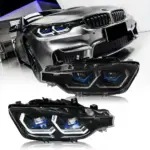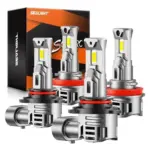
Every state regulates motorcycle headlights, but the specific numbers and testing standards differ enough to cause real confusion when you’re upgrading or replacing a headlight. Federal standards set a floor through DOT and FMVSS 108, but states layer their own inspection criteria, candela minimums, and color restrictions on top. Knowing what your state actually measures, and how, matters before you buy anything.
How Federal Standards Set the Baseline
The Federal Motor Vehicle Safety Standard 108 (FMVSS 108) is the foundation every motorcycle headlight sold in the United States must meet. It specifies minimum and maximum candela outputs at defined test points across the beam pattern, not a simple lumen total. For a Class B motorcycle headlight (the most common), the standard requires at least 10,000 candela at the center of the high beam and sets zone-by-zone minimums across a grid of test angles.
DOT compliance is a manufacturer certification, not a government test. Manufacturers self-certify that their products meet FMVSS 108, which means the DOT marking on a bulb or housing is a legal claim, not independent verification. That distinction matters when buying aftermarket parts, because a DOT stamp on a cheap import does not guarantee the unit was actually tested to the full standard. For riders upgrading headlights, the practical takeaway is to source from manufacturers who publish photometric test data, not just display a stamp.
State Inspection Requirements and What They Actually Measure
Most states that require annual or biennial motorcycle inspections check headlights with a simple pass/fail process based on whether the headlight functions, aims correctly, and produces light within a color range (white to selective yellow). Few states use a photometer during roadside or inspection lane checks. California, for example, references FMVSS 108 compliance in its vehicle code but does not independently measure candela output at inspection; inspectors verify that the light operates and that the beam aims within acceptable vertical and horizontal limits.
Texas requires headlight aim to fall within a half-degree tolerance using an approved aiming device. New York’s inspection standards specify that headlights must meet SAE or DOT standards and be aimed so the high beam hot spot does not project above a horizontal line at 25 feet. Florida requires at least one headlight that produces sufficient light to reveal a person or vehicle at 150 feet on low beam and 300 feet on high beam, language that sets a functional distance standard rather than a candela figure. These distance-based standards are common across Southern states and are generally easier to satisfy with a properly aimed LED or halogen unit than the photometric grid tests implied by FMVSS 108.
LED Headlights and State-Specific Complications
LED motorcycle headlights create a specific compliance question because many early aftermarket LED conversions produced high raw lumen output but poor beam pattern control, throwing light in directions that exceeded FMVSS 108 glare limits. The legal question for riders is not simply whether an LED is bright enough; it is whether the full assembly, bulb plus housing plus projector or reflector, meets the photometric standard as a unit.
Several states, including Virginia and Pennsylvania, have inspection language that requires headlights to be “of a type approved by” the relevant federal standard, which inspectors often interpret to mean the entire headlight assembly must carry DOT certification, not just the bulb. Swapping an LED bulb into a housing designed for halogen can void the assembly’s DOT certification even if the individual bulb has its own DOT stamp. The motorcycle LED headlight guide covers this certification distinction in more depth. Riders in strict-inspection states should look for complete headlight assemblies certified as a unit rather than bulb-only replacements.
Auxiliary Lights, High Beams, and Color Restrictions
Beyond the primary headlight, many states regulate how many forward-facing lights a motorcycle can run simultaneously and what color they can emit. White and selective yellow are universally permitted for forward-facing headlights. Blue is prohibited for non-emergency vehicles in every state. Some states, including Illinois and Ohio, restrict the use of additional forward-facing white lights to conditions where they do not operate simultaneously with high beams or exceed combined candela thresholds.
Auxiliary lights mounted below the mirrors or on crash bars fall under different rules than headlights in most state codes. They are typically regulated as fog lights or driving lights, which carry their own aim and intensity limits (see the motorcycle auxiliary lighting options for how output specs compare across popular models). California prohibits more than two lighted lamps on the front of a motorcycle at any time, counting the headlight, which means a rider running dual aux lights must switch off the headlight to stay legal, an approach almost no one uses in practice.
For off-road-only motorcycles, none of these standards apply, but the moment a bike operates on a public road, full DOT headlight compliance becomes a legal requirement regardless of the bike’s primary intended use.
The practical compliance path for most riders is straightforward: use a DOT-certified complete headlight assembly, verify it aims within your state’s specified tolerances, and confirm that any auxiliary lights you add comply with your state’s rules on simultaneous forward-facing lamps. Where your state references FMVSS 108 directly, the beam pattern and candela distribution of the full assembly matter, not just the total lumen output on the packaging. When in doubt, your state’s DMV inspection manual is publicly available and will tell you exactly what an inspector checks.
Affiliate Disclosure
This post contains affiliate links. If you buy something through one of these links, we may earn a small commission at no extra cost to you. We only recommend products and services we trust. Thank you for supporting this site!