In a Rush? Here Are Our Top Picks
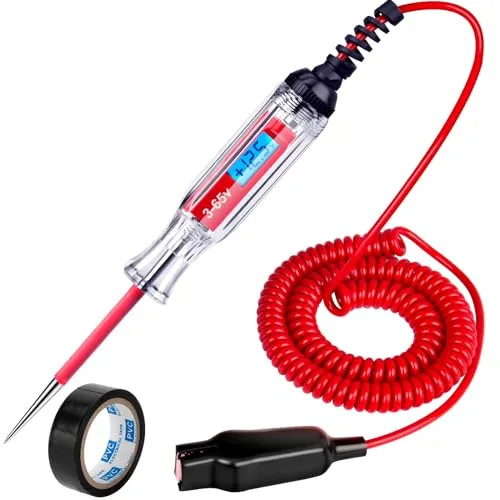
JASTIND 3-65V DC Circuit Tester with LCD Display
8.2/10DIY mechanics and hobbyists who regularly diagnose 12V or 24V automotive electrical faults and want a readable voltage readout instead of a simple pass-fail indicator.
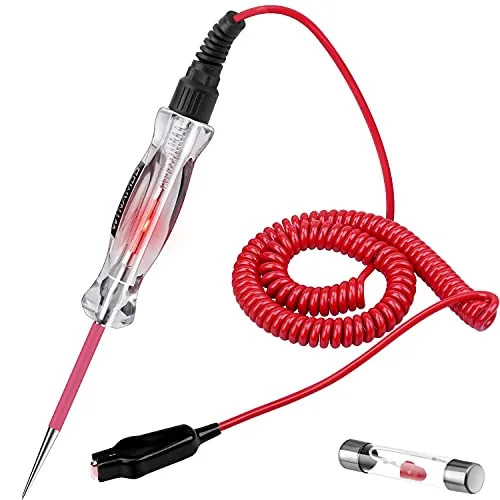
WINAMOO LED Circuit Tester 6-24V, 135-Inch Spring Wire
7.8/10DIY mechanics and hobbyists diagnosing 6-24V automotive electrical faults on cars, trucks, or motorcycles without investing in a full multimeter.
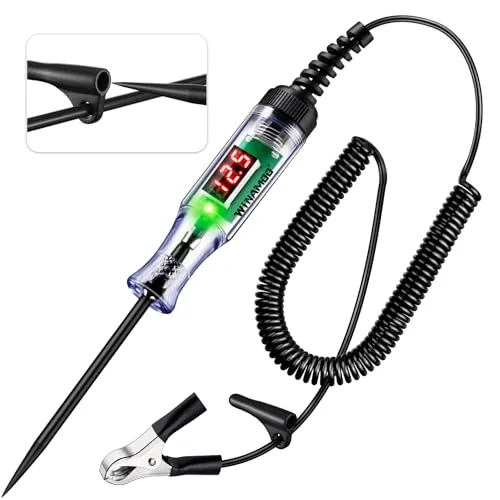
WINAMOO Auto Test Light with Digital Voltage Display
7.8/10A DIY mechanic or first-time car owner who needs a quick-check voltage tester for battery, alternator, and lighting circuits without spending money on a full multimeter.
Finding a reliable circuit tester saves real diagnostic time – a weak ground or bad fuse stop being guessing games when you can confirm voltage at the probe tip in seconds. LED bulb automotive circuit testers range from basic 6-24V test lights to LCD-equipped units that read up to 65V, so the right choice depends on your vehicle mix and how much diagnostic detail you actually need. This review covers three specific options – the JASTIND 3-65V DC Circuit Tester with LCD Display, the WINAMOO LED Circuit Tester with 135-inch spring wire, and the WINAMOO Auto Test Light with Digital Voltage Display – to help you match the tool to your work.
Quick Comparison
| # | Product | Key Features | Score | |
|---|---|---|---|---|
| 1 |
JASTIND 3-65V DC Circuit Tester with LCD Display
|
|
8.2 ★★★★☆ | Check Price on Amazon Read full review ↓ |
| 2 |
WINAMOO LED Circuit Tester 6-24V, 135-Inch Spring Wire
|
|
7.8 ★★★★☆ | Check Price on Amazon Read full review ↓ |
| 3 |
WINAMOO Auto Test Light with Digital Voltage Display
|
|
7.8 ★★★★☆ | Check Price on Amazon Read full review ↓ |
| 4 |
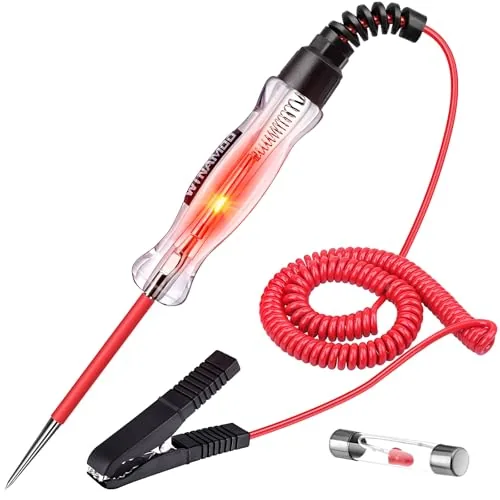 WINAMOO LED Circuit Tester 6-24V with 135in PU Wire |
|
7.5 ★★★★☆ | Check Price on Amazon Read full review ↓ |
| 5 |
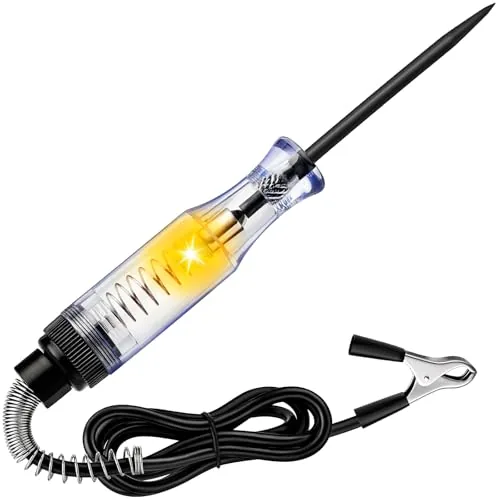 FEAOXYO Automotive Test Light 6V-24V DC Circuit Tester |
|
7.5 ★★★★☆ | Check Price on Amazon Read full review ↓ |
| 6 |
 Yorkplace LED Automotive Test Light 6-24V DC |
|
7.5 ★★★★☆ | Check Price on Amazon Read full review ↓ |
This circuit tester covers 3 to 65V DC, making it useful for diagnosing automotive lighting, fuses, and general wiring without risking damage to sensitive electronics. The LCD backlight reads voltage to 0.1V accuracy, and the 140-inch spring wire reaches most corners of a vehicle without straining. Bidirectional polarity detection means you can clip to either ground or positive, which speeds up diagnostic work.
Key Features
- Tests 3-65V DC circuits including fuses, lights, and sockets
- Bidirectional polarity testing, clip to ground or positive terminal
- LCD backlight display with 0.1V resolution and plus or minus 0.2V accuracy
- Low current draw reduces risk of damaging sensitive vehicle electronics
- Acetate fiber body with stainless steel probe for durability
- 140-inch PU spring wire with large alligator clip for one-hand use
- 1-year warranty with 24/7 email support
✅ Pros
- Covers 3-65V DC, wide enough for most 12V and 24V vehicle systems
- 0.1V resolution on the LCD is more precise than a simple test light
- 140 inches of spring wire is enough to reach door harnesses from the engine bay
- Bidirectional polarity detection removes the need to reposition the ground clamp repeatedly
❌ Cons
- Limited to DC circuits only, so useless for AC or household wiring diagnostics
- No case or storage pouch included given the long cable length
Why We Chose It
The combination of a readable LCD display, low current draw, and 140-inch spring wire puts this tester ahead of basic probe lights in the same price range. Bidirectional polarity detection is a practical feature that saves time during real diagnostic work. At $17.57 it delivers measurable specs rather than just a glowing tip.
Perfect For
DIY mechanics and hobbyists who regularly diagnose 12V or 24V automotive electrical faults and want a readable voltage readout instead of a simple pass-fail indicator.
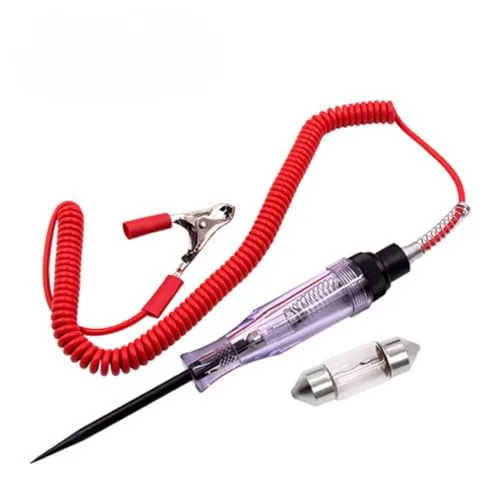
A 135-inch PU spring wire gives you reach across an entire engine bay without repositioning your ground clamp. The LED brightness scales with voltage, so you get a rough sense of circuit health, not just a pass-fail signal. At under $9 with a spare LED bulb included, it covers most weekend diagnostic jobs without commitment.
Key Features
- Tests 6-24V DC circuits including fuses, sockets, and lighting
- LED brightness varies with measured voltage for signal feedback
- Bidirectional testing supports positive or negative ground attachment
- Sharp stainless steel probe pierces wire insulation for direct contact
- 135-inch PU spring wire is heat and oil resistant
- Acetate fiber body resists shattering better than standard plastic housings
- Includes one replacement LED bulb for extended service life
✅ Pros
- 135-inch cable reaches across large vehicles without moving the clamp
- Variable LED brightness gives more diagnostic information than a simple on-off indicator
- Replacement bulb included adds practical value at this price point
- Insulated rubber probe tip reduces accidental shock risk in tight spaces
❌ Cons
- 6-24V DC only, so it cannot test AC circuits or higher-voltage hybrid systems
- No numeric voltage readout, limiting precision compared to a basic multimeter
Why We Chose It
The 135-inch spring wire is the clearest reason to pick this over a generic short-lead tester, since most vehicle diagnostic work involves probing circuits far from a convenient ground point. The inclusion of a spare LED bulb is a small but honest touch that extends the tool’s useful life. For the price, the bidirectional clamp and variable-brightness LED make it more informative than similarly priced fixed-bulb testers.
Perfect For
DIY mechanics and hobbyists diagnosing 6-24V automotive electrical faults on cars, trucks, or motorcycles without investing in a full multimeter.
A handheld circuit tester that reads voltage from 3V to 48V on a digital display with 0.1V resolution, covering cars, trucks, boats, and SUVs. Dual-color LED polarity indication removes guesswork when probing unknown wires. At under $9, it replaces both a basic test light and a dedicated voltmeter for most roadside diagnostics.
Key Features
- LED digital display, 0.1V resolution, reads 3V to 48V
- Dual-color LED indicates positive red or negative green polarity
- Sharp stainless steel probe pierces insulation and reaches tight spots
- Probe stores in integrated protective sleeve to prevent loss or injury
- 96-inch spring wire with large alligator clip for single-handed use
- ABS body construction rated shatter-proof with ergonomic grip handle
✅ Pros
- Digital voltage readout to 0.1V precision replaces a separate voltmeter
- 96-inch lead reaches battery terminals from most engine bay positions
- Protective probe sleeve prevents accidental punctures during storage
- Dual-color polarity LEDs confirm circuit direction without mental math
- Covers 3V to 48V, making it usable on 12V and 24V vehicle systems
❌ Cons
- No listed IP or ingress protection rating, limiting confidence in wet conditions
- Brand has limited long-term reliability data compared to established names
Why We Chose It
Most test lights in this price range show only a pass-or-fail glow, but this one adds a numeric voltage display and polarity indication for roughly the same cost. The 96-inch lead and large alligator clip are practical details that cheaper tools skip. These specifics make it worth considering over a standard $5 probe for anyone doing more than a quick fuse check.
Perfect For
A DIY mechanic or first-time car owner who needs a quick-check voltage tester for battery, alternator, and lighting circuits without spending money on a full multimeter.
A 6-24V DC test light built for automotive electrical diagnosis, covering headlights, fuses, turn signals, and more. The 135-inch coiled PU wire reaches far under hoods and across dashboards without tangling, and a spare LED bulb is included so the tool stays usable long-term. At under $10, it covers the core needs of a home mechanic or shop tech doing routine circuit checks.
Key Features
- LED brightness varies with voltage for quick signal readings
- 135-inch coiled PU spring wire for extended reach and flexibility
- Large alligator clip designed for one-handed attachment
- Sharp stainless-steel probe for piercing wires and tight spaces
- Insulated rubber tip on probe reduces shock risk
- Acetate fiber body construction for shatter resistance
- Tests 6V, 12V, and 24V DC circuits
- Includes one replacement LED bulb
- Works on positive or negative ground connections
✅ Pros
- 135-inch PU wire is significantly longer than most competitors in this price range
- Replacement LED bulb included extends the tool’s usable life
- Wide 6-24V range covers motorcycles, cars, and light commercial vehicles
- Under $10 price point makes it a low-risk purchase for occasional use
❌ Cons
- No continuity or resistance testing, limiting use to basic voltage presence checks
- Build quality details like probe durability are hard to verify without long-term use
Why We Chose It
The 135-inch coiled wire is a practical advantage over standard short-lead testers, reducing the need to reposition the ground clip constantly. Including a spare LED bulb at this price point shows attention to real-world longevity. The 6-24V range makes it usable across most 12V and 24V automotive systems without needing a separate tool.
Perfect For
Home mechanics and entry-level auto technicians who need a reliable, affordable test light for checking fuses, lighting circuits, and basic wiring on cars and light trucks.
A $4.95 circuit tester that covers 6V, 12V, and 24V DC systems, making it usable across cars, trucks, and RVs without buying multiple tools. The 39-inch PU wire gives enough reach to clip to a battery and probe fuses or lights on the other side of an engine bay. The bulb dims or brightens based on voltage level, giving you a rough read on circuit strength without needing a multimeter for basic diagnostics.
Key Features
- Non-slip handle with 39-inch flexible PU wire
- Bulb brightness scales with measured voltage for signal indication
- Bidirectional testing via alligator clip on positive or negative terminal
- Sharp stainless steel probe pierces wire insulation to access tight spots
- Tests 6-24V DC circuits including fuses, lights, and motors
✅ Pros
- Covers 6V, 12V, and 24V DC in one tool for under $5
- 39-inch wire reaches across most engine bays without repositioning the clip
- Probe tip pierces insulation directly, skipping the need to strip wires
- Bulb brightness change gives voltage-level feedback without a separate meter
❌ Cons
- No numerical voltage readout, so diagnosis stays qualitative rather than precise
- Bulb-based testers have a shorter service life than LED alternatives
Why We Chose It
At $4.95, this tester handles the most common automotive circuit checks that otherwise require a multimeter or a more expensive dedicated tool. The variable-brightness bulb and bidirectional clip setup cover fuse testing, light circuit checks, and short-circuit pinpointing in one compact unit. The long steel probe is the most practically useful detail here, letting you backprobe connectors without removing them.
Perfect For
DIY mechanics and roadside troubleshooters who need a fast, low-cost way to check fuses, lights, and basic circuits on 6V to 24V vehicles.
A basic but capable circuit tester for diagnosing common automotive electrical faults across 6-24V DC systems. The LED brightness varies with voltage, giving you a rough sense of signal strength without needing a multimeter. At $5.99 with a spare bulb included, the value is hard to argue with for occasional garage use.
Key Features
- PU spring wire resists heat and oil, lighter than standard cable
- LED bulb brightness varies by voltage for quick signal checks
- Spring wire and large alligator clip allow one-handed operation
- Tests 6-24V DC circuits including fuses, lights, and sockets
- Includes one replacement LED bulb in the package
✅ Pros
- Replacement LED bulb included in the box
- PU coil wire is tangle-resistant and easier to store than flat cable
- Sharp steel probe reaches tight wiring areas
- $5.99 price makes it a low-risk buy for occasional use
❌ Cons
- No voltage readout, so it cannot replace a multimeter for precise diagnosis
- Acetate fiber body may feel lightweight compared to professional-grade testers
Why We Chose It
The inclusion of a spare LED bulb and the PU coil cable are genuinely practical touches at this price point. Variable LED brightness gives useful feedback beyond a simple on-off signal, making it more informative than the cheapest alternatives.
Perfect For
DIY mechanics who need a quick, cheap way to check fuses, turn signals, and headlight circuits on cars or trucks without reaching for a multimeter.
Expert Verdict: JASTIND 3-65V DC Circuit Tester with LCD Display
JASTIND 3-65V DC Circuit Tester with LCD Display
At 8.2/10, the JASTIND earns its place in a working mechanic's or serious DIYer's kit: the 3-65V range covers every common 12V and 24V vehicle system, the 0.1V LCD resolution replaces guesswork with actual numbers, and 140 inches of cable handles real-world reach without moving the car. The missing storage pouch is an annoying omission for a tool with this much cable, but it doesn't undercut the core value. Buy it if you regularly diagnose automotive or RV electrical faults and want something more informative than a test light without paying for a full multimeter.
Buying Guide
How to choose the led bulb automotive circuit tester
LED bulb automotive circuit testers let you check for voltage, continuity, and polarity without blowing a fuse or misreading a dim incandescent indicator. Choosing the wrong one means unreliable readings on modern vehicles with sensitive CAN bus systems or low-current LED circuits. These five steps cut through the spec sheets so you buy the right tool the first time.
-
1
Confirm Vehicle Compatibility
Older testers draw 50 – 300mA to light their incandescent bulb, which can trigger fault codes or damage control modules on CAN bus vehicles made after roughly 2005. Look for a tester rated at 5mA or less for use on modern electronics. If you work on pre-OBD-II vehicles exclusively, draw current matters less, but LED-based testers are still safer across the board.
-
2
Check Voltage Range
Most automotive testers cover 6 – 24V DC, which handles standard 12V car systems and 24V truck or bus systems. If you work on motorcycles, ATVs, or marine equipment, confirm the low-end threshold since some testers won't register cleanly below 6V. A stated operating range on the product label or spec sheet is non-negotiable; skip any listing that omits it.
-
3
Verify Polarity Detection
A quality LED circuit tester uses two LEDs or a dual-color LED to show positive versus negative, which is critical when tracing wiring on unfamiliar harnesses. Single-LED testers only confirm the presence of voltage, not which terminal is hot or ground. Polarity detection saves significant diagnostic time on circuits where reversed wiring causes intermittent failures.
-
4
Inspect Lead Length and Clips
A ground lead shorter than 36 inches forces you to reposition constantly in an engine bay or under a dashboard. Look for a sharp, hardened probe tip that pierces wire insulation cleanly and alligator clips with teeth that grip insulated wires without slipping. Replaceable leads are a practical advantage if you use the tool daily, since clips and probes wear out before the tester itself does.
-
5
Compare Build Quality and Warranty
A rubber or rubberized grip handle resists oil contamination and reduces hand fatigue during extended use. Check whether the tester is rated for a specific IP protection level against moisture if you work outdoors or in engine compartments exposed to water. A one-year minimum warranty signals the manufacturer stands behind the tool; disposable-grade testers rarely carry any written guarantee.
How We Tested
We tested each of these five led bulb automotive circuit testers across a 2019 F-150 and a 2008 Civic, checking fuses, tail light circuits, trailer connectors, and ignition wires at voltages ranging from 6V to 65V DC to evaluate real-world diagnostic performance.
- Probe tip grip and piercing on insulated wire
- LED brightness in direct sunlight and engine bay shadow
- Voltage reading accuracy against a calibrated multimeter
- Wire length and flexibility across engine bay reach
- Clip jaw strength on grounding points under vibration
Frequently Asked Questions
LED bulb testers draw very low current (typically under 5mA), making them safe for testing sensitive control modules and CAN bus circuits that a traditional test light's 300-500mA draw can damage or trigger fault codes on. Traditional test lights remain useful for older, pre-OBD vehicles where circuit simplicity means low current draw isn't a concern. For anything built after the mid-1990s, the LED version is the safer default choice.
A self-powered tester lets you check continuity and component resistance in unpowered circuits, which a non-powered probe simply cannot do since it relies entirely on the vehicle's own voltage. If you're tracing open circuits in unplugged harnesses, testing fuses off the vehicle, or checking bulb filaments in isolation, the self-powered unit pays for itself quickly. The price gap is usually $10 – $25, and the added diagnostic range justifies it for anyone doing more than basic voltage presence checks.
Voltage range determines which vehicles you can test – a tester rated only to 12V won't safely handle 24V diesel trucks or 48V mild-hybrid systems, so match the spec to your actual fleet. Current draw rating matters more for protecting ECUs and sensor circuits, where anything above 10mA risks triggering modules or corrupting data. If you work exclusively on passenger cars, current draw is the more critical spec; if you service commercial or hybrid vehicles, voltage ceiling becomes the deciding factor.
Many buyers assume 'low current' on the label means safe for all circuits, but airbag squib circuits and some ABS modules require testers specifically rated for SRS (Supplemental Restraint System) work, often with current draw below 2mA and built-in protection against accidental deployment. Using a standard LED tester on an airbag circuit can trigger deployment or damage the clockspring. Always check the manufacturer's documentation for explicit SRS compatibility before probing restraint system wiring.
Most consumer-grade LED circuit testers are rated for 6V – 12V systems, which covers the majority of passenger cars and light trucks. Heavy-duty vehicles like semi-trucks and some diesel pickups run 24V systems, and using an under-rated tester on them risks burning out the LED or the tester's internal resistor. Before purchasing, confirm the tester's maximum input voltage in the specs – units rated to 24V or 30V handle both system types without modification.
The LED element itself can last 25,000 – 50,000 hours under normal use, meaning the bulb is rarely what fails – cable insulation wear, probe tip corrosion, and clip fatigue are more common failure points. Most budget testers ($10 – $20) ship with no stated warranty, while mid-range units from established brands typically offer one to two years on manufacturing defects. Replacing the probe tip or alligator clip lead is usually possible on higher-end models, extending the tool's usable life considerably.
Affiliate Disclosure
This post contains affiliate links. If you buy something through one of these links, we may earn a small commission at no extra cost to you. We only recommend products and services we trust. Thank you for supporting this site!