7 Best LED Strip Lights For Ceilings (2026 Review Guide)
The Best Ranked LED Strip Lights For Ceiling
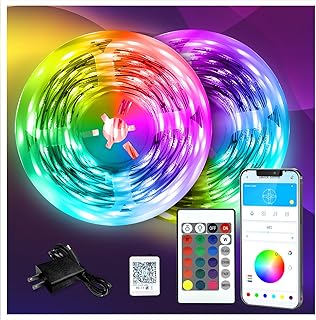
DAYBETTER LED Strip Lights 130ft RGB Decor with Remote
The DAYBETTER 130ft LED Strip Lights offer vibrant RGB lighting perfect for bedrooms, desks, and indoor spaces. With versatile control options including a smart app and an IR remote, you can select from 16 million colors and various lighting modes to suit any mood or occasion. The lights also feature music synchronization, allowing them to change colors in time with your favorite tunes, bringing parties and everyday moments to life. Smart timing and color memory functions add convenience, making these LED strips a great choice for decorative and ambient lighting.
Key Features:
- 130ft RGB LED strip with 16 million color options
- Controls via DAYBETTER app and 24-key IR remote
- Multiple lighting modes including Flashing, Quick, Jump, and Fade
- Music synchronization that changes lights with your phone's music
- Timer function with automatic on/off and color memory
- Ideal for decorating bedrooms, ceilings, kitchens, living rooms, bars, and parties
Pros
- Long 130ft length suitable for large areas
- Multiple control methods for flexible use
- Music sync enhances party atmosphere
- Smart timer and color memory add convenience
Cons
- Requires a 24V power supply which may limit plug options
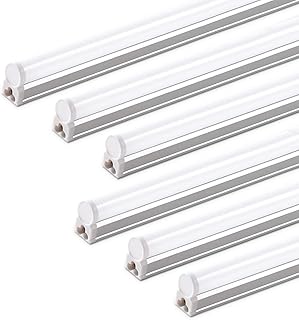
Barrina LED T5 Integrated Fixture 4FT Super Bright
The Barrina 6-Pack LED T5 Integrated Shop Lights offer bright, energy-efficient lighting ideal for various spaces including garages, basements, and offices. Each 4-foot fixture delivers 2200 lumens of crisp 6500K white light while consuming only 20 watts, ensuring excellent illumination with low power usage. The lights are linkable, allowing up to 8 units to be connected seamlessly for extended coverage. Installation is simple with included mounting accessories and a plug-and-play design. These ETL-listed fixtures come with built-in on/off switches for convenient control and are perfect for both ceiling and under-cabinet applications.
Key Features:
- Bright output of 2200 lumens with only 20 watts of power consumption
- Linkable design supports connecting up to 8 fixtures using seamless connectors or 20-inch cords
- Easy plug-and-play installation with included mounting hardware and snap joints
- Ideal for garages, basements, workshops, offices, and under-cabinet lighting
- Includes 6 LED fixtures, power cords with on/off switches, hardwire kits, connector cables, and installation accessories
- Not compatible with motion sensors as this may reduce lifespan
- Second-generation design features safer male-female connectors to prevent accidental electrical connections
Pros
- High brightness with low energy usage
- Expandable linking system for customized lighting setups
- Simple and quick installation process
- Versatile for multiple indoor applications
- Comes with all necessary installation components
Cons
- Not compatible with motion sensor systems
- Requires new connectors to link older and newer units safely
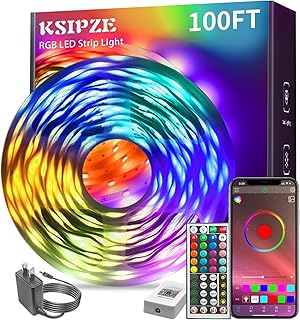
KSIPZE 100ft RGB Music Sync LED Strip Lights
The KSIPZE 100ft LED Strip Lights offer vibrant RGB color options with smart app and remote control, allowing you to customize your lighting experience effortlessly. Featuring music sync capabilities, these lights change colors in response to ambient sounds, perfect for creating lively party atmospheres or mood lighting. The flexible strip is easy to install with strong adhesive backing and includes timing settings for automatic on/off scheduling, making it ideal for various home dcor applications including bedrooms, kitchens, and living rooms.
Key Features:
- Control LED lights via app or IR remote with 16 million colors and adjustable brightness
- Customizable lighting modes like flashing, jump, and fade at different speeds
- Built-in microphone enables color changes synced to music and ambient sounds
- Automatic on/off timing with schedule repeat functionality
- 100ft length suitable for decorating multiple rooms and special occasions
- Strong adhesive backing for quick and easy installation on clean, dry surfaces
Pros
- Extensive color options and customizable modes enhance ambiance
- Music sync feature adds dynamic lighting effects for parties
- Long 100ft length covers large spaces for versatile use
- Convenient app and remote control for easy operation
- Simple application with strong adhesive tape
Cons
- Timing feature setup can be slightly complicated for some users
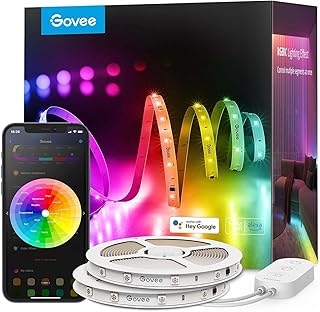
Govee 100ft RGBIC LED Strip Lights, Smart Control
The Govee 100ft RGBIC LED Strip Lights offer vibrant and customizable lighting solutions for any indoor space. With two 50ft strips, you can creatively illuminate bedrooms, living rooms, or dorms using segmented multicolor effects. The lights are compatible with Alexa and Google Assistant for effortless voice control, and the Govee Home App provides extensive customization options including music sync modes that react dynamically to sound. Easy to install with adhesive backing, these LED strips bring colorful ambience to your home or party setups.
Key Features:
- Two 50ft LED strips totaling 100ft for versatile lighting layouts
- RGBIC technology delivers segmented color effects along the strip
- Voice control compatible with Alexa and Google Assistant for hands-free operation
- Govee Home App enables custom color creation, effect sharing, and AI-generated themes
- Enhanced music sync mode with 11 settings that respond to audio input
- Simple installation with adhesive backing suitable for dry, clean indoor surfaces
- Not waterproof; designed for indoor use only and requires gentle handling to avoid damage
Pros
- Extensive length allows for multiple design possibilities
- Segmented RGBIC colors provide dynamic and vibrant lighting effects
- Voice and app control make customization easy and convenient
- Responsive music sync enhances party and entertainment experiences
- User-friendly installation with strong adhesive backing
Cons
- Not waterproof, limiting usage to dry indoor environments
- Requires careful handling to avoid damage from bending or pulling
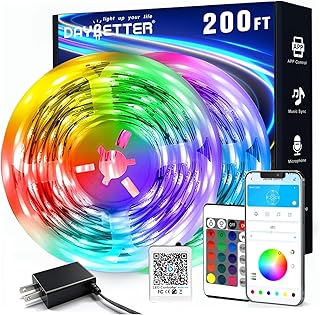
DAYBETTER LED Strip Lights 200ft Smart Control
The DAYBETTER LED Strip Lights offer 200 feet of vibrant, customizable lighting with both app and remote control options. Perfect for enhancing bedrooms, living rooms, kitchens, or parties, these RGB lights feature music sync, multiple lighting modes, and a timer function for convenience. Easy to install with strong adhesive backing, these lights transform any space with dynamic color effects and seamless control.
Key Features:
- Controls via smart app and 24-key IR remote with 16 million color options and multiple lighting modes including flashing, quick, jump, and fade
- Music sync feature changes light colors in time with music through smartphone app
- Timer function with color memory allows automatic on/off scheduling
- 200 feet total length (two 100-foot rolls) suitable for decorating bedrooms, ceilings, kitchens, living rooms, bars, and parties
- Strong adhesive backing for quick and easy installation on clean, dry surfaces
Pros
- Extensive 200 ft length covers large areas
- Multiple control options with app and remote
- Music sync adds fun, dynamic lighting
- Timer function for convenience and energy savings
- Easy installation with strong adhesive
Cons
- Remote control range can be limited in larger rooms
- App connection may occasionally be unstable depending on smartphone compatibility
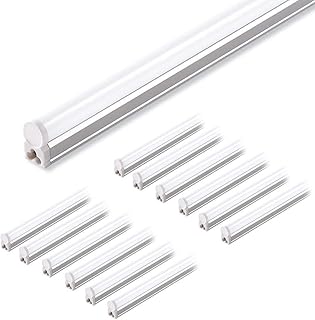
Barrina Pack of 12 LED T5 Shop Light 4FT
The Barrina 4FT LED T5 Shop Light offers bright, energy-efficient lighting with 2200 lumens at just 20W power consumption. Its extendable design allows up to 8 lights to be connected in series, making it ideal for various spaces like garages, basements, and workbenches. This set includes multiple power cords and connectors for flexible installation, providing convenient plug-and-play setup and reliable performance for your general lighting needs.
Key Features:
- High brightness with 2200 lumens output at low 20W power consumption
- Up to 8 lights can be connected in series using 47-inch connecting cords
- Includes 6 power cords (59 inches each) with on/off switches for easy control
- Suitable for garages, basements, workbenches, storage areas, cabinets, and offices
- Package contains 12 LED shop lights, power cords, connector cables, hardwires, small connectors, and installation accessories
- ETL listed for safety and quality assurance
- Not compatible with motion sensors to avoid reducing lifespan
Pros
- Bright and efficient lighting with low energy use
- Flexible installation with extendable connection options
- Complete kit with cords and installation hardware included
Cons
- Not compatible with motion sensors
- Requires new male-female connector cables for mixing with older models
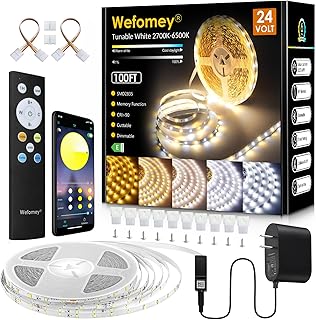
White LED Strip Lights 100ft Dimmable with App Control
The Wefomey White LED Strip Lights offer a 100-foot length of bright, dimmable lighting with 1440 high-quality 2835 LEDs. Designed for versatile use in bedrooms, kitchens, living rooms, and ceilings, these lights provide adjustable color temperatures ranging from warm 2700K to cool 6500K. Controlled easily via Bluetooth app or RF remote, they include safety features like a UL-listed 24V adapter and short circuit prevention. The strip's self-adhesive backing and included mounting screws simplify installation, while the cuttable design allows custom lengths for DIY projects.
Key Features:
- 100 feet long strip with 1440 bright 2835 LEDs
- Adjustable color temperature from 2700K to 6500K and dimmable brightness
- Controlled via Bluetooth app or RF remote with timer and group control
- UL-listed 24V power adapter with built-in short circuit protection
- Self-adhesive backing and included screws for easy installation
- Cuttable design for customizable length
- Includes 24V24W power adapter, RF remote, connectors, and mounting brackets
Pros
- Extra long 100ft strip covers large areas effectively
- Wide color temperature range from warm to cool white
- Multiple control options including app and remote
- Safe to use with certified power supply and low heat output
- Easy installation with adhesive backing and mounting hardware
Cons
- Remote batteries not included
- Requires testing before final installation to ensure proper function
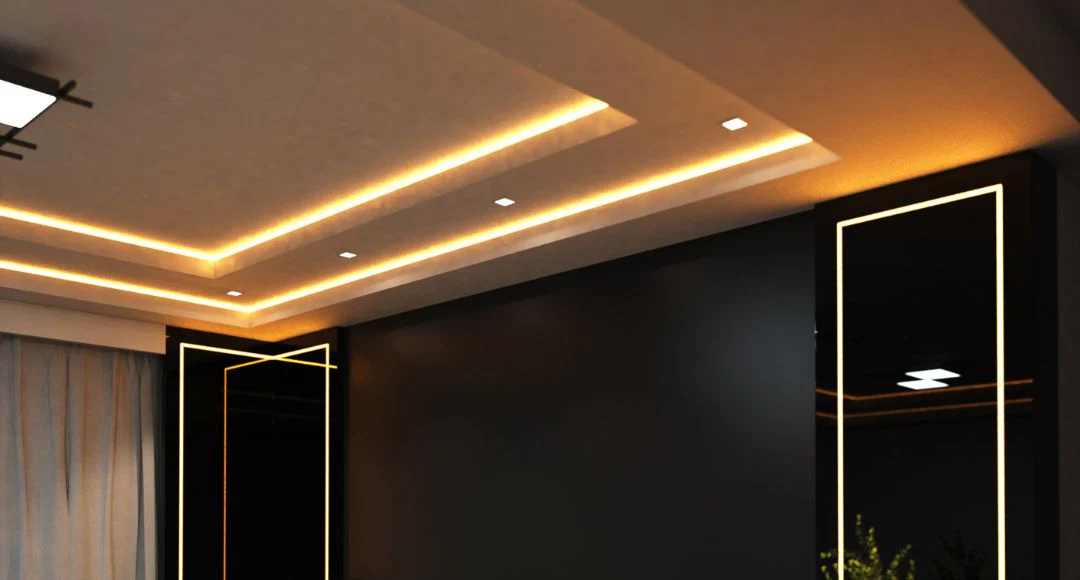
Let's Talk Ceiling Glow: Why LED Strips Are a Game-Changer
By the way, Once you start seeing a room softly lit by LED strip lights tucked into a ceiling recess, it's hard to go back. That gentle wash of color or crisp white illumination feels so much more refined than a bare bulb dangling from a socket.
Imagine walking into your living room, looking up at a halo of light that perfectly accentuates crown molding, or sliding into bed under a soft, customizable glow that matches your late-night reading mood. Sounds cozy, right? Let me explain how to get there.
One Small Detail, Big Impact: Benefits of Ceiling LED Strip Lights
- Even Illumination: No harsh shadows or hot spots. LED strips deliver continuous light along ceilings or coves.
- Energy Savings: LEDs sip power, sometimes as little as 5 to 10 watts per meter, yet they still shine bright.
- Color Play: Fancy dialing in any shade from cool daylight to cozy amber? RGB and tunable white options have you covered.
- Slim & Flexible:
Reviews you may find interesting:
14 Best 48-Inch LED Light Fixtures (2026 Review Guide)
20 Best LED Fence Lights (2026 Review Guide)
8 Best Motion Sensor Garage Lights (2026 Review Guide)
Stick them into tight cornices, around beams, or inside plaster reveals. They bend, they curve, they go wherever you need them. - Smart Controls: Tap an app, set timers, even sync with your favorite playlist. LED tech has come a long way since you last checked.
Okay, But How Do I Choose the Right Strips?
Here's the thing: not all strip lights are created equal. A couple of key specs will guide you toward the perfect fit for your ceiling:
1. Brightness & Light Quality
LED power is usually measured in lumens per foot (or meter). If you're looking for a gentle accent, 100, 200 lm/ft might do. Craving a more practical task light around a home office or kitchen island? Aim for 400+ lm/ft. Also check the Color Rendering Index (CRI): higher than 80 ensures colors look natural.
2. Color Options
Single-tone white strips are great for minimalist vibes, while RGB or RGBW kits let you switch between hundreds of colors. Ever tried a soft pink glow for a movie night? Trust me, it's a vibe.
3. Length & Segmentation
Measure your ceiling run carefully. Most strips can be cut at marked points every 2, 3 inches. Planning a wrap-around cove? Make sure you have enough reel length and that connectors are compatible.
4. Power Supply & Voltage
Most household LED strips run on 12V or 24V low-voltage systems, safer and less heat. Just match the strip's voltage to an appropriate transformer or power adapter. Pro tip: buy a slightly higher wattage PSU than you need so it doesn't run at 100% capacity all the time.
5. Adhesive & Mounting
Cheap strips sometimes have weak backing that peels off after a week. Look for industrial-grade 3M tape or aluminum channels that double as heatsinks, and they look snazzy, too.
6. Control Methods
Remote control is old news, you've got apps, voice assistants, and even motion sensors. Think about how you want to operate your ceiling glow: manual switch, phone tap, or an automatic schedule.
Prep Work & Installation: Make It Seamless
Here's a small secret: a flawless LED ceiling is all about planning. Get your tape measure out. Sketch a simple ceiling map. Mark where your power feed will enter. Map the strips in straight runs if you can, that way, cuts and connectors are minimal.
Step-by-Step Guide
- Clean the Surface: Wipe away dust and grease. Adhesive loves a good, clean surface.
- Dry-Fit the Strips: Lay them out without sticking to check length, corners, and connector placement.
- Cut at Marked Points: Use sharp scissors. Avoid slicing the copper pads out by mistake.
- Attach Connectors: Snap on quick-lock clips or solder wires if you're feeling adventurous.
- Stick or Channel: Peel the backing and press firmly, or slide into an aluminum U-profile for extra rigidity and a polished look.
- Wire Up: Connect to the transformer. Match positive to positive and negative to negative. Labeling wires during dry-fit helps big time.
- Test & Tuck: Power on before sealing everything. Once you're happy, hide cables behind molding or inside raceways.
Design Ideas That Make Heads Turn
Light isn't just functional, it's the seasoning on the dcor dish. Here are some playful ways to use ceiling LED strips:
- Cove Lighting: Nestle strips inside recessed ledges for a floating-ceiling effect.
- Perimeter Glow: Frame your room like a picture. Perfect for game rooms or media centers.
- Pattern Play: Zigzag, wave, or custom stencil cutouts letting light spill through, ideal for modern lofts.
- Seasonal Switch-Up: Cozy orange in fall, merry red and green at Christmas, or playful pastels for spring.
Keep It Safe & Lasting
Even low-voltage LEDs carry current, so a few safety pointers:
- Don't overload your transformer, stick within its wattage limit.
- Keep connections dry, especially in bathrooms or near HVAC vents.
- Allow strips to vent. If you mount inside airtight channels, heat can build up and shorten LED life.
- Clean gently, dust builds up and dims the glow. A microfiber cloth is your best friend.
Smart Features to Amp Up Your Ceiling
Fancy syncing lights to a song's beats? Or maybe you want a sunrise wake-up routine that mimics natural dawn? Modern LED controllers can do all that, plus geofencing so lights come on when you arrive home.
Think of it like having a lighting butler: it knows your habits, sets the mood, and can even flash red if your gaming team scores a victory. Alright, maybe that last one's niche, but hey, possibilities are endless.
Wrapping It Up: Light Your Ceiling, Lift Your Mood
So there you have it. From picking the right brightness to hiding every last wire, installing ceiling LED strips is a weekend project that pays off every evening. It's casual enough for a cozy hangout and sharp enough to impress guests.
go ahead, sketch that ceiling cove on paper. Measure twice, maybe even thrice. Because when you flip that final switch and see your ceiling come alive, it's a little bit magical. Trust me, you'll never look up the same way again.