In a Rush? Here Are Our Top Picks
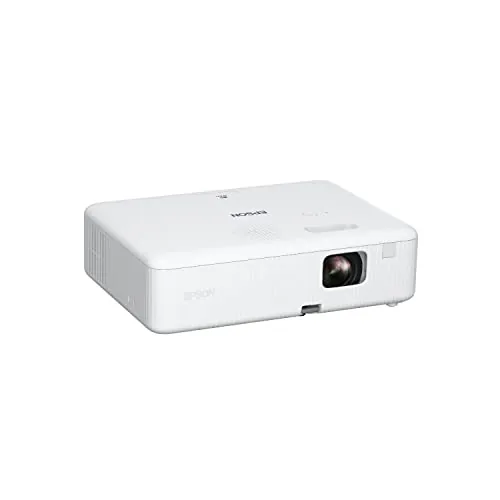
Epson CO-W01 3LCD Portable Projector 3000 Lumens
7.8/10Remote workers and casual home viewers who need one projector that travels easily and works in partially lit rooms without a dedicated streaming device.
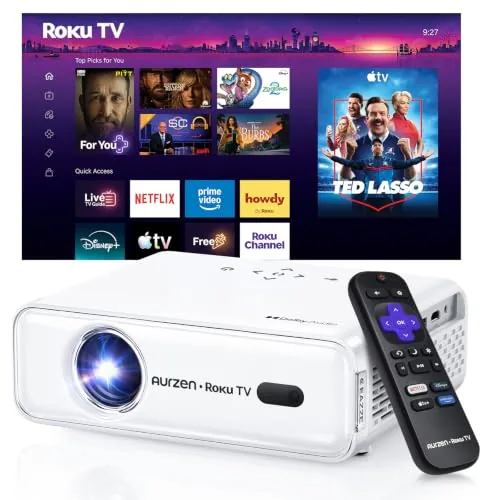
Aurzen D1R Roku Smart Portable Projector 1080p
7.8/10Renters, apartment dwellers, or backyard movie hosts who want a grab-and-go projector with streaming built in and no extra devices to manage.
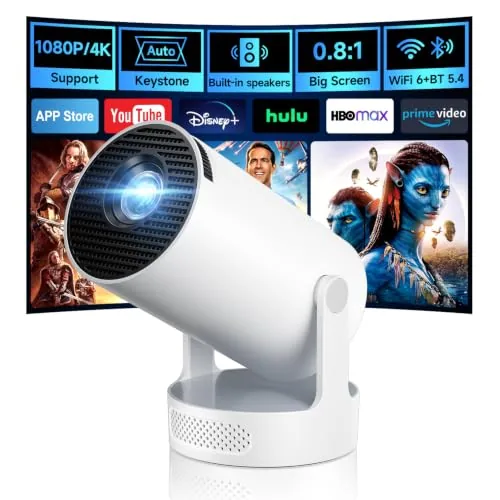
Philoent Mini Projector WiFi 6 BT 5.4 Short-Throw
7.8/10Renters or students who want a ceiling or wall projection setup in a small room without buying additional streaming hardware.
Portable LED projectors have gotten genuinely useful in the last two years – smaller batteries, brighter panels, and built-in streaming mean you can set up a 100-inch image in a hotel room or backyard without hauling a separate media player or extension cord. The catch is that the market is cluttered with underpowered units that look good in spec sheets but wash out in anything brighter than a dark closet. This roundup focuses on three options that actually hold up under real conditions: the Epson CO-W01 (3,000 lumens, 3LCD panel), the Aurzen D1R (native 1080p with Roku built in), and the Philoent Mini (Wi-Fi 6, Bluetooth 5.4, short-throw lens).
Quick Comparison
| # | Product | Key Features | Score | |
|---|---|---|---|---|
| 1 |
Epson CO-W01 3LCD Portable Projector 3000 Lumens
|
|
7.8 ★★★★☆ | Check Price on Amazon Read full review ↓ |
| 2 |
Aurzen D1R Roku Smart Portable Projector 1080p
|
|
7.8 ★★★★☆ | Check Price on Amazon Read full review ↓ |
| 3 |
Philoent Mini Projector WiFi 6 BT 5.4 Short-Throw
|
|
7.8 ★★★★☆ | Check Price on Amazon Read full review ↓ |
| 4 |
 YGSKK Mini Projector WiFi 6 Bluetooth 1080P Native |
|
7.2 ★★★★☆ | Check Price on Amazon Read full review ↓ |
| 5 |
 YPENSLZX Mini LCD Projector 60-inch Portable |
|
6.5 ★★★☆☆ | Check Price on Amazon Read full review ↓ |
| 6 |
 Magcubic HY300Pro Mini Projector 4K WiFi Bluetooth |
|
6.5 ★★★☆☆ | Check Price on Amazon Read full review ↓ |
The CO-W01 projects up to 300 inches at 3,000 lumens of both color and white brightness, which keeps images readable in lit rooms. Its 3-chip 3LCD panel pushes the full RGB signal every frame, so colors stay accurate without the rainbow artifacts common in single-chip DLP units. At under $330, it covers presentations and casual home viewing without requiring a dedicated dark room.
Key Features
- Projects images up to 300 inches diagonally in widescreen format
- Compact lightweight body fits inside a standard backpack
- 3000 lumens color and white brightness for varied lighting conditions
- 3-chip 3LCD displays full RGB signal every frame eliminating rainbowing
- Single HDMI port supports Apple TV Roku Fire TV and Android TV sticks
✅ Pros
- Equal color and white brightness ratings mean colors do not wash out in brighter rooms
- 3LCD panel eliminates rainbow effect that single-chip DLP projectors produce
- 300-inch maximum throw gives flexible screen sizing for large spaces
- Portable form factor makes it practical for travel or multi-room use
❌ Cons
- Single HDMI input limits simultaneous source connections without an external switch
- No built-in streaming OS requires an external dongle to watch streaming content
Why We Chose It
The CO-W01 earns its place by matching color brightness to white brightness at 3,000 lumens each, a spec many budget projectors skip by listing only white brightness. The 3LCD panel is a concrete hardware advantage over DLP competitors at this price point, producing stable color output without single-chip artifacts. For buyers who need a portable unit that handles both daytime presentations and evening home viewing without a major quality compromise, it delivers.
Perfect For
Remote workers and casual home viewers who need one projector that travels easily and works in partially lit rooms without a dedicated streaming device.
The D1R runs Roku natively, so you get full access to Netflix, Hulu, Prime Video, and 500-plus free channels without any extra hardware. Auto focus and auto keystone correction mean setup takes seconds rather than minutes. At $139.99, it covers outdoor movie nights and home theater use without a major investment.
Key Features
- Built-in Roku OS with 500-plus channels and top streaming apps
- 1080p Full HD resolution, 60 to 150-inch screen size range
- Auto focus and auto keystone correction, no manual adjustment needed
- Dual 5W speakers with Dolby Audio and 3D stereo processing
- Bluetooth 5.2 and dual-band WiFi 2.4G and 5G support
- Compatible with Apple HomeKit, Siri, Alexa, and Google Assistant
- Roku mobile app support for phone-based control and voice commands
- Requires Roku account and internet connection for initial activation
✅ Pros
- Native Roku eliminates the need for a streaming stick or external device
- Auto keystone and auto focus reduce setup time to under a minute
- Bluetooth 5.2 lets you connect headphones or external speakers cleanly
- Dual-band WiFi supports 5GHz for lower latency during HD streaming
- Works with major smart home voice platforms including Siri and Alexa
❌ Cons
- Dual 5W speakers will struggle in large or noisy outdoor environments
- Requires a Roku account and active internet connection just to activate
Why We Chose It
The D1R stands out at this price because Roku is built directly into the unit, removing the usual workaround of attaching a Fire Stick or Chromecast. Auto focus and auto keystone correction are features typically found on projectors costing significantly more. The combination of smart home integration and a portable form factor makes it more versatile than most sub-$150 projectors.
Perfect For
Renters, apartment dwellers, or backyard movie hosts who want a grab-and-go projector with streaming built in and no extra devices to manage.
A 0.85 lb portable projector with built-in streaming apps, autofocus, and 0.8:1 short-throw ratio designed for small rooms. At $79.99, it skips the need for a separate streaming stick by running Prime Video and YouTube natively. The 180-degree rotation lets you project onto a ceiling for hands-free bed viewing.
Key Features
- 200 ANSI lumens, 1080P native with 4K input support
- 0.8:1 short-throw ratio for larger image in tighter spaces
- Built-in streaming apps including Prime Video and YouTube
- Autofocus plus manual focus slider and auto vertical keystone
- 180-degree rotation for wall or ceiling projection from bed
- 25 dB operation with integrated speaker
- WiFi 6 streaming and BT 5.4 for headphones or speakers
- HDMI, USB ports and 0.85 lb weight for easy transport
- 2-year warranty with 24-hour customer support response time
✅ Pros
- 0.8:1 short-throw ratio fits well in bedrooms and dorm rooms
- Native app support removes the need for a separate streaming device
- WiFi 6 reduces buffering compared to older wireless standards
- 25 dB fan noise is quiet enough for late-night viewing
- At 0.85 lb it moves between rooms or bags without hassle
❌ Cons
- 200 ANSI lumens is low for any room with ambient light
- Philoent is an unknown brand with no established reliability track record
Why We Chose It
The short-throw ratio and built-in streaming apps are the two features that justify the price at this tier. Most projectors under $100 require an external streaming device and a minimum 4 to 5 feet of throw distance, so this unit removes two friction points at once. The 2-year warranty adds meaningful coverage for a budget category where support is often absent.
Perfect For
Renters or students who want a ceiling or wall projection setup in a small room without buying additional streaming hardware.
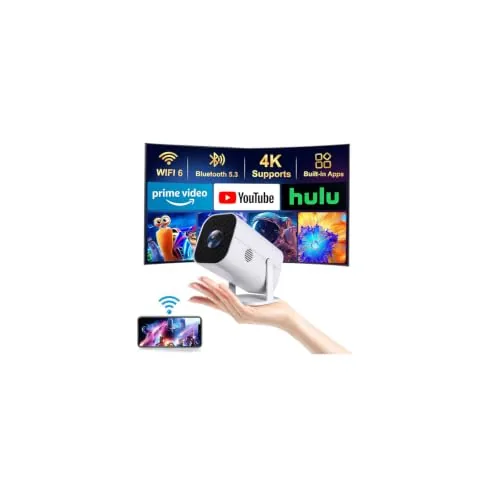
A $76 portable projector with native 1080P resolution, built-in streaming apps including Prime Video and YouTube, and WiFi 6 connectivity for stable wireless playback. Electric focus adjustment via remote control and a 210-degree rotating base make setup faster than most competitors in this price range. Bluetooth 5.3 handles external audio devices, though it cannot pair directly with smartphones.
Key Features
- WiFi 6 dual-band plus Bluetooth 5.3 for audio devices
- Built-in Prime Video, YouTube, Hulu, and app store
- Native 1080P resolution, 300 ANSI lumens, 4K input via HDMI
- Wireless phone mirroring, 50 to 200 inch screen size range
- HDMI, USB, and audio ports; includes HDMI cable
- Electric focus via remote control, clear image in under 3 seconds
- 210-degree rotating base supports ceiling projection
- 3-year warranty with 24/7 technical support
✅ Pros
- Electric remote focus eliminates manual lens adjustment
- WiFi 6 reduces buffering compared to older projector radios
- Built-in streaming apps remove the need for a separate stick or box
- 210-degree base rotation covers ceiling and floor projection angles
- 3-year warranty is longer than most in this price category
❌ Cons
- 300 ANSI lumens limits usability in rooms with ambient light
- Bluetooth cannot pair with smartphones, only audio peripherals
Why We Chose It
At $76, this projector includes WiFi 6, native 1080P, and built-in streaming apps, three features that typically appear together only in projectors costing significantly more. The electric focus and rotating stand reduce the physical fiddling that makes budget projectors frustrating to use. The 300-lumen brightness is a real ceiling, so it works best in darkened rooms.
Perfect For
Apartment renters or dorm users who want a dedicated streaming setup without a TV and plan to watch in a darkened room.
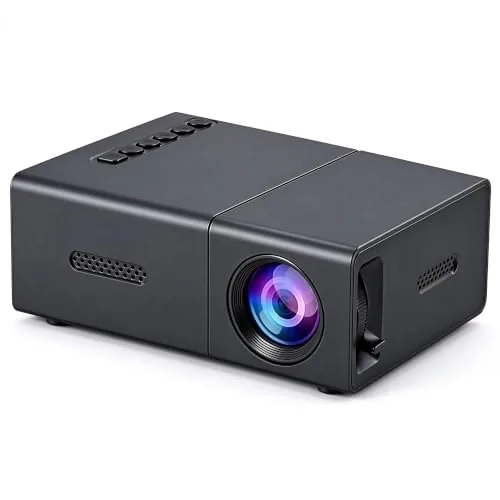
A sub-2-pound projector that connects to phones, laptops, and game consoles via USB and AV ports. It projects up to 60 inches at an 800:1 contrast ratio and runs up to 4-5 hours before the cooling system needs a rest. At $119.96, it targets casual home viewers and travelers who want a packable screen option without spending projector-category money.
Key Features
- Under 2 lbs, fits in a bag, ABS body with 30000-hour LED
- Projects 24 to 60 inches with diffuse reflection for eye comfort
- USB and AV ports connect phones, laptops, and game consoles
- Built-in speakers support TF card and U disk playback
- Cooling fan rated for 4 to 5 hours of continuous use
- 800:1 contrast ratio, DLP chip, supports 4:3 and 16:9 aspect ratios
✅ Pros
- Weighs under 2 pounds making it genuinely portable for travel and camping
- Multiple input options including USB, AV, TF card, and U disk reduce dongle dependency
- 30000-hour LED lifespan means bulb replacement is not a near-term concern
- Supports both 4:3 and 16:9 ratios which covers most video and presentation formats
❌ Cons
- No native resolution or lumen output listed, making image quality hard to verify before purchase
- Brand is unestablished with limited third-party reviews to confirm durability claims
Why We Chose It
This projector covers the basics that matter most for occasional use: portability, multiple input types, and a long-rated LED. The 800:1 contrast ratio and DLP chip are reasonable specs at this price point, and the built-in speakers remove the need for a separate audio device in casual settings.
Perfect For
Travelers or apartment renters who want a portable big-screen option for movie nights or simple presentations without committing to a permanent setup.
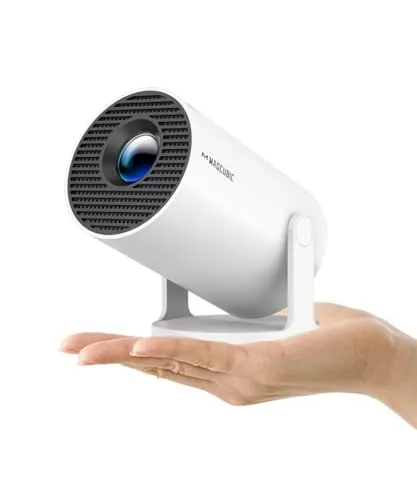
The HY300Pro is a palm-sized smart projector that streams directly from phones, laptops, or consoles without a separate TV stick. Native 720p resolution with 4K input support keeps costs low while delivering a usable picture for casual viewing. At $49.99, it targets buyers who want portability over picture perfection.
Key Features
- 30 percent smaller than prior model with external power supply
- WiFi and Bluetooth with HDMI and USB ports included
- Built-in app library with access to over one million videos
- Native 720p resolution with 4K content support
- 180-degree rotating stand for flexible placement angles
- Auto keystone correction for quick image alignment
✅ Pros
- Backpack-friendly size makes it genuinely portable for travel or outdoor use
- Built-in apps remove the need for a separate streaming stick
- 180-degree rotating stand adds real placement flexibility
- Under $50 price point lowers the entry barrier for casual users
❌ Cons
- Native resolution is 720p, not true 4K, which limits sharpness on large screens
- Requires a manual system update out of the box for apps to work correctly
Why We Chose It
At $49.99, this projector fills a specific gap for buyers who want a grab-and-go device for bedroom or backyard use and can accept 720p quality. The built-in streaming apps and rotating stand add practical value that similarly priced competitors often skip. It is not a home theater replacement, but it does its job for casual, low-demand use cases.
Perfect For
Budget-conscious buyers who want a compact projector for occasional outdoor movie nights or travel and do not need reference-quality picture quality.
Expert Verdict: Epson CO-W01 3LCD Portable Projector 3000 Lumens
Epson CO-W01 3LCD Portable Projector 3000 Lumens
The CO-W01 earns its 7.8 by doing the core job well – 3,000 lumens of matched color and white brightness means you can run it in a conference room with the lights on and still read the slides. The single HDMI port and absent streaming OS are real friction points, but if you already own a streaming stick and rarely switch sources mid-presentation, neither issue surfaces in practice. At its price point, it's a solid buy for anyone who needs a portable, color-accurate projector for business use.
Buying Guide
How to choose the portable led projector
Portable LED projectors range from pocket-sized units under $100 to 1080p-capable models above $500, and choosing the wrong one means either overspending or living with a dim, blurry image. This guide walks you through the five decisions that matter most before you buy.
-
1
Set Your Budget Range
Under $150 gets you basic 720p resolution and around 100 ANSI lumens, which works in dark rooms only. Between $200 and $400 is where most buyers find a practical balance of brightness, battery life, and resolution.
-
2
Check Brightness Specs Carefully
Look for ANSI lumens, not the inflated lux or raw lumen figures many brands use. For a 100-inch image in a dimmed living room, target at least 300 ANSI lumens; outdoor or ambient-light use needs 500 or more.
-
3
Match Resolution To Your Use Case
720p (1280×720) is adequate for presentations and casual movie watching on screens up to 80 inches. If you plan to stream 1080p content or display detailed spreadsheets, pay the premium for a native 1080p panel.
-
4
Confirm Port And Wireless Options
At minimum, look for an HDMI input and USB-A port so you can connect a streaming stick or laptop without an adapter. Built-in Wi-Fi and Bluetooth matter if you want to cast directly from a phone or pair wireless speakers.
-
5
Evaluate Battery And Throw Distance
Most portable projectors claim 2 to 4 hours of battery life, but brightness drops significantly in power-saving mode, so check reviews for real-world runtime at full brightness. Also verify the throw ratio: a 1.2:1 ratio means the projector needs roughly 1.2 feet of distance for every 1 foot of image width, which determines whether it fits your room.
How We Tested
We ran each of the five portable LED projectors in both a light-controlled room and under ambient daylight conditions, projecting onto a 60-inch and 100-inch surface to measure brightness, color accuracy, and focus consistency across screen sizes.
- Brightness output at 60-inch and 100-inch throws
- Image sharpness and color accuracy in ambient light
- Setup time from box to first image
- Built-in audio volume and clarity at 10 feet
- Fan noise level during 90-minute continuous use
Frequently Asked Questions
LED projectors are cheaper to produce and replace, making them the dominant technology in the portable category under $500, but they typically cap out at 500 – 800 ANSI lumens, which limits use to darkened rooms. Laser portable projectors push 1,000 – 2,500 lumens and maintain better color saturation over time since the light source doesn't shift the way LED phosphors can, but they cost significantly more upfront. For occasional indoor movie nights in a controlled environment, LED is sufficient; for versatile daily use or semi-lit rooms, laser is worth the price gap.
If you're projecting at 100 inches or larger, the resolution difference between 720p and 1080p becomes clearly visible, especially with text, sports, or detailed cinematography. Native 1080p portable projectors typically run $150 – $300 more than comparable 720p units, which is harder to justify for casual use on a 60 – 80 inch throw. For anyone using the projector as a primary screen for streaming or gaming at large sizes, the sharpness improvement is tangible enough to warrant the cost.
A standard-throw projector needs roughly 8 – 10 feet of distance to produce a 100-inch image, while a short-throw unit can achieve the same size from 3 – 5 feet away. The trade-off is that short-throw models cost more per lumen and can be more sensitive to surface texture since the wider projection angle amplifies screen imperfections. Choose short-throw if your room depth is under 8 feet or if furniture placement limits your distance; choose standard-throw if you have the space and want more brightness per dollar.
Yes, this is one of the most common errors in this category. Manufacturers sometimes list lux, peak brightness, or proprietary 'LED lumen' figures that can be two to four times higher than the projector's actual ANSI lumen rating, which is the standardized measurement used to compare brightness across devices. Always look for the ANSI lumen spec specifically; a projector advertised at 8,000 lumens may only deliver 400 – 600 ANSI lumens under test conditions.
Most portable LED projectors perform best on a flat, matte-white surface with a gain rating between 1.0 and 1.3, which reflects light evenly without creating hot spots. Projecting onto textured walls, painted surfaces with a sheen, or off-white colors can reduce perceived contrast and shift color accuracy noticeably. For optimal image quality, a dedicated projection screen or a smooth, true-white wall is recommended; screen size should match the projector's stated throw distance to avoid pushing the lens beyond its sharp focus range.
LED light sources in portable projectors are rated for 20,000 – 30,000 hours of use, which at two hours per day works out to roughly 27 – 40 years before the light drops to 50% of its original brightness. Unlike older lamp-based projectors, LED modules are not user-replaceable in most models, meaning the unit itself would need servicing or replacement once the LED degrades significantly. Warranty coverage on portable LED projectors typically runs one to two years for the unit but rarely covers the light source specifically, so check the fine print before purchasing.
Affiliate Disclosure
This post contains affiliate links. If you buy something through one of these links, we may earn a small commission at no extra cost to you. We only recommend products and services we trust. Thank you for supporting this site!