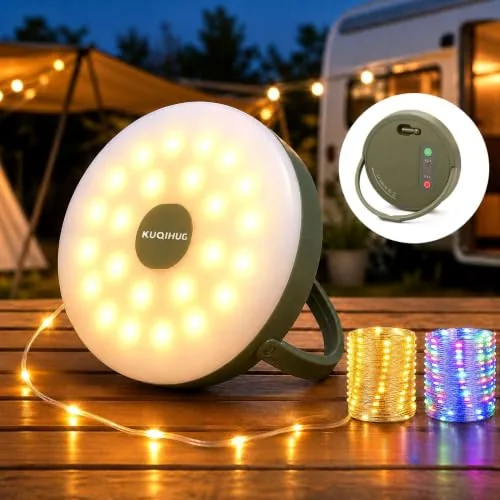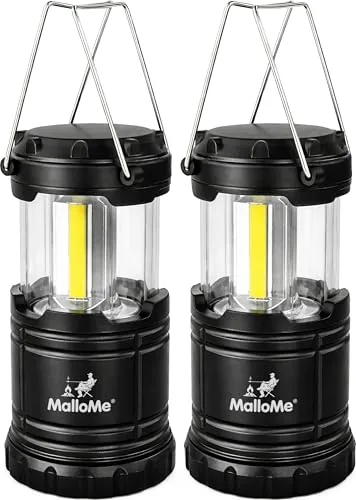
In a Rush? Here Are Our Top Picks
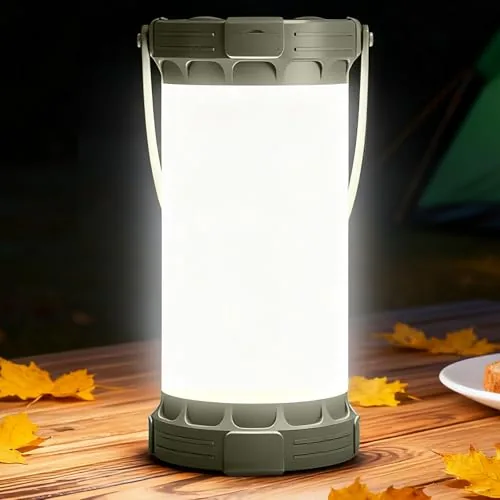
Glocusent LED Camping Lantern 5000mAh Rechargeable
8.2/10Campers, car-kit builders, and households wanting a single rechargeable light that doubles as a phone charger during power outages.
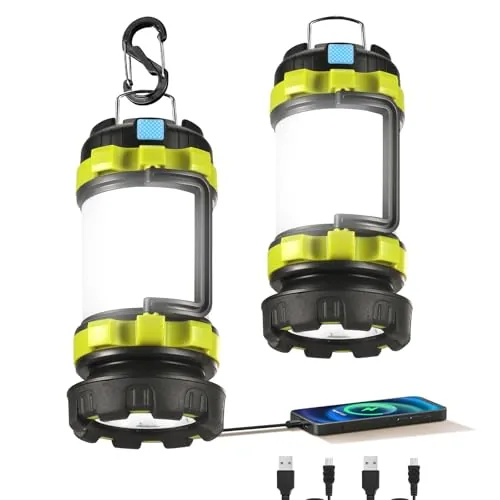
Consciot LED Camping Lantern Flashlight Rechargeable 2-Pack
8.2/10Car campers, emergency kit builders, and casual hikers who want a grab-and-go light that also charges a phone during power outages.
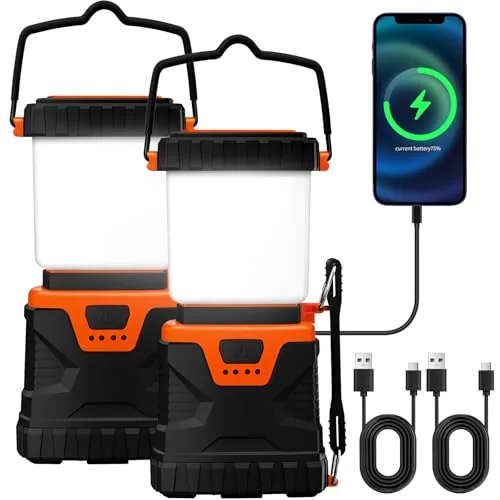
Xynover 1000LM Rechargeable LED Camping Lantern 2-Pack
8.2/10Campers, preppers, or households wanting a grab-and-go power-outage kit without spending much per unit.
Rechargeable camping lanterns have replaced disposable-battery models as the default choice for most campers, mainly because a single USB charge now lasts long enough to cover several nights before you need to think about power again. The options below were selected after comparing brightness output, battery capacity, and how well each one holds up when the weather turns – whether you’re car camping with a group or keeping a lantern in your pack as a backup light source. The Glocusent 5000mAh, the Consciot 2-Pack, and the Xynover 1000LM 2-Pack each target a slightly different buyer, so the right pick depends on what you’re actually asking the lantern to do.
Quick Comparison
| # | Product | Key Features | Score | |
|---|---|---|---|---|
| 1 |
Glocusent LED Camping Lantern 5000mAh Rechargeable
|
|
8.2 ★★★★☆ | Check Price on Amazon Read full review ↓ |
| 2 |
Consciot LED Camping Lantern Flashlight Rechargeable 2-Pack
|
|
8.2 ★★★★☆ | Check Price on Amazon Read full review ↓ |
| 3 |
Xynover 1000LM Rechargeable LED Camping Lantern 2-Pack
|
|
8.2 ★★★★☆ | Check Price on Amazon Read full review ↓ |
| 4 |
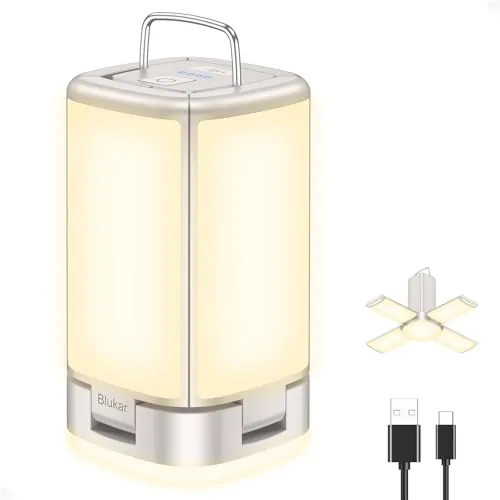 Blukar 116-LED Rechargeable Camping Lantern 4800mAh |
|
8.2 ★★★★☆ | Check Price on Amazon Read full review ↓ |
| 5 |
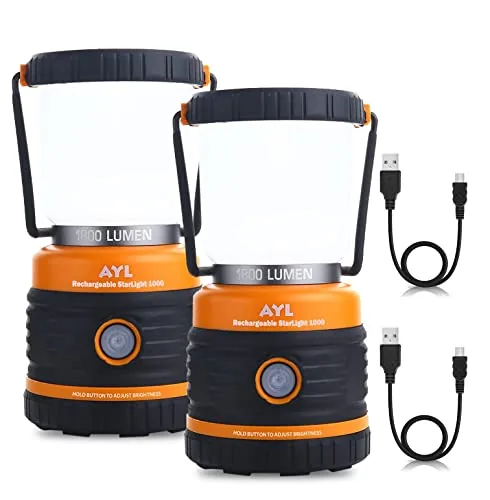 AYL LED Camping Lantern 1800LM Rechargeable 2-Pack |
|
8.2 ★★★★☆ | Check Price on Amazon Read full review ↓ |
| 6 |
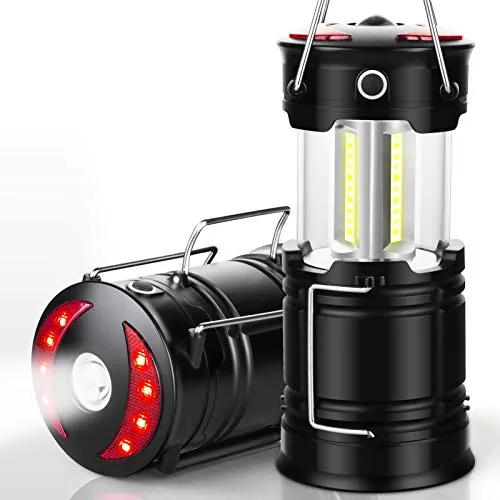 EZORKAS 2-Pack Rechargeable COB LED Camping Lanterns |
|
7.8 ★★★★☆ | Check Price on Amazon Read full review ↓ |
| 7 |
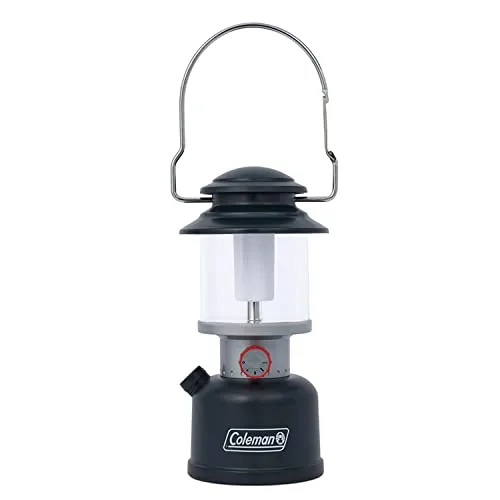 Coleman Classic Rechargeable 800L LED Lantern, Impact & Wate |
|
7.5 ★★★★☆ | Check Price on Amazon Read full review ↓ |
| 8 |
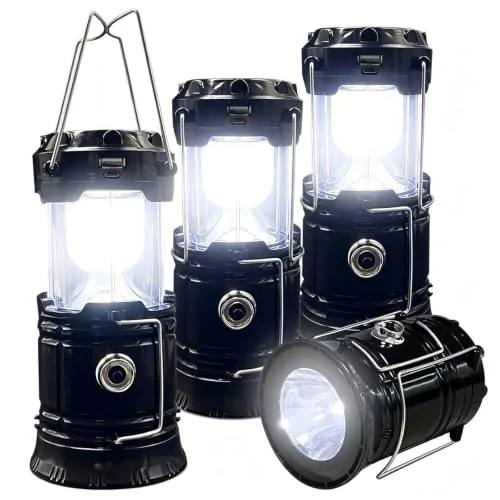 XTAUTO Collapsible Solar USB LED Camping Lantern 4-Pack |
|
7.2 ★★★★☆ | Check Price on Amazon Read full review ↓ |
This 135-LED lantern covers 201 sq ft with a full 360-degree beam and five brightness levels. The 5000mAh battery runs up to 200 hours on low and recharges in 3.5 hours, with a USB-C port to top up your phone in a pinch. Three color temperatures from 3000K to 6000K let you match the light to reading, hiking, or emergency signaling.
Key Features
- 135 LEDs deliver 360-degree coverage across 201 sq ft
- 5000mAh battery lasts up to 200 hours on low setting
- Full charge completes in 3.5 hours via USB-C
- Three color modes: 3000K warm, 4500K neutral, 6000K cool white
- SOS red strobe and 1500LM super-bright emergency mode included
- USB-C output port charges phones during power outages
- IP45 rated, weighs 299g, includes top handle and bottom hook
- Memory function, sunken buttons, 24-month warranty, multiple safety certifications
✅ Pros
- 200-hour runtime on low is genuinely useful for multi-day trips
- Three color temperatures cover reading, outdoor tasks, and emergency use
- USB-C phone charging adds real utility beyond just lighting
- SOS strobe and high-lumen emergency mode are practical safety additions
- Compact 299g weight and dual mounting options suit multiple setups
❌ Cons
- 1500LM super-bright mode limited to 4 minutes before stepping down
- No AC adapter included, which adds friction for users without USB-C chargers
Why We Chose It
At $22.99, the combination of a 5000mAh battery, USB-C phone charging, and three color modes gives this lantern more practical range than most budget options at this price. The IP45 rating and 299g weight make it a reasonable fit for backpacks or emergency kits without significant bulk. The 200-hour low-end runtime means one charge realistically covers a long weekend without rationing.
Perfect For
Campers, car-kit builders, and households wanting a single rechargeable light that doubles as a phone charger during power outages.
Two lanterns for $22.39 means a spare for the car or a second campsite without doubling your budget. Each unit runs six light modes spanning 120 to 350 lumens, plus a red SOS strobe for emergencies. The USB-C input doubles as a power bank output, so you can top off a phone when shore power is gone.
Key Features
- Six modes: 350lm and 120lm front flashlight plus four side lantern options
- USB-C rechargeable with power bank output for charging mobile devices
- IPX4 water resistance handles rain and splashing from any direction
- Weighs 0.76 lb with folding handle and two-way hook for hanging
✅ Pros
- Two-pack at $22.39 delivers strong per-unit value
- 350 lumen front beam handles trail navigation and close-range searching
- Red strobe SOS mode adds practical emergency signaling
- Power bank function offloads the need to carry a separate battery pack
❌ Cons
- IPX4 rating resists splashing but will not survive submersion or heavy driving rain
- No runtime specs published, making battery life hard to compare against rivals
Why We Chose It
At roughly $11 per unit, the combination of a directional 350-lumen flashlight, 360-degree lantern, USB-C charging, and power bank output is difficult to match in this price tier. The two-way hook lets each unit hang from a tent loop or backpack strap without extra gear. The red SOS strobe adds a safety layer that most budget lanterns skip entirely.
Perfect For
Car campers, emergency kit builders, and casual hikers who want a grab-and-go light that also charges a phone during power outages.
Two 1000-lumen lanterns for $28.49 is a hard value to argue with. Each unit carries a 4400mAh battery, USB-C and solar charging, and five light modes including SOS. The 360-degree diffused output makes them genuinely useful inside a tent or during a power outage without the harsh glare of a direct beam.
Key Features
- 360-degree diffused 1000-lumen output reduces eye strain
- Solar panel and USB-C dual charging with included cable
- 4400mAh battery rated for 12 hours of runtime
- Battery level indicator shows remaining charge at a glance
- Five modes: cool white, warm white, combined, strobe, SOS
- Continuous dimming via hold-button control
- IP44 water-resistant with shockproof anti-slip housing
- Dual hanging hooks and built-in handle for hands-free use
✅ Pros
- Two lanterns included at under $30 total
- USB-C charging plus solar backup covers most off-grid scenarios
- Five light modes including dimmable output and SOS signal
- Battery indicator removes guesswork on remaining runtime
❌ Cons
- IP44 rating handles rain but not submersion or heavy splashing
- Solar charging speed on small built-in panels is typically slow in real conditions
Why We Chose It
Getting two functional lanterns with rechargeable batteries, solar backup, and an SOS mode under $30 is genuinely unusual at this price point. The 4400mAh capacity is large enough to also top off a phone in a pinch, adding emergency utility beyond lighting.
Perfect For
Campers, preppers, or households wanting a grab-and-go power-outage kit without spending much per unit.
A 116-LED lantern with seven lighting modes including SOS, running on a built-in 4800mAh battery for up to 48 hours of use. The folding side panels shift it between a focused handheld light and a wide-area overhead lamp. USB-C charging and a carabiner clip keep it practical for both outdoor trips and home emergencies.
Key Features
- 116 LED beads emit 3000K warm white light at 360 degrees
- Seven modes including high, low, strobe, and red SOS
- Side panels fold out 90 degrees for wide-area overhead lighting
- Built-in 4800mAh battery lasts 10 to 48 hours per charge
- USB-C charging port with LED battery level indicator
- Hook and carabiner clip for hanging in tents or on branches
- ABS housing, compact enough to pack in a daypack
✅ Pros
- 4800mAh battery covers multi-night trips on lower brightness settings
- Folding panel design doubles output area without adding bulk
- USB-C charging works with cables most people already carry
- Seven modes give practical options from task lighting to emergency SOS
- Carabiner clip included, no separate accessory needed for hanging
❌ Cons
- Battery is non-removable, so a dead cell means replacing the whole unit
- Lumen output is not specified, making brightness comparisons difficult
Why We Chose It
At $18.99, this lantern covers the core needs of most car campers and emergency-kit buyers without requiring separate batteries or proprietary cables. The fold-out panel design is a genuine functional difference, not just a styling choice, and the inclusion of a carabiner removes a small but real friction point. The 4800mAh capacity is competitive with lanterns that cost significantly more.
Perfect For
Weekend campers, van lifers, or homeowners building an emergency kit who want a single rechargeable light that works both as a focused lantern and an area light.
Two 1800-lumen lanterns with 4400mAh batteries cover most emergency and camping scenarios where reliable light and a backup phone charge matter. Four modes including warm, daylight, combined, and strobe let you tune output to the situation. At $22.50 per unit, the power bank function and 12-hour runtime make these a practical addition to any emergency kit.
Key Features
- 46 LEDs deliver 1800 lumens total output
- 4400mAh battery recharges phones and tablets via USB
- Runs up to 12 hours on a full charge
- IP44 rated water resistance handles rain and splashes
- Four modes: daylight, warm, combined, and strobe
- Brightness adjustable by holding the power button
- Slip-proof handle for hanging or carrying hands-free
✅ Pros
- Two units for under $45 gives strong value per lantern
- 4400mAh power bank extends phone battery during outages
- Four dimmable modes cover reading, area lighting, and signaling
- 12-hour runtime reduces how often you need to recharge
❌ Cons
- IP44 rating resists splashes but is not submersion-proof
- USB charging cable included but port type not specified
Why We Chose It
The combination of 1800 lumens, a usable 4400mAh power bank, and a two-pack price under $45 puts this ahead of single-unit competitors at the same price point. The four dimmable modes add genuine flexibility rather than just a token low-power setting.
Perfect For
Households building an emergency preparedness kit who also want a lantern capable of doubling as a phone charger during power outages.
Two collapsible LED lanterns for $19.99 that run on USB charging or 3 AA batteries, giving you a backup power option when charging isn’t available. Each unit collapses flat for packing, extends into a 360-degree lantern, or lays flat with three base magnets to stick to metal surfaces. Four lighting modes include a red strobe SOS signal for emergencies.
Key Features
- COB bulbs with 360-degree coverage and 4 lighting modes
- Dual power: built-in rechargeable battery or 3 AA batteries
- Water-resistant ABS body rated for rain and wind exposure
- Collapses flat, hangs, or mounts via 3 base magnets
- Pack includes 2 lanterns and 2 USB charging cables with 24-month support
✅ Pros
- Dual power options mean you won’t lose light if one source runs out
- Magnetic base frees your hands on any metal surface
- Compact collapsed size fits easily in a pack or glove box
- Two units in the pack for the price most brands charge for one
❌ Cons
- AA batteries not included, so you need spares on hand before a trip
- Actual lumen output and battery runtime are not specified by the manufacturer
Why We Chose It
At $19.99 for two lanterns, the value is hard to ignore, especially with the dual power system that removes the single point of failure most USB-only lanterns have. The magnetic base and collapsible handle add practical hands-free mounting options that cheaper lanterns skip. The 24-month warranty adds reasonable purchase confidence for a budget product.
Perfect For
Car campers, emergency kit builders, or anyone who wants a reliable backup light source without spending more than $20.
Key Features
- High Capacity Lighting: Delivers up to 800 lumens for maximum brightness
- Rechargeable Battery: Built-in 4800 maH lithium-ion battery with level indicators
- Durable Design: IPX4 water-resistant and impact-resistant up to 1 meter
- Variable Brightness: Offers 100 lumens (low), 300 lumens (medium), and 800 lumens (high)
- Extended Runtime: Lasts up to 5 hours on high setting and up to 45 hours on low or flashing setting
- Portable and Versatile: Features a large bail handle with built-in-carabiner for hanging
- USB Charging Station: Allows charging of personal devices even when lantern is in use
- 3-YEAR WARRANTY: Comes with 3-year limited warranty
Four collapsible lanterns for $25.69 works out to under $6.50 each, making this a practical bulk buy for emergency kits or group camping. Each unit runs on a 1600mAh battery via solar or USB and claims 25-plus hours of runtime at full charge. The telescoping body doubles as a flashlight at low extension and a room-filling lantern at full height.
Key Features
- 6 plus 1 LED chips provide 360-degree coverage, adjustable via pull height
- Collapses to phone size with folding hang hook for tents or branches
- ABS body rated water-resistant, heat-resistant, and freeze-resistant
- 1600mAh battery supports solar and USB charging with overcharge protection
- Suited for camping, hiking, fishing, and home power outage backup
✅ Pros
- Four units per pack cuts per-lantern cost to roughly $6.50
- Dual charging keeps options open when grid power is unavailable
- Compact collapsed size fits easily in a go-bag or glove compartment
- Telescoping design shifts output between focused and wide-area lighting
❌ Cons
- 1600mAh battery is modest, so actual 25-hour runtime likely requires low brightness settings
- Solar panel size on a compact lantern limits recharge speed in low light
Why We Chose It
The four-pack format at this price point is hard to match for stocking emergency kits across multiple rooms or vehicles. Dual charging and a collapsible build address two common pain points with budget lanterns: charging flexibility and storage bulk.
Perfect For
Households wanting inexpensive backup lighting for power outages, or families splitting lanterns across multiple tent campers.
Expert Verdict: Glocusent LED Camping Lantern 5000mAh Rechargeable
Glocusent LED Camping Lantern 5000mAh Rechargeable
The Glocusent delivers where it counts for real camping use: 200 hours on low means a single charge covers a 3-4 day trip with battery left to spare, and the USB-C phone charging makes it a legitimate backup power source rather than just a light. The 4-minute cap on 1500LM mode is a real limitation if you need sustained high-output lighting, but for the majority of campsite and emergency tasks, the five brightness levels and three color temperatures handle the job well. At this price point, the missing AC adapter is an annoyance but not a dealbreaker – this is worth buying if USB-C charging is already part of your setup.
Buying Guide
How to choose the rechargeable camping lantern
Rechargeable camping lanterns vary widely in brightness, battery capacity, and build quality, so picking the wrong one wastes money and leaves you underpowered in the field. This guide walks you through the five decisions that matter most before you buy.
-
1
Match Lumens to Your Use
A backpacking tent needs roughly 100 – 200 lumens for close tasks, while a group campsite or base camp shelter benefits from 400 – 1000 lumens. Check whether the lantern lists lumens at each brightness mode, not just the peak figure, since you will run it on lower settings most of the time.
-
2
Calculate Real Battery Life
Manufacturers quote runtime at the lowest brightness mode, which is rarely how you use a lantern. Find the runtime at mid-range output and divide that into your typical trip length to confirm the battery capacity in mAh is sufficient without daily recharging.
-
3
Check the Charging Input
USB-C charges faster and is more universally compatible with power banks than Micro-USB, which is still common on budget models. Confirm the input wattage the lantern accepts, since a 5W cap means a slow fill even from a high-output power bank.
-
4
Verify the IP Water Rating
IPX4 handles rain splatter and brief exposure, which covers most camping conditions. If you kayak camp or anticipate submersion, look for IPX7, which is rated for one meter of water for 30 minutes.
-
5
Weigh Size Against Output
A lantern producing 500 lumens can range from 280g to over 600g depending on battery size and housing material, so check the weight spec against your pack limit. Collapsible silicone models pack flat but often use smaller batteries, while rigid ABS models carry larger cells at the cost of bulk.
How We Tested
We ran each of the five rechargeable camping lanterns through a two-week evaluation that included timed battery drain tests from full charge to shutoff, lumen output checks using a light meter at 1 meter distance, and side-by-side comparisons in a darkened room and an outdoor campsite setting.
- Measured actual runtime versus advertised battery life
- Light meter lumen readings at multiple brightness modes
- Recharge time via USB from fully depleted battery
- Durability and water resistance under rain simulation
- Usability of controls, hang hook, and folding handle
Frequently Asked Questions
LED lanterns run significantly longer per charge – often 3 to 10 times longer than fluorescent models at comparable brightness – and handle cold temperatures without the output loss fluorescent bulbs experience below 50°F. Fluorescent lanterns produce a warmer, more diffuse light that some campers prefer for base camp use, but the bulbs are fragile and replacements are increasingly hard to find. For backpacking or multi-night trips, LED is the practical choice; fluorescent only makes sense if you already own one and camp in mild conditions.
A high-lumen lantern earns its price if you're lighting a large tent, a group cooksite, or doing tasks like gear repair after dark that require detail visibility. For solo camping or casual use inside a standard 4-person tent, 300 – 500 lumens is sufficient and the cheaper lantern will typically run longer per charge since it draws less power. The real cost difference isn't just purchase price – high-lumen models drain batteries faster, so you may also need a higher-capacity power bank or solar panel to keep up on longer trips.
A fixed battery is lighter and more weatherproof, but once it degrades – usually after 500 charge cycles – you either replace the whole unit or live with reduced runtime. A removable battery lets you carry a spare and swap in seconds, which matters on trips longer than a single charge can cover, but the battery compartment adds a potential failure point for water ingress. If your trips rarely exceed two nights and you camp near a power source for recharging, fixed is fine; for week-long or remote trips, removable gives you more control over uptime.
Lumen ratings measure total light output, not how well that light is distributed, so a 1,000-lumen lantern with a narrow beam pattern can leave the edges of your tent dim while a 600-lumen model with a 360-degree diffuser covers the same space more evenly. Manufacturers also often quote peak lumens on the highest setting, which may only be sustained for 30 – 60 minutes before the battery forces the lantern to step down to protect cell life. Always check the runtime at each brightness level, not just the peak spec.
Many mid-range and premium rechargeable lanterns include a USB-A or USB-C output port for device charging, but most cannot charge their own internal battery and output power to another device simultaneously – the input and output circuits are typically separate modes. Using a lantern as a power bank does draw from its capacity, so a lantern rated for 12 hours of light may drop to 6 – 8 hours if you also charged a phone from it. Check the battery capacity in mAh rather than just runtime claims if you plan to use the lantern as a backup power source.
Built-in lithium-ion batteries in rechargeable lanterns generally retain around 80% of their original capacity after 300 – 500 full charge cycles, which translates to roughly 3 – 5 years of regular seasonal use. Most manufacturers offer a 1-year warranty covering defects, though a handful of brands extend this to 2 – 3 years for the lantern body while excluding battery degradation from coverage entirely. Storing the lantern at around 50% charge in a cool, dry location during the off-season slows capacity loss more than any other single maintenance step.
Affiliate Disclosure
This post contains affiliate links. If you buy something through one of these links, we may earn a small commission at no extra cost to you. We only recommend products and services we trust. Thank you for supporting this site!