In a Rush? Here Are Our Top Picks
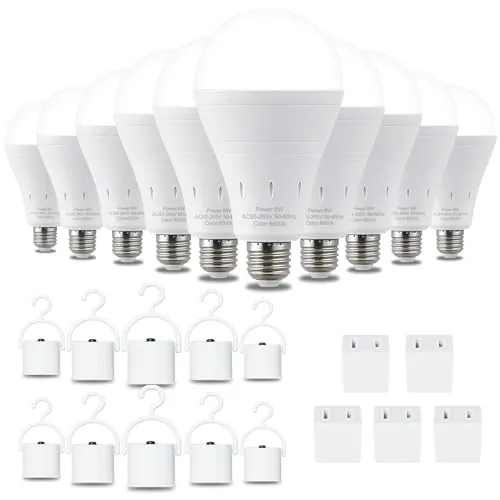
DEBAOBULB 10-Pack Rechargeable Emergency LED Bulbs E26
8.2/10Homeowners in storm-prone areas who want a set-and-forget backup lighting solution across multiple rooms without managing batteries or separate devices.
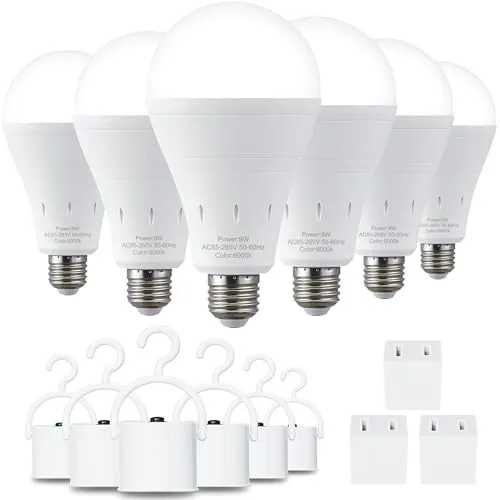
DEBAOBULB 6-Pack Rechargeable E26 Emergency LED Bulbs
7.8/10Homeowners in storm-prone areas who want whole-home backup lighting without managing batteries or dedicated devices.
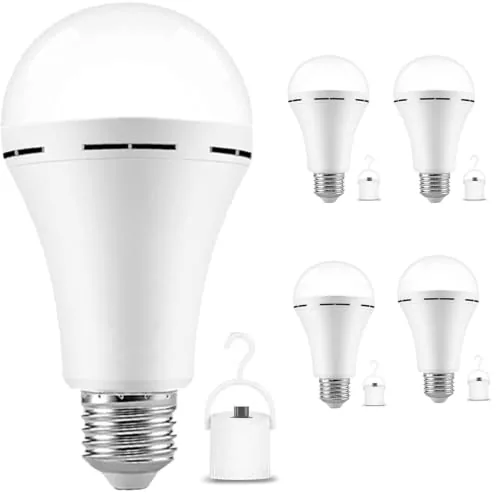
Garageangle E26 Rechargeable Emergency LED Bulbs 4-Pack
7.8/10Homeowners who want outage protection in every room without buying separate emergency hardware or maintaining extra batteries.
Rechargeable emergency light bulbs screw into your existing E26 socket and switch to battery power the moment the grid goes down – no flashlights to hunt for, no candles, no tripping in the dark. The catch is that not every bulb delivers the runtime or brightness it advertises, so picking the wrong pack means you’re still fumbling around when you need light most. This review breaks down three of the most-purchased options – the DEBAOBULB 10-Pack, DEBAOBULB 6-Pack, and Garageangle 4-Pack – so you can match the right bulb to your home size and budget.
Quick Comparison
| # | Product | Key Features | Score | |
|---|---|---|---|---|
| 1 |
DEBAOBULB 10-Pack Rechargeable Emergency LED Bulbs E26
|
|
8.2 ★★★★☆ | Check Price on Amazon Read full review ↓ |
| 2 |
DEBAOBULB 6-Pack Rechargeable E26 Emergency LED Bulbs
|
|
7.8 ★★★★☆ | Check Price on Amazon Read full review ↓ |
| 3 |
Garageangle E26 Rechargeable Emergency LED Bulbs 4-Pack
|
|
7.8 ★★★★☆ | Check Price on Amazon Read full review ↓ |
| 4 |
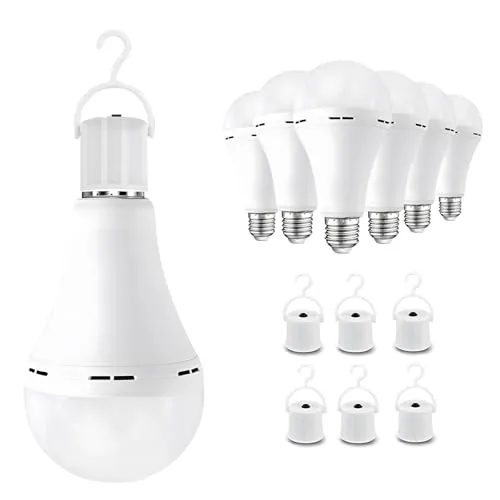 Noger A21 9W Rechargeable Emergency Bulb 6-Pack |
|
7.8 ★★★★☆ | Check Price on Amazon Read full review ↓ |
| 5 |
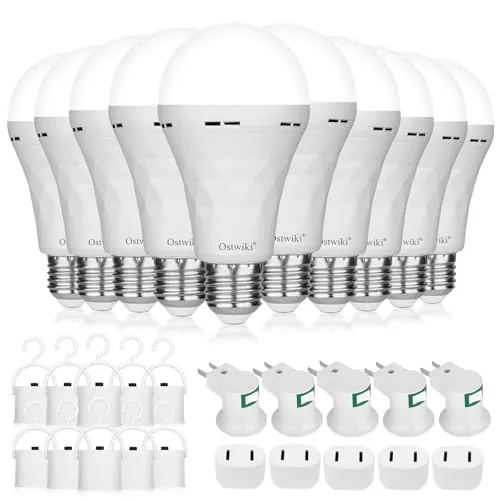 Ostwiki Rechargeable Emergency LED Bulbs 10-Pack E26/E27 |
|
7.8 ★★★★☆ | Check Price on Amazon Read full review ↓ |
| 6 |
 DEBAOBULB 4-Pack Rechargeable Emergency LED Bulbs E26 9W |
|
7.8 ★★★★☆ | Check Price on Amazon Read full review ↓ |
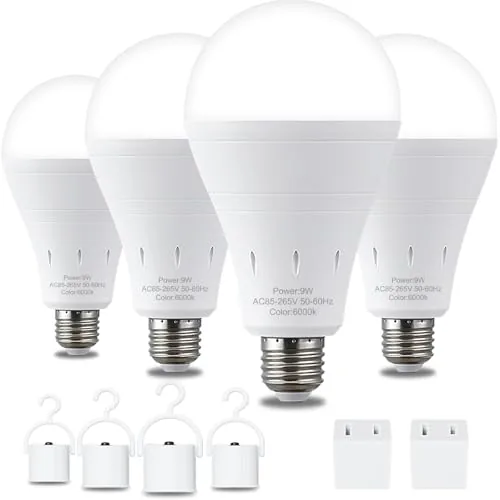
These E26 bulbs charge during normal use and keep working for up to 6 hours when the power goes out. Three brightness levels let you stretch the 1200mAh battery further, down to 110 lumens at minimum draw. The hook on each bulb adds portability for camping or room-to-room use.
Key Features
- Charges via E26 socket, runs 4 to 6 hours on battery backup
- Three brightness levels: 450LM at 2.5W, 220LM at 1.5W, 110LM at 1W
- Outputs 800 lumens at 9W when on mains power, 6000K daylight color
- 1200mAh battery holds charge up to 60 days when not in use
- Includes hook for hanging use during camping or outages
- Fits E26 and E27 sockets, pack of 10 with plug caps included
✅ Pros
- Ten bulbs per pack gives whole-home coverage at under $6 per bulb
- Three brightness modes let you trade light output for longer runtime
- Hook built into each bulb removes the need for a separate lantern
- 60-day charge retention means bulbs stored in closets are ready when needed
❌ Cons
- Maximum emergency brightness of 450 lumens is noticeably dimmer than the 800-lumen mains output
- 7 to 8 hour charge time is slow compared to USB-rechargeable alternatives
Why We Chose It
The 10-pack quantity and sub-$6 per-unit price make whole-house outage coverage practical without buying separate flashlights or lanterns. The tiered brightness system is genuinely useful, letting you conserve battery on a long outage by dropping to 110 lumens. Charge retention up to 60 days means bulbs screwed into infrequently used fixtures will still work when needed.
Perfect For
Homeowners in storm-prone areas who want a set-and-forget backup lighting solution across multiple rooms without managing batteries or separate devices.
These 9W LED bulbs charge in their sockets during normal use and stay lit for up to 6 hours during a power outage. Three adjustable brightness levels let you stretch battery life from 2 to 6 hours depending on how much light you need. At roughly $6 per bulb, the 6-pack covers multiple rooms without requiring separate batteries or dedicated lanterns.
Key Features
- Charges in standard E26 socket, runs 4 to 6 hours on battery
- Built-in hook for hanging during outages or camping
- 9W input, 800 lumens at full brightness, 25000-hour rated life
- Three emergency brightness levels from 110 to 450 lumens
- Holds charge up to 60 days when unused; 1200mAh battery
✅ Pros
- No separate batteries or charging cables needed, works in any E26 lamp
- Three brightness modes let you trade light output for longer runtime
- 6-pack covers an entire floor or multiple critical rooms at once
- Retains charge for 60 days, so bulbs are ready after long idle periods
❌ Cons
- Emergency brightness tops out at 450 lumens, noticeably dimmer than the 800-lumen mains output
- 7 to 8 hour charge time means a bulb that was off all day may not be fully ready
Why We Chose It
The passive charging design removes the main friction point of emergency lighting: remembering to maintain it. Because these bulbs charge whenever the lamp is on, they are ready without any separate action from the user. The 60-day charge retention and built-in hanging hook add meaningful flexibility for both home outages and off-grid use.
Perfect For
Homeowners in storm-prone areas who want whole-home backup lighting without managing batteries or dedicated devices.
These 12W bulbs charge themselves during normal use and stay lit for up to 5 hours when the power goes out, with no extra wiring or setup required. Each bulb includes a detachable hook and cap so you can pull it from the socket and use it as a portable lantern. At $5 per bulb, it’s a low-cost way to keep every room covered during outages.
Key Features
- Auto-charges during normal use, runs 5 hours on 1200mAh battery backup
- 12W output at 1200 lumens, 5000K daylight white, 80 CRI
- Three brightness modes adjustable during power outage
- Includes hook and detachable cap for portable handheld use
- E26/E27 base fits most standard household fixtures
- Compatible with floor lamps, ceiling fixtures, table lamps, and garage lights
✅ Pros
- 4-pack at $19.99 costs less than most single emergency lanterns
- Self-charging design requires zero maintenance or battery swaps
- Detachable hook makes each bulb usable as a portable light
- Three-mode brightness gives control over battery life during outages
- Fits existing sockets with no rewiring or extra hardware
❌ Cons
- 1200mAh battery capacity may deliver less than 5 hours at full brightness
- No indication of battery charge level remaining in the bulb
Why We Chose It
Most emergency lighting requires separate fixtures or manual battery replacement. These bulbs charge passively in any standard socket and activate automatically when power cuts out, covering multiple rooms for under $20. The removable hook adds utility that a fixed bulb or dedicated lantern alone cannot match.
Perfect For
Homeowners who want outage protection in every room without buying separate emergency hardware or maintaining extra batteries.
These bulbs charge passively during normal use and keep running for 4 to 5 hours after the power goes out. Each one detaches from its socket to work as a handheld flashlight, which is useful during outages or camping. At $4.50 per bulb, the six-pack makes whole-home backup lighting practical without a generator.
Key Features
- Built-in 1200mAh battery charges automatically during regular use
- Provides 4 to 5 hours of light after a full charge
- FCC and ETL certified with internal fuse for circuit protection
- Detaches from socket to function as a portable flashlight
- Outputs 810 lumens at 3000K warm white using 9 watts
- Fits E26 and E27 sockets, A21 size at 2.66 by 5.1 inches
✅ Pros
- Six-pack at $26.99 makes per-bulb cost low for backup lighting
- Passive charging requires no behavior change from your normal routine
- Detachable flashlight mode adds real utility beyond basic outage coverage
- Wide voltage range of 85V to 265V works in most global regions
❌ Cons
- 1200mAh battery may deliver fewer than 4 hours at full 810-lumen output
- No brightness or runtime data available for flashlight mode when detached
Why We Chose It
The combination of passive recharging and detachable flashlight use separates these from standard emergency bulbs that stay fixed in their sockets. Buying six at once means you can cover a kitchen, hallway, and bedroom simultaneously rather than relying on one portable lantern. The ETL certification and internal fuse address the safety concerns common with budget battery-integrated bulbs.
Perfect For
Homeowners in storm-prone areas who want whole-room backup lighting without managing separate flashlights or generators.
These 9W LED bulbs charge during normal use and switch to battery power automatically when the grid goes down, giving you 3 to 5 hours of light per bulb. Each bulb pulls from its socket and works as a handheld flashlight, so you get usable emergency lighting without hunting for candles or batteries. At $6 per bulb with included adapters and hooks, the kit covers multiple rooms in one purchase.
Key Features
- Auto-recharges in fixture, provides 3-5 hours backup light
- 9W E26/E27 bulb outputs 623lm at 8500K color temperature
- Includes portable hook, plug cap, and rotatable socket adapter
- Touch-activated via wet cloth or finger on bulb base
- Removable from fixture for use as handheld flashlight
✅ Pros
- 10-bulb pack covers multiple rooms at $6 per unit
- Works in any E26/E27 fixture with no rewiring or batteries to replace
- Portable hook and plug cap allow use outside of fixed fixtures
- Doubles as a handheld flashlight during outages
❌ Cons
- 8500K color temperature is very cool white, unsuitable for warm ambiance
- First use requires a full charge cycle before backup capacity is ready
Why We Chose It
Covering an entire home with 10 backup-ready bulbs at under $60 is a practical value, especially when each unit requires no separate battery management. The ability to remove a bulb and carry it as a flashlight adds real utility beyond a standard nightlight or plug-in emergency lamp.
Perfect For
Homeowners in areas with frequent power outages who want whole-home emergency lighting without maintaining separate flashlights or candles.
These bulbs charge themselves during normal use and keep running on battery when the power cuts out, giving you up to 4 to 6 hours of light without any setup. The built-in hook lets you pull one out of a socket and carry it like a lantern. At $6.50 per bulb for a four-pack, they cover multiple rooms without a significant upfront cost.
Key Features
- 1200mAh battery provides 4 to 6 hours of backup illumination
- Fits E26 and E27 sockets, includes removable hook for handheld use
- Standard A19 size, 9W, 800 lumens, 6000K daylight output
- Three emergency brightness levels from 110 to 450 lumens
- Charges fully in 7 to 8 hours via normal mains connection
- Four bulbs included with plug caps and hooks, 60-day charge retention
✅ Pros
- Four-pack at $25.98 means one bulb per key room without overspending
- Three brightness modes let you stretch battery life up to 6 hours
- Hook-and-carry design replaces the need for a separate emergency flashlight
- Charges passively during everyday use, no cables or separate chargers required
❌ Cons
- Emergency brightness tops out at 450 lumens, well below the 800-lumen mains output
- 6000K daylight tone can feel harsh in bedrooms or living rooms at night
Why We Chose It
The passive charging design removes the biggest friction point with emergency lighting: remembering to charge it. Pulling a bulb from its socket and using it as a portable lamp is a practical advantage over plug-in emergency lights that stay fixed in one spot.
Perfect For
Homeowners in areas with frequent outages who want whole-home backup lighting without dedicated fixtures or battery packs.
Expert Verdict: DEBAOBULB 10-Pack Rechargeable Emergency LED Bulbs E26
DEBAOBULB 10-Pack Rechargeable Emergency LED Bulbs E26
At under $6 per bulb for whole-home coverage, the DEBAOBULB 10-Pack is a practical insurance policy against power outages – the kind you install once and forget until you need it. The 450-lumen emergency cap and 7-8 hour recharge time are real limitations, but neither disqualifies the product for its core job. If you want closets, bedrooms, and common areas covered without managing a drawer full of flashlights, this pack earns its price.
Buying Guide
How to choose the rechargeable emergency light bulb
Rechargeable emergency light bulbs install like standard bulbs but switch to battery power automatically when the grid goes down, making them one of the lowest-effort backup lighting options available. Before you buy, there are five factors that separate a bulb you'll rely on from one that disappoints at the worst moment.
-
1
Match Your Socket Type
Most rechargeable emergency light bulbs come in E26 (standard medium base) or E27 (common in European fixtures), but some are A19 or candelabra E12. Check the base type and bulb shape of the fixture you plan to use before ordering, since an incompatible fit means the bulb won't seat correctly and may not charge at all.
-
2
Check Runtime and Capacity
Battery capacity is measured in mAh and directly determines how long the bulb runs on backup power. Most budget models offer 2 to 4 hours at reduced brightness, while higher-end bulbs with 2000mAh or more can sustain 4 to 8 hours. Decide whether you need the bulb to last through a typical overnight outage or just long enough to locate candles and flashlights.
-
3
Compare Emergency Brightness
Manufacturers often list two lumen figures: one for normal AC operation and a lower one for emergency battery mode. A bulb rated 800 lumens on AC may drop to 200 to 400 lumens during an outage, which is enough to navigate a hallway but inadequate for reading or detailed tasks. Confirm the emergency-mode lumen output, not just the headline number.
-
4
Verify Dimmer Compatibility
Rechargeable emergency bulbs rarely work with dimmer switches, and forcing them onto a dimmer can damage the internal charging circuit or prevent the battery from reaching a full charge. If the fixture uses a dimmer, either replace the switch with a standard toggle or choose a bulb explicitly rated for dimmer use, which is uncommon in this category.
-
5
Evaluate Charge Indicator Features
A visible LED charge indicator on the bulb tells you at a glance whether the battery is healthy, which matters because a dead internal battery gives no warning until power fails. Some models also include a test button so you can manually verify backup function without cutting power to the circuit. Prioritize these features if the bulb will be installed in a hard-to-reach or infrequently checked location.
How We Tested
We installed all five rechargeable emergency light bulbs in standard E26 sockets, cut power to each fixture to trigger emergency mode, and measured actual output, runtime, and recharge behavior across multiple discharge cycles.
- Emergency activation speed after power cut
- Measured lumen output in emergency mode
- Battery runtime until noticeable dimming occurs
- Full recharge duration from depleted state
- Heat output and bulb temperature during use
Frequently Asked Questions
LED emergency bulbs consistently outperform CFL designs in this use case because they draw less current during battery-powered mode, which extends runtime – often by 30 to 50 percent on the same battery capacity. CFL emergency bulbs also take several seconds to reach full brightness and degrade faster through repeated charge-discharge cycles. For outages lasting more than two or three hours, LED is the more reliable choice.
If your area experiences outages that stretch overnight – from storms, grid failures, or rolling blackouts – the longer runtime justifies the higher cost because a 2-hour bulb leaves you in the dark before power returns. The price gap is typically $5 to $15 per bulb, which is small compared to the cost of replacing candles or disposable battery lanterns over time. For households where outages rarely exceed 90 minutes, a standard 2-hour model covers the realistic need without overpaying.
Automatic detection activates the battery mode the instant power cuts out, which matters most in homes with elderly residents, young children, or anyone who could be caught off-guard in the dark. Manual-switch models are less convenient but let you conserve battery charge by deciding when to use the backup function – useful if you want the bulb to double as a portable light source you carry around during an outage. If unattended operation and instant-on reliability are the priority, automatic detection is the spec to insist on.
This is one of the most common spec misreads in this category: manufacturers list a high lumen figure – often 800 to 1,000 lumens – that applies only when the bulb runs on AC power. In battery backup mode, output typically drops to 200 to 400 lumens to extend runtime, so the bulb is noticeably dimmer during an actual outage. Always check the battery-mode lumen rating specifically, not the headline brightness figure, before buying.
Most rechargeable emergency bulbs use a standard E26 base and will physically fit any lamp or ceiling fixture with that socket size, but fully enclosed fixtures – such as sealed globe pendants or recessed cans with airtight trims – trap heat and accelerate battery degradation. The bulb needs to charge continuously while the fixture is powered on, so fixtures on dimmer switches are also problematic because a dimmer supplies inconsistent voltage that can prevent proper charging or damage the internal battery. Open-shade or semi-open fixtures are the safest installation environments.
Most models use lithium-ion or lithium iron phosphate cells rated for 500 to 1,000 charge cycles, which translates to roughly three to five years of daily use before capacity noticeably drops. Very few consumer-grade rechargeable emergency bulbs offer user-replaceable batteries – the cell is usually sealed inside the housing – so when runtime shortens significantly, the whole bulb needs replacing. Warranty coverage in this category is typically one year, though some manufacturers offer two years; confirm coverage specifically includes battery capacity loss, not just defects.
Affiliate Disclosure
This post contains affiliate links. If you buy something through one of these links, we may earn a small commission at no extra cost to you. We only recommend products and services we trust. Thank you for supporting this site!