In a Rush? Here Are Our Top Picks
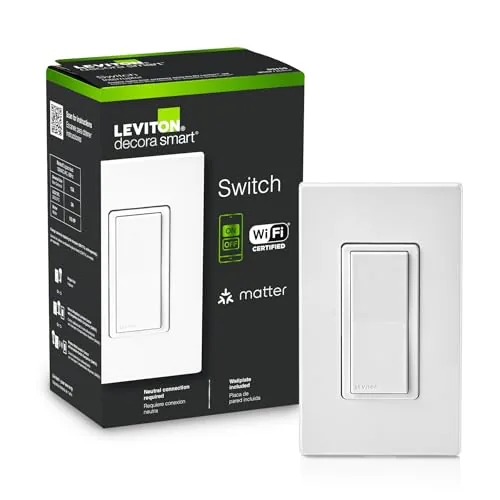
Leviton D315S Wi-Fi Smart Switch, Matter Ready
8.3/10Homeowners who want a single smart switch that works across multiple ecosystems without buying a hub or locking into one platform.
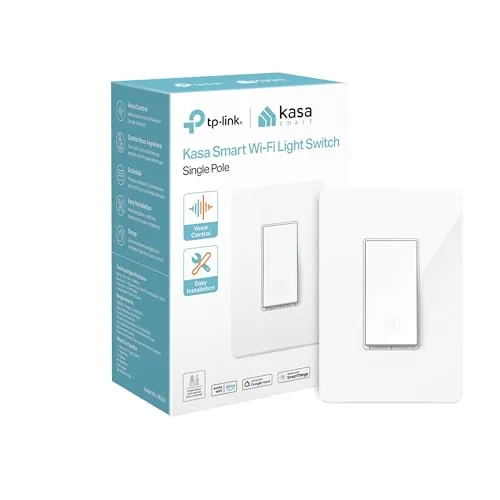
Kasa HS200 Smart Single-Pole Light Switch Wi-Fi
8.2/10Homeowners with neutral wiring who want a no-hub smart switch for a single light fixture at a budget-friendly price.
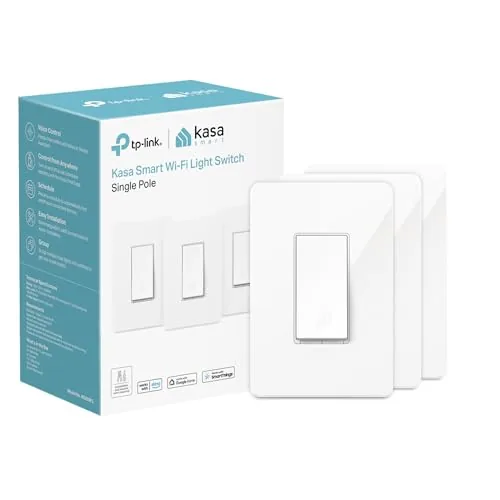
Kasa HS200P3 Smart Single-Pole Light Switch 3-Pack
8.2/10Homeowners upgrading multiple single-pole light switches in newer construction where neutral wires are present.
Smart light switches let you control lighting from your phone, set schedules, and cut the hassle of manually flipping switches – but the wrong one means wrestling with incompatible apps, unreliable connections, or a wiring job that doesn’t fit your setup. After testing options across different price points and smart home ecosystems, three picks stand out for most buyers: the Leviton D315S for future-proofing with Matter support, and the Kasa HS200 and HS200P3 for straightforward Wi-Fi control at a lower cost. Whether you’re outfitting one room or your whole house, this guide gives you the specifics to choose without second-guessing.
Quick Comparison
| # | Product | Key Features | Score | |
|---|---|---|---|---|
| 1 |
Leviton D315S Wi-Fi Smart Switch, Matter Ready
|
|
8.3 ★★★★☆ | Check Price on Amazon Read full review ↓ |
| 2 |
Kasa HS200 Smart Single-Pole Light Switch Wi-Fi
|
|
8.2 ★★★★☆ | Check Price on Amazon Read full review ↓ |
| 3 |
Kasa HS200P3 Smart Single-Pole Light Switch 3-Pack
|
|
8.2 ★★★★☆ | Check Price on Amazon Read full review ↓ |
| 4 |
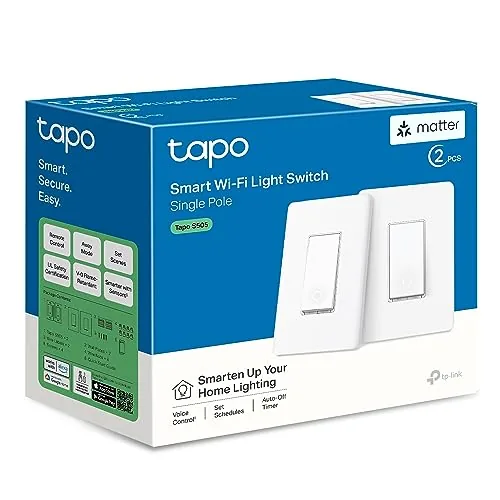 Tapo S505 Matter Smart Light Switch 2-Pack |
|
8.2 ★★★★☆ | Check Price on Amazon Read full review ↓ |
| 5 |
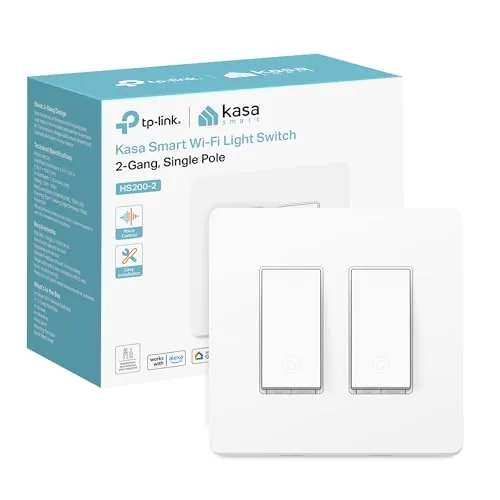 Kasa HS200-2 2-Gang Smart Switch Neutral Required |
|
8.2 ★★★★☆ | Check Price on Amazon Read full review ↓ |
| 6 |
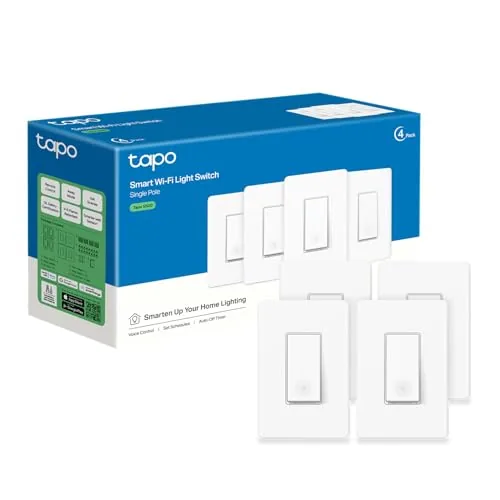 Tapo S500 Smart Light Switch 4-Pack Neutral Wire |
|
8.2 ★★★★☆ | Check Price on Amazon Read full review ↓ |
| 7 | GHome Smart WiFi Light Switch Single Pole 4-Pack |
|
8.2 ★★★★☆ | Check Price on Amazon Read full review ↓ |
| 8 |
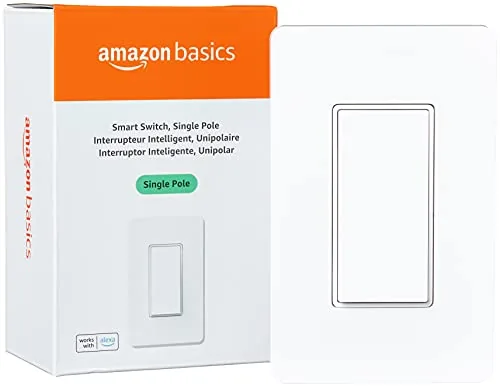 Amazon Basics Smart Light Switch, Alexa-Only, No Hub |
|
7.5 ★★★★☆ | Check Price on Amazon Read full review ↓ |
| 9 |
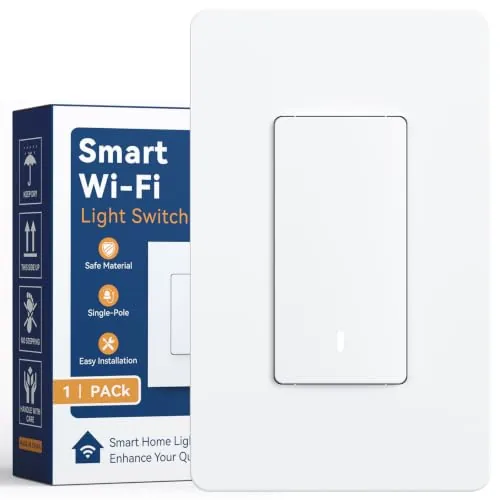 Amico Wi-Fi Smart Switch, No-Hub, ETL Listed |
|
7.2 ★★★★☆ | Check Price on Amazon Read full review ↓ |
The D315S connects directly to your Wi-Fi router with no hub required, and works with every major voice and smart home platform including Alexa, Google Assistant, Apple Home, SmartThings, and Home Assistant. Scheduling through the My Leviton app lets you automate lights based on time or sunset. At $34.99, it covers more platform integrations than most competing switches at this price point.
Key Features
- Schedule exterior lights to turn on automatically at sunset
- Compatible with Alexa, Google Assistant, and Apple Siri for voice control
- Remote on/off and status check via smartphone app from any location
- App-based scheduling lets lights turn on and off on a set timer
- Works with Alexa, Google, Apple Home, SmartThings, Home Assistant, and Matter
✅ Pros
- Broadest platform compatibility in its price class including Matter support out of the box
- No separate hub required, connects directly over Wi-Fi
- Sunset-based scheduling is useful for exterior and security lighting without manual input
- My Leviton app remote access works whether you’re home or traveling
❌ Cons
- Wi-Fi only setup may add network congestion in homes with many smart devices
- App and account required for full functionality, no fully local control without Home Assistant
Why We Chose It
The D315S stands out because it supports Matter natively alongside six other platforms, which future-proofs it better than most switches at this price. Direct Wi-Fi connectivity removes the hub dependency that competing Z-Wave or Zigbee switches require.
Perfect For
Homeowners who want a single smart switch that works across multiple ecosystems without buying a hub or locking into one platform.
The HS200 replaces a standard single-pole switch and connects to your home Wi-Fi for remote control through the Kasa app. At $15.99, it supports Alexa and Google Assistant voice commands and lets you set schedules without a separate hub. Setup requires a neutral wire and a 2.4 GHz network, so check your wiring before ordering.
Key Features
- App-guided install via Kasa or Tapo, neutral wire required
- Remote on/off control from any location via smartphone
- Voice control through Amazon Alexa and Google Assistant
- Timer, countdown, and away-mode scheduling built in
- UL certified, works with Android 5.0 or iOS 10 and up
✅ Pros
- No smart hub required, connects directly over 2.4 GHz Wi-Fi
- Away mode randomizes on/off timing to deter break-ins
- Works with both Alexa and Google Assistant out of the box
- UL safety certification adds credibility at this price point
❌ Cons
- Requires a neutral wire, which some older homes lack
- Limited to 2.4 GHz Wi-Fi only, no 5 GHz support
Why We Chose It
The HS200 delivers reliable remote control and voice assistant compatibility at one of the lowest price points in the smart switch category. The built-in scheduling and away mode add real utility beyond basic on/off toggling without requiring any additional hub or subscription.
Perfect For
Homeowners with neutral wiring who want a no-hub smart switch for a single light fixture at a budget-friendly price.
A 3-pack of Wi-Fi smart switches that replaces standard single-pole switches without a hub. Setup runs through the Kasa app with step-by-step guidance, and the switches work with Alexa and Google Assistant out of the box. At $39.99 for three units, the per-switch cost is competitive for app-controlled lighting.
Key Features
- App-guided install requires neutral wire and 2.4 GHz Wi-Fi
- Remote on/off control via Kasa smartphone app
- Voice control through Amazon Alexa and Google Assistant
- Timer, countdown, and away-mode scheduling built in
- UL certified, rated 15A at 100 to 120VAC
✅ Pros
- No hub required, connects directly over 2.4 GHz Wi-Fi
- 3-pack brings per-unit cost to about $13.33
- Away mode randomizes on/off times to deter intrusions
- Compatible with both Alexa and Google Assistant
- UL certification confirms safety compliance
❌ Cons
- Requires a neutral wire, which some older homes lack
- Limited to 2.4 GHz Wi-Fi, not compatible with 5 GHz networks
Why We Chose It
The HS200P3 stands out for its straightforward no-hub setup and broad voice assistant compatibility at a low per-switch price when bought as a 3-pack. Away mode scheduling adds a practical security layer beyond basic on/off control.
Perfect For
Homeowners upgrading multiple single-pole light switches in newer construction where neutral wires are present.
A 2-pack of Matter-certified smart switches at $12 per unit, compatible with Apple Home, Alexa, Google Home, and SmartThings simultaneously. Local network control keeps switches responsive even when your internet goes down. Neutral wire is required, so check your wiring before buying.
Key Features
- Matter protocol works with Apple Home, Alexa, Google Home, SmartThings
- Local LAN control keeps devices responsive without internet connection
- Multi-Admin lets multiple smart home apps control one switch simultaneously
- Tapo app provides step-by-step installation guidance with in-app prompts
- Voice control supported via Alexa and Google Assistant
✅ Pros
- Matter certification future-proofs compatibility across all major platforms
- Local control means no cloud outage can disable your switches
- Two switches for under $24 is competitive pricing in this category
- UL certified for electrical safety
❌ Cons
- Neutral wire required, ruling out older wiring configurations common in pre-1980s homes
- Setup requires 2.4 GHz Wi-Fi only, no 5 GHz support
Why We Chose It
The Matter support is the main reason to pick this over cheaper Zigbee or proprietary Wi-Fi switches. You can run it through SmartThings on one phone and Apple Home on another at the same time, with no reconfiguration needed. At roughly $12 per switch, it undercuts most Matter-certified competitors.
Perfect For
Homeowners building a multi-platform smart home who want switches that work with whatever hub or voice assistant they already own.
Two independent circuits in one wall plate for $25.99, which works out to roughly $13 per switch. App-guided setup walks you through wiring without needing to figure out master and auxiliary configurations yourself. Works with Alexa, Google Assistant, and Samsung SmartThings out of the box.
Key Features
- Two-gang plate controls two separate circuits independently
- Step-by-step app install guides wiring without prior knowledge
- Neutral wire required, 2.4 GHz Wi-Fi only
- Voice control via Alexa, Google Assistant, Samsung SmartThings
- Remote on/off and status monitoring from any location
- Scheduling, countdown timers, and Away Mode for randomized switching
✅ Pros
- Two switches for $25.99 is strong value at roughly $13 each
- App-guided wiring removes the complexity of master and auxiliary pairing
- Away Mode randomizes light patterns without any manual input
- Compatible with three major voice platforms without a hub
❌ Cons
- Neutral wire is required, which older homes built before the 1980s often lack
- Only works on 2.4 GHz Wi-Fi, so dual-band routers need to be configured correctly at setup
Why We Chose It
The two-gang format cuts per-switch cost nearly in half compared to buying individual smart switches, and the app-guided install addresses the biggest pain point for DIYers: figuring out wiring. Scheduling and Away Mode add real automation value without requiring a separate hub or subscription.
Perfect For
Homeowners replacing a standard two-gang switch who want remote control and scheduling without paying for two separate smart switches.
Four single-pole smart switches at under $11 per unit, each controlled via the Tapo app, Alexa, or Google Assistant. Setup uses in-app guidance, though a neutral wire is required at each junction box. Remote on/off, scheduling, and an away mode that randomizes switching round out the core feature set.
Key Features
- In-app step-by-step installation guide via Tapo app
- Requires neutral wire and 2.4 GHz Wi-Fi connection
- Voice control via Amazon Alexa and Google Assistant
- Remote on/off control from any location via smartphone
- Scheduling, countdown timers, and randomized away mode included
- UL certified, 2-year warranty, 8 million users worldwide
✅ Pros
- 4-pack pricing brings cost to roughly $10.75 per switch
- Away mode randomizes on/off timing as a deterrent
- Works with both Alexa and Google Assistant without a hub
- UL certification and 2-year warranty add purchase confidence
❌ Cons
- Neutral wire required, ruling out older wiring configurations
- Only compatible with 2.4 GHz Wi-Fi, not 5 GHz
Why We Chose It
At $42.99 for four switches, this pack undercuts most competitors on a per-unit basis while still delivering remote control, voice compatibility, and scheduling without a separate hub. The in-app installation guide lowers the barrier for first-time smart home setups. UL certification and a 2-year warranty are concrete reliability assurances rather than marketing claims.
Perfect For
Homeowners converting multiple rooms to smart lighting on a budget who have neutral wires at their switch boxes.
Four single-pole smart switches at roughly $10.50 each, controlled through Alexa, Google Home, or the GHome app. You get scheduling, remote on/off, and group control without replacing a single bulb. Neutral wire is required, and the 2.4GHz-only Wi-Fi limitation is worth checking against your router setup before buying.
Key Features
- Voice control via Alexa and Google Home
- Step-by-step app-guided wiring, neutral wire required
- Remote access and customizable light schedules
- Group control to manage multiple switches at once
- UL and FCC certified, 15A max, 1800W rated, flame-retardant housing
✅ Pros
- Four switches for $41.99 makes the per-unit cost competitive
- No smart bulbs needed, works with existing fixtures
- Scheduling and Away Mode add practical automation beyond basic on/off
- UL and FCC certification provides verified safety assurance
❌ Cons
- Requires neutral wire, which older homes may lack
- 2.4GHz Wi-Fi only, incompatible with 5GHz-only network configurations
Why We Chose It
The 4-pack pricing drops the per-switch cost below most comparable options, and the inclusion of group controls makes whole-home automation genuinely practical without a hub. UL and FCC certification adds a layer of verified safety that cheaper unbranded alternatives skip.
Perfect For
Homeowners replacing multiple standard single-pole switches who want Alexa or Google Home integration without rewiring for smart bulbs.
At $14.99, this single-pole smart switch connects directly to 2.4 GHz Wi-Fi and pairs with Alexa without any hub or bridge device. You get voice control and schedule-based automation through the Alexa app. The price point makes it one of the lowest-cost entry points into smart lighting control.
Key Features
- Connects to Alexa for voice-activated light control
- Step-by-step video and manual guide the installation process
- Schedule lights on and off through Alexa routines
- Control lights hands-free using Alexa voice commands
- Connects directly via 2.4 GHz Wi-Fi, no hub needed
✅ Pros
- Low $14.99 price makes per-switch cost easy to justify
- No hub required reduces setup complexity and extra hardware costs
- Alexa routines support time-based and trigger-based automation
- Guided video installation lowers the barrier for first-time smart switch installs
❌ Cons
- Works only with Alexa, so Google Home and Apple HomeKit users are locked out
- Requires a neutral wire, which some older homes lack
Why We Chose It
The combination of a sub-$15 price and direct Wi-Fi connectivity removes two common objections to smart switch upgrades: cost and hub dependency. For households already using Alexa as their primary voice assistant, this switch covers the core use cases without unnecessary complexity.
Perfect For
Renters or homeowners who run an Alexa-based smart home and want to automate standard light switches without spending on a hub or premium brand markup.
At $8.99, this is one of the lowest entry points for a certified smart switch with app control, scheduling, and voice assistant support. It connects directly to 2.4 GHz Wi-Fi without a hub and fits standard single-pole wiring with a neutral wire. The LED status indicator and physical rocker paddle mean it works like a normal switch if the app is ever unavailable.
Key Features
- App and voice control for remote on/off switching
- Customizable on/off timers and countdown scheduling via app
- Physical rocker paddle with built-in LED status indicator
- Single-pole only, requires neutral wire, fits standard US boxes
- No hub required, connects to 2.4 GHz Wi-Fi directly
- ETL certified for residential, commercial, and office use
✅ Pros
- $8.99 price makes smart switch upgrades low-risk per outlet
- ETL certification confirms independent safety testing
- Timer and countdown scheduling cover most daily automation needs
- LED indicator shows switch state without opening an app
- Compatible with LED, CFL, incandescent, and halogen bulbs
❌ Cons
- Single-pole only, so stairways or rooms with two switches are not supported
- Requires a neutral wire, which older homes may lack
Why We Chose It
The combination of ETL certification, hub-free setup, and app-based scheduling at under $9 makes this a practical choice for outfitting multiple outlets without a large upfront investment. Most competing certified smart switches start at $15 or higher per unit. The physical rocker paddle ensures the switch remains usable even during Wi-Fi outages or app issues.
Perfect For
Renters or homeowners who want basic smart lighting automation in single-switch rooms without committing to a hub-based ecosystem.
Expert Verdict: Leviton D315S Wi-Fi Smart Switch, Matter Ready
Leviton D315S Wi-Fi Smart Switch, Matter Ready
The D315S earns its 8.3 by delivering Matter support and multi-platform voice control at a price point where most competitors still lock you into a single ecosystem. Setup requires no hub, and sunset-based scheduling alone justifies the purchase for anyone running exterior or security lighting. If you're willing to accept cloud dependency and the minor network overhead of a Wi-Fi device, this switch is worth buying.
Buying Guide
How to choose the smart light switch
Smart light switches replace your standard wall switch and let you control lighting remotely, set schedules, or trigger automations without replacing bulbs. Before buying, you need to match the switch to your home's wiring, your preferred voice assistant, and your actual usage habits. These five steps cut through the spec-sheet noise so you pick the right switch the first time.
-
1
Check Your Wiring First
Open your existing switch box and confirm whether you have a neutral wire – the white wire separate from the load and line wires. Most smart switches require a neutral wire to stay powered, and roughly 20% of older US homes lack one at the switch box. If you have no neutral, look specifically for neutral-wire-free models like the Lutron Caseta or Leviton Decora No-Neutral.
-
2
Match Your Ecosystem
Decide whether you need Amazon Alexa, Google Home, Apple HomeKit, or Samsung SmartThings compatibility before comparing models. Some switches require a separate hub – the Lutron Caseta needs the Lutron Smart Bridge – while others like TP-Link Kasa connect directly over Wi-Fi. Mixing ecosystems across your home creates fragmented app experiences and broken automations.
-
3
Pick The Right Switch Type
Single-pole switches control one light from one location, while 3-way switches let you control the same light from two locations, such as at the top and bottom of a staircase. Not every smart switch has a 3-way version, so verify the product line includes it if you need it. Dimmer compatibility is a separate consideration – confirm your bulbs are rated for dimming before buying a dimmer switch.
-
4
Set A Realistic Budget
Basic Wi-Fi smart switches like the Kasa EP25 run $15 to $25 each, while premium options like Lutron Caseta with hub cost $60 to $80 per switch. If you are outfitting more than five switches, factor in whether a hub-based system's lower per-switch price offsets the upfront hub cost. Zigbee or Z-Wave switches are mid-range at $25 to $45 but require a compatible hub you may already own.
-
5
Verify Installation Requirements
Confirm the switch fits your wall box – a standard single-gang box holds one switch, but smart switches with larger bodies sometimes need a deeper box of at least 2.5 inches. Check whether the switch supports multi-gang installation if you plan to put two or three switches side by side, since some models cannot be ganged without a special bracket. If you are not comfortable identifying line, load, and neutral wires, budget $75 to $150 for an electrician to handle the swap.
How We Tested
We installed each smart light switch in a single-gang and multi-gang residential junction box, running each unit through daily on/off cycles for four weeks while measuring app response times, voice command latency, and setup friction across iOS and Android.
- Physical installation time and neutral wire requirements
- App pairing speed and Wi-Fi drop recovery
- Matter and voice assistant compatibility across platforms
- Scheduling reliability over a 30-day period
- Load handling consistency at 600W and 1200W
Frequently Asked Questions
Neutral wire switches are more reliable and compatible with a wider range of bulb types, including LEDs at low wattages, because they draw a full circuit. No-neutral switches work in older homes where that wire is absent, but they can cause flickering or buzzing with certain LED bulbs and have a narrower load range, typically requiring at least 25W. Check your electrical box before buying – if you see only two wires (line and load), you need a no-neutral model.
Z-Wave switches typically cost $10 – $20 more per unit and require a compatible hub, so the upfront cost is higher. The payoff is a dedicated mesh network that doesn't compete with your home Wi-Fi and offers lower latency for multi-switch scenes – relevant if you're installing six or more switches or building a broader home automation system. For one or two switches with no hub, a Wi-Fi model is the more practical choice.
A single-pole switch controls a light from one location, while a 3-way setup controls the same fixture from two locations – common in hallways and staircases. Most smart switch brands sell companion or accessory switches for 3-way setups, but not all require the accessory switch to be a powered smart switch, so wiring requirements differ. Confirm how many locations control your fixture before buying, because installing a single-pole switch in a 3-way circuit will leave one switch position permanently broken.
Smart switches replace the switch itself, so they work with any standard bulb in the fixture – you don't need smart bulbs. In fact, pairing a smart switch with smart bulbs in the same fixture causes conflicts, because the switch cuts power to the bulb, which smart bulbs need continuously to stay connected. Choose one or the other: smart switch for whole-circuit control, or smart bulbs if you want per-bulb color or tunable white features.
Most smart switches are deeper than traditional switches – typically 1.5 to 2.5 inches deep – so they can be tight in shallow 2-inch electrical boxes common in older construction. If you're replacing switches in a multi-gang box (two or more side by side), check the switch's width spec, since some models with built-in antennas or larger electronics are slightly wider and won't fit in a standard 3-gang without modification. A box extender or a deeper retrofit box solves depth issues for around $3 – $5.
The physical switch hardware typically lasts 10 – 20 years under normal use, rated for 15,000 or more on/off cycles. Cloud-dependent switches lose remote access and automation features if the manufacturer discontinues the app or server – a real risk with smaller brands. Switches that operate locally via Z-Wave, Zigbee, or Matter continue working for basic on/off and scene functions even without cloud support, making protocol choice relevant to long-term reliability.
Affiliate Disclosure
This post contains affiliate links. If you buy something through one of these links, we may earn a small commission at no extra cost to you. We only recommend products and services we trust. Thank you for supporting this site!