7 Best LED Corn Bulbs (2026 Review Guide)
The Best Ranked LED Corn Bulb
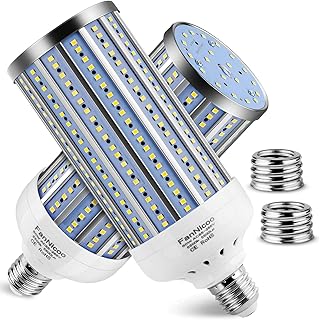
500W Equivalent LED Corn Light Bulb, 5500L, 6500K, E26/E27
The FanNicoo 2 Pack LED Corn Light Bulbs offer powerful 60W illumination equivalent to a 500W incandescent bulb, providing bright, cool daylight white light at 6500K. With a high output of 5500 lumens and 360 omnidirectional lighting, these bulbs are perfect for large indoor and outdoor spaces such as garages, warehouses, workshops, and backyards. Featuring instant-on technology and robust heat dissipation, they ensure reliable performance and long-lasting use.
Key Features:
- 60W LED bulb delivers brightness equivalent to a 500W incandescent lamp with 5500 lumens output and 360 omnidirectional light.
- Advanced LED technology with intelligent constant current driver for stable quality and extended lifespan.
- Instant-on functionality, no ballast needed, and lights up immediately at full brightness.
- Durable construction with forged aluminum for superior heat dissipation, operating in temperatures from -4F to 113F.
- E26/E27 medium base allows easy installation, suitable for garages, warehouses, workshops, patios, streets, and more.
Pros
- High brightness with energy-efficient LED technology saves electricity costs.
- Instant full brightness without warm-up time.
- Durable build ensures long lifespan and reliable heat management.
- Versatile application for both indoor and outdoor large area lighting.
Cons
- Cool daylight color temperature may be too harsh for some indoor environments.

150W Equivalent LED Corn Light Bulb, 2500L, 6500K, E26/E27
The FanNicoo LED Corn Light Bulb delivers bright, energy-efficient lighting designed to replace traditional 150W incandescent bulbs while using only 20W of power. With a high brightness output of 2500 lumens and a cool daylight white color temperature of 6500K, it provides clear, natural light suitable for various indoor settings like homes, garages, and warehouses. The bulb offers 360-degree illumination for wide coverage, instant flicker-free startup, and a long lifespan of up to 36,000 hours. Equipped with a standard E26/E27 base, it's easy to install in most common fixtures, making it a versatile and reliable lighting solution.
Key Features:
- 20W LED bulb replaces 150W incandescent, producing 2500 lumens
- 360-degree omnidirectional lighting for wide area coverage
- Instant, flicker-free light with high color rendering (CRI>80) for natural illumination
- No ultraviolet or infrared radiation, environmentally friendly
- Overload protection and stable quality ensuring safety and up to 36,000 hours lifespan
- Standard E26/E27 base compatible with most household fixtures
- Non-dimmable design
- Suitable for chandeliers, ceiling fixtures, table lamps, floor lamps, and wall lamps
Pros
- Energy-efficient, significantly reducing electricity use compared to incandescent bulbs
- Provides bright, natural light with high color accuracy
- Long lifespan minimizes replacement frequency
- Wide compatibility with standard light fixtures
- Instant start without flickering protects the eyes
Cons
- Non-dimmable, which limits use in adjustable lighting setups
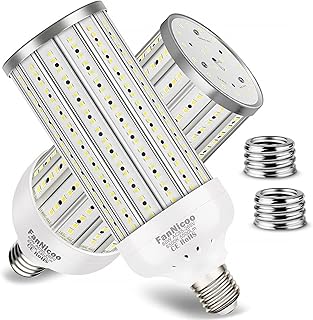
500W Equivalent LED Corn Light Bulb, 5500L, 6500K, E26/E27
The FanNicoo 2 Pack LED Corn Light Bulbs offer bright, energy-efficient lighting with a daylight white color temperature of 6500K. Each 60W bulb delivers 5500 lumens, equivalent to a traditional 500W incandescent lamp, providing wide 360-degree illumination for both indoor and outdoor spaces. Designed with a durable medium E26/E27 base, these bulbs are perfect for garages, warehouses, workshops, streets, and yards, combining instant-on technology and excellent heat dissipation for reliable, long-lasting performance.
Key Features:
- 60W LED bulb equivalent to 500W incandescent, saving energy while providing 5500 lumens of bright light
- Omnidirectional 360-degree illumination covers large areas effectively
- Long-lasting with intelligent constant current LED technology for enhanced durability
- Instant-on setup with no ballast required, lights up immediately when switched on
- Superior heat dissipation using high-quality cold forged aluminum to maintain optimal temperature
- Fits standard E26/E27 medium base sockets for easy installation
- Suitable for various locations including garages, warehouses, workshops, patios, streets, and more
Pros
- Significant energy savings compared to incandescent bulbs
- Bright, wide-angle lighting ideal for large spaces
- Easy to install and instant illumination without warm-up
Cons
- Bulb size may be larger than standard bulbs, requiring ample fixture space
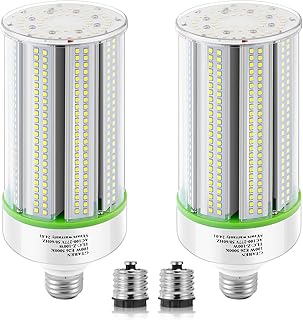
100W LED Corn Bulbs, 5000K, E26/E39, 14,000LM
The GTAREN 2-Pack 100W LED Corn Bulbs offer a powerful and energy-efficient lighting solution, ideal for commercial and industrial settings. Delivering 14,000 lumens with a daylight white color temperature of 5000K, these bulbs replace traditional 400W metal halide or HID lamps, providing bright, flicker-free illumination. Designed for easy installation without ballasts, they fit both E26 and E39 bases and operate on 110-277V. With an estimated lifespan of 50,000 hours, these bulbs reduce maintenance and energy costs significantly, making them perfect for warehouses, garages, street lighting, and more.
Key Features:
- 100W LED corn bulb producing 14,000 lumens, equivalent to 400W metal halide or 1000W incandescent bulbs
- Daylight white color temperature of 5000K with a 360-degree beam angle for uniform lighting without dark spots
- Easy installation with no ballast required; compatible with E26 and E39 bases, suitable for 110-277V
- Energy-efficient, consuming one-tenth the power of incandescent bulbs and one-third less than energy-saving bulbs
- Long lifespan of up to 50,000 hours, lasting over 23 years based on 7 hours daily use
- Versatile application for indoor and outdoor use including warehouses, garages, streets, parking lots, and industrial fixtures
- Manufacturer offers 24/7 customer support and a 5-year warranty
Pros
- High brightness output effectively replaces much higher wattage traditional bulbs
- Significant energy savings and long operational life reduces replacement frequency
- Broad voltage compatibility and base options for versatile installation
- Direct wire installation eliminates the need for ballasts, reducing installation complexity
- Reliable customer support and extended warranty ensure peace of mind
Cons
- Not dimmable, which limits use in settings requiring adjustable lighting
- Bulb size may not fit all smaller fixtures due to its length and diameter
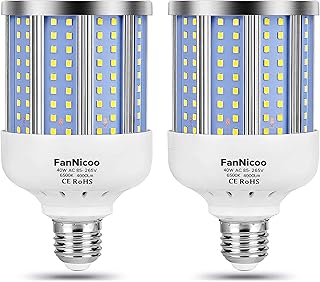
280W Equivalent LED Corn Light Bulb, 4000L, 6500K, E26/E27
The FanNicoo 2-pack LED corn light bulbs offer bright, energy-efficient lighting with a 4000-lumen output at 6500K cool white. Designed to replace 280W incandescent bulbs while using only 40W, these bulbs provide all-around illumination with a 360 beam angle. Their durable aluminum body ensures effective heat dissipation and a long lifespan, making them ideal for various indoor and outdoor settings such as garages, warehouses, gardens, and workshops. Easy to install with standard E26/E27 bases, these bulbs deliver reliable, high-intensity lighting wherever you need it.
Key Features:
- Equivalent to a 280W incandescent bulb but uses only 40W, providing significant energy savings
- Produces 4000 lumens of bright, 6500K cool white light with 360 omnidirectional illumination
- Durable aluminum body with excellent heat dissipation extends the bulb's lifespan
- Flame-resistant PC base material can withstand high temperatures up to 6500K
- Fits standard E26/E27 medium base sockets for easy installation
- Suitable for indoor and outdoor use in garages, warehouses, gardens, workshops, patios, barns, and more
Pros
- High brightness with efficient energy use
- Long-lasting with effective heat management
- Versatile and easy to install in standard sockets
Cons
- Cool white light may be too harsh for some indoor environments
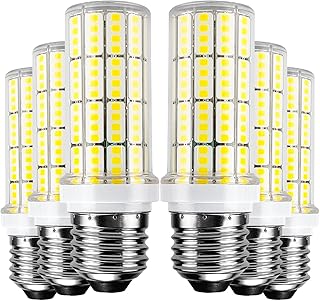
200W Equivalent LED Bulb, 2500L, 5000K, E26/E27
The RIUVAO 20W LED Light Bulb offers a powerful and energy-efficient lighting solution, delivering 2500 lumens of bright, cool daylight. Designed with a durable waterproof plastic shell, this bulb is suitable for both indoor and outdoor use, including garages, warehouses, and home spaces. It provides instant, flicker-free illumination with natural color rendering to reduce eye strain, making it a great replacement for traditional 100W incandescent bulbs.
Key Features:
- Consumes 20W while providing brightness equivalent to a 200W incandescent bulb
- Produces 2500 lumens with a 360-degree beam angle for wide and bright illumination
- Durable IP67-rated waterproof, dustproof, and anti-fog plastic construction
- Eco-friendly with no lead, mercury, UV, or IR radiation
- Instant on with no flickering or buzzing and 80 CRI for natural color rendering
- Fits standard E26/E27 bases suitable for various fixtures including ceiling fans, floor lamps, porch lights, and outdoor floodlights
Pros
- Significantly reduces energy consumption by up to 85%
- Waterproof and dustproof design allows versatile indoor and outdoor usage
- Bright, cool daylight output provides excellent visibility and eye comfort
Cons
- May run warmer than conventional bulbs due to high power output
- Not dimmable, limiting use in fixtures requiring adjustable lighting
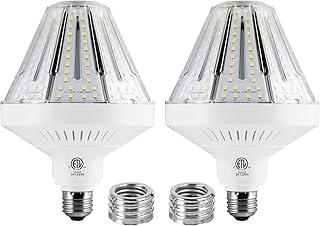
120W LED Corn Light Bulb, 5000K, E26/E39, 18,000LM
The CA New Sunshine 120W LED Corn Light Bulb offers an energy-efficient alternative to traditional 1200W metal halide or incandescent bulbs, delivering the same brightness with 90% energy savings. Producing 18,000 lumens of 5000K daylight white light, it provides full 360 illumination, ideal for large indoor and outdoor spaces such as warehouses, garages, and workshops. Designed for easy installation with an E26/E39 base, this durable, waterproof bulb features premium cooling for extended lifespan and consistent performance.
Key Features:
- Saves 90% energy by replacing 1200W metal halide or incandescent bulbs with just 120W power consumption
- Instant plug-and-play installation with E26/E39 base, no ballast, no flicker, no buzzing
- Produces 18,000 lumens of bright 5000K daylight white light with 360 full coverage
- IP64 rated for water and dust resistance, suitable for wet and dusty environments
- Enhanced cooling design with a low noise fan and aluminum materials for longer service life
Pros
- Significantly reduces energy costs while maintaining high brightness
- Easy to install with no additional ballast or wiring adjustments needed
- Durable and weather-resistant, suitable for various indoor and outdoor settings
Cons
- Relatively large size may not fit all fixtures
- May produce a cooler light that isn't ideal for all environments
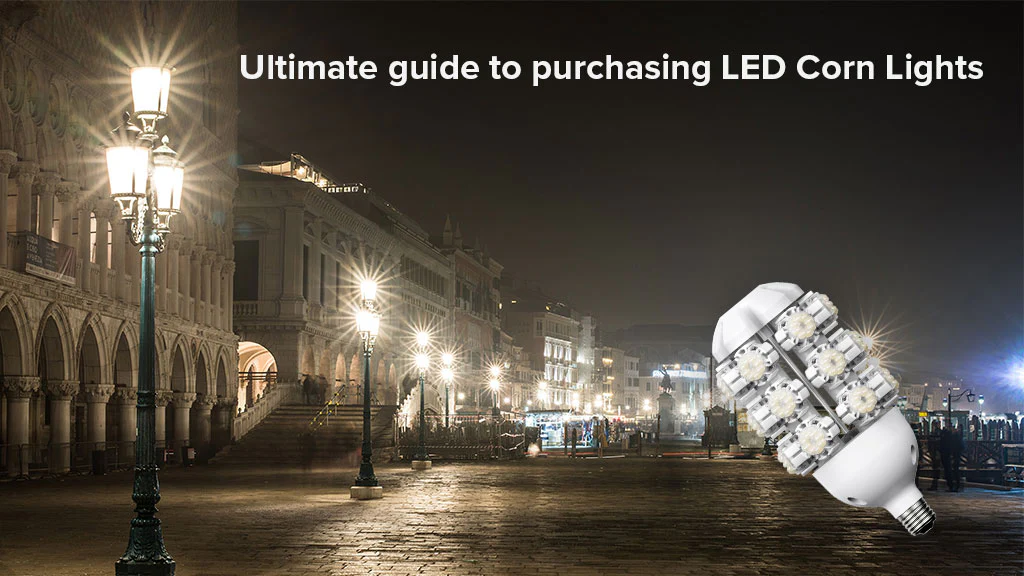
Why LED Corn Bulbs Are Lighting Up the Market
Have you ever noticed a bulb that looks like a miniature corn cob? It might seem quirky at first, almost playful, but there's serious engineering behind that kernel-like design. These LED corn bulbs have become the go-to choice for illuminating big spaces, from warehouse floors to parking lots. And honestly, once you see one in action, it's hard to settle for anything else.
By the way, Traditional bulbs spread light everywhere but often miss key spots. Crooked shadows, dim corners, it's the lighting equivalent of wearing mismatched socks. Corn bulbs, on the other hand, deliver 360 coverage, filling gaps and banishing dark patches. Think of it like planting a row of cornstalks in a field: every stalk contributes to a sea of golden light.
Getting a Handle on the Basics
Let me explain how these bulbs work. Inside each "kernel" sits an LED chip, and those chips are arranged in vertical strips around a central column. That shape isn't just for show, it's what gives full-circle illumination. Brightness is measured in lumens, not watts, so a 30W LED corn bulb can easily rival a 100W metal halide lamp. Mind blown, right?
Reviews you may find interesting:
7 Best LED Strip Lights For Ceilings (2026 Review Guide)20 Best Audi A6 C7 Aftermarket Headlights (2026 Review Guide)
7 Best LED Panel Lights (2026 Review Guide)
Here's the thing: lumens tell you how much light you get, while wattage shows how much energy you use. By focusing on lumen output per watt, you'll spot the true energy heroes. It's like comparing miles per gallon when you shop for a car. Skip the old-school wattage-only mindset and start thinking lumens.
Shape and Structure: More Than Just a Funny Name
The ear-of-corn silhouette is functional. Multiple LED strips around the center mean no awkward dark zones. Picture a carousel, each horse (LED chip) moves in perfect rhythm around the pole, lighting every angle. It's a clever twist on an age-old lighting concept.
Lumen Output and Wattage: The Numbers You Need
Want to light up a 200-square-foot garage? You might aim for 4,000, 5,000 lumens. A 30, 40W corn bulb will hit that sweet spot, while only sipping electricity. If you need mega-bright, industrial-level light, go for 8,000, 10,000 lumens with a 60, 80W model. It's all about matching the lumens to the space.
Key Features to Keep on Your Radar
- Brightness & Efficiency: Seek at least 100 lm/W for a solid mix of brightness and low power draw.
- Color Temperature: From warm 2700K for cozy vibes to cool 6500K for crisp visibility, pick what fits your mood and tasks.
- Beam Angle & Coverage: True 360 bulbs beat narrow spotlights when you need uniform illumination.
- Durability & Lifespan: Aim for 30,000+ hours rated life; that's years of on-and-off duty.
- Heat Management: A well-designed heat sink (those fin-like ridges) keeps the LEDs chill and efficient.
Energy Savings and Longevity: Show Me the Numbers
Let's talk cold, hard facts. Replace a 150W metal halide lamp with a 50W LED corn bulb and you'll save around 100W per hour. Over 10 hours a day, that's 1 kWh saved daily, 365 kWh annually. If electricity costs $0.12 per kWh, you're looking at over $40 in yearly savings for just one bulb. Multiply that across 10 fixtures, and, boom, you've covered the cost of your bulbs in a couple of years.
Plus, LEDs maintain brightness better over time. Traditional HPS lamps fade dramatically after a few thousand hours. Corn bulbs hold steady, so your warehouse doesn't turn into a gloomy cave halfway through the year.
Installation Tips You'll Actually Use
Installing a corn bulb isn't rocket science, but there are a few tricks. First, power down the circuit, safety first. Next, remove the old bulb and inspect the socket for any corrosion or damage. A quick spray of contact cleaner can't hurt. When you screw in the new corn bulb, tighten it gently, overtightening can crack the base.
Hey, you might need an adapter if you're switching from an HPS fixture. Those mogul (E39) bases differ from the more common medium (E26). Adapters are cheap and easy. And remember, always check the voltage rating, most bulbs run on 120, 277V, but some industrial models need 480V.
Let's Chat Compatibility: Will It Fit?
Misfit fixtures are the worst. Corn bulbs come with E26 and E39 options, sometimes even G24 or GU24. Before you hit "add to cart," take a moment to peek at your existing fixture. If it's an enclosed fixture, choose a corn bulb rated for wet or damp locations, moisture can shorten LED life if the bulb isn't sealed properly.
Also, check the physical clearance. Corn bulbs can be taller or wider than traditional bulbs. A quick tape-measure session will save you from awkward returns.
Heat, Quality, and Build: Are They Worth It?
Some skeptics worry LEDs run too warm, but good corn bulbs integrate passive cooling. You'll spot thick aluminum fins wrapped around the base, those suck up heat and dissipate it into the air, just like radiator fins in your car engine. No moving parts means no noisy fans.
Quality varies, of course. Budget brands might skip on thermal design or use cheap driver components. That can lead to flicker, dimming, or early burnout. Look for UL or DLC certification to ensure you're not rolling the dice.
Real-World Scenarios: Where Corn Bulbs Shine
- Street Lights & Parking Lots: Uniform coverage reduces dark spots and improves safety.
- Warehouse & Industrial Halls: High ceilings demand punchy lumens, corn bulbs deliver.
- Garden & Patio Lighting: Warm color temps create inviting outdoor vibes.
- Large Garages & Workshops: Clear visibility means fewer mistakes and safer tasks.
Ever tried working on your car under a single hanging incandescent? It's like painting in a haunted mansion, shadows everywhere. Swap in a corn bulb and the scene brightens up like midday sun.
Picking the Right One: A Handy Checklist
All set to pull the trigger? Run through these quick points:
- Confirm socket size (E26 vs. E39).
- Match lumen output to your space requirements.
- Ensure the bulb has proper certification (UL, DLC).
- Check heat-sink design, bigger fins usually mean better cooling.
- Verify voltage range and dimming compatibility.
- Read the warranty details (at least 3, 5 years is solid).
Wrapping It Up: Bright Thoughts
Honestly, LED corn bulbs have come a long way, from oddball novelties to lighting workhorses. They're efficient, long-lived, and deliver that even, glare-free glow we crave in big spaces. While they might look a bit unconventional, but sometimes the quirkiest ideas turn out to be the most practical. So next time you're wrestling with flickering fixtures or sky-high energy bills, give these corn-inspired champs a shot. Your wallet, and your warehouse, will thank you.