20 Best LED Tri-proof Lights (2026 Review Guide)
The Best Ranked LED Tri-proof Light
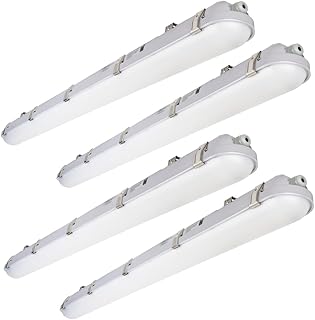
DAKASON 4FT LED Vapor Tight Light 60W, Waterproof Outdoor Light, 5000K, UL Listed
The DAKASON 4FT LED Vapor Tight Light is a durable, energy-efficient lighting solution ideal for wet and dusty environments such as parking garages, car washes, warehouses, and outdoor areas. With a bright output of 6600 lumens at only 60 watts, it replaces traditional metal halide or fluorescent fixtures while saving energy. Its waterproof design, adjustable brightness, and easy installation make it a reliable choice for commercial and industrial spaces.
Key Features:
- Energy-efficient 60W LED produces 6600 lumens, replacing 120-200W metal halide or fluorescent lights
- Adjustable brightness settings: 60W, 50W, and 40W for customizable light output
- Waterproof IP65-rated polycarbonate housing with stainless steel clips, suitable for wet and dusty areas
- Compatible with 0-10V dimmer switches (dimmer not included) for low wattage dimming control
- Wide applications including car washes, warehouses, barns, freezers, gas stations, parking garages, industrial kitchens, stairwells, tunnels, and patios
- Includes mounting bracket and screws for wall surface installation; waterproof cable gland included (cable not included)
- UL certified with maintenance-free LEDs rated for 50,000 hours and backed by a 5-year warranty
Pros
- High brightness with low power consumption, saving energy and costs
- Durable waterproof design suitable for harsh environments
- Multiple brightness levels for versatile lighting needs
- Easy to install with included hardware
- Long lifespan with UL certification and strong warranty
Cons
- Dimmer switch required for brightness adjustment but not included
- Power cable must be purchased separately
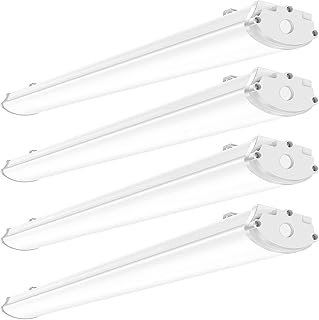
ANTLUX 4FT LED Vapor Tight Light 50W, 5000LM, IP66, 4 Pack
The ANTLUX 4FT LED Vapor Tight Light Fixture offers a powerful, durable, and waterproof lighting solution ideal for both indoor and outdoor wet environments. With 50W power delivering 5000 lumens, it efficiently replaces traditional fluorescent or incandescent lights. Its robust construction withstands harsh conditions, making it perfect for parking garages, carports, freezers, and other demanding spaces. The plug-and-play design allows quick installation without extra wiring or parts, while the long lifespan ensures years of maintenance-free use.
Key Features:
- IP66 waterproof, dustproof, and impact-resistant design with silica gel sealing, suitable for indoor and outdoor wet or cold environments
- Provides 5000 lumens at 50W, replacing less efficient fluorescent or incandescent lights
- Made with high-quality LED chips and rugged aluminum alloy for durability and low maintenance
- Versatile for use in carports, parking garages, car washes, walk-in freezers, food processing areas, barns, warehouses, patios, tunnels, and stairwells
- Plug-in design with a 5-foot power cord for easy, fast installation without any wiring or additional parts
- Long lifespan rated for up to 23 years based on 6 hours of daily use, supported by professional after-sales service
Pros
- Highly durable and weather-resistant, ideal for harsh environments
- Energy-efficient with bright 5000-lumen output using only 50 watts
- Simple installation with plug-and-play design and no extra wiring required
- Versatile application in many commercial and residential settings
- Long-lasting with minimal maintenance needs
Cons
- May require multiple units for very large spaces as each light covers a moderate area
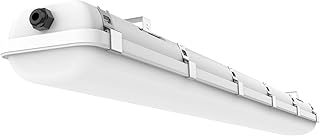
HYPERLITE 4FT 40W LED Vapor Tight Light, 5000K, Waterproof
The HYPERLITE 4FT 40W Vapor Tight LED Light is a powerful and durable lighting solution designed for a variety of environments including freezers, workshops, barns, and outdoor areas. With 5200 lumens and a high brightness efficiency of 130 lumens per watt, it provides bright, evenly distributed light. Its waterproof and dustproof IP65-rated design ensures reliable performance even in harsh conditions. The fixture is easy to install, supports daisy chaining for extended lighting setups, and is UL certified for safety and dependability.
Key Features:
- 40W LED light producing 5200 lumens with 130 lumens per watt efficiency
- Simple surface mount installation completed in 3 to 5 minutes
- Includes a 2-foot wire for daisy chaining up to 11 lights (60W) or 17 lights (40W)
- Frosted housing and clear lens for even light distribution without spots
- IP65 rated dustproof and waterproof, suitable for temperatures from -22F to 113F
- UL certified with a 36-month warranty and 30-day return policy
Pros
- High brightness with efficient energy consumption
- Durable, weatherproof design suitable for harsh environments
- Easy and quick to install with flexible daisy chaining options
- Long warranty period and strong customer support
Cons
- Daisy chain maximum limits may restrict very large installations
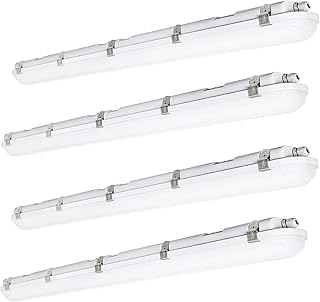
4FT LED Vapor Tight Light Fixture 60W/50W/40W, 5000K, Waterproof, 4 Pack
The DOSILIO 4FT LED Vapor Tight Light Fixture is a versatile and energy-efficient lighting solution ideal for both indoor and outdoor commercial settings. Offering adjustable brightness levels and a durable, waterproof design, this fixture is perfect for garages, workshops, cold storage, and more. With its high lumen output and easy installation, it provides bright, reliable illumination while reducing energy costs.
Key Features:
- Produces 7800 lumens at 60W with efficiency up to 130 lumens per watt, operating on 100-277V.
- Three selectable wattage settings, 60W, 50W, and 40W, to customize brightness before installation.
- IP65 rated for dust and water resistance, suitable for indoor and outdoor use in various environments.
- Includes mounting brackets and supports linking up to 8 fixtures in a series; compatible with 0-10V dimmers for adjustable brightness range.
- ETL listed for safety and quality, designed as a commercial-grade replacement for fluorescent lighting.
Pros
- Energy efficient with high brightness output.
- Flexible brightness settings to suit different needs.
- Durable, waterproof design suitable for various environments.
- Easy installation with linkable fixtures and dimming capability.
Cons
- Dimmers are not included and must be purchased separately.
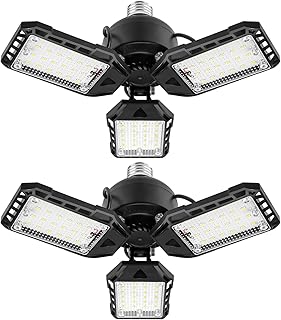
LED Garage Lights 80W, 8000LM, 3 Deformable Panels, 2 Pack
The Aoretic LED Garage Lights 2 Pack offers powerful and energy-efficient lighting with 80W power and 8000 lumens brightness. Featuring three adjustable deformable panels, these lights provide 360-degree illumination, eliminating dark spots in garages, workshops, basements, and more. With a daylight color temperature of 6500K and a high color rendering index, they deliver clear and vibrant lighting that's ideal for any large indoor space. Easy to install with a standard E26 socket, these durable lights are designed for long-lasting performance and superior heat dissipation.
Key Features:
- 80W total power producing 8000 lumens brightness with 6500K daylight color temperature and CRI over 80 for clear, natural light
- Three adjustable panels that rotate from 0 to 90 degrees to provide full 360-degree lighting coverage without dark spots
- High-quality aluminum heatsink with hollowed design for effective heat dissipation, extending lifespan beyond 50,000 hours
- Fits standard E26 sockets for easy installation in seconds without tools or electricians
- Suitable for large indoor areas such as garages, barns, warehouses, workshops, offices, and basements
Pros
- Very bright with wide 360-degree illumination
- Energy efficient, saving over 85% compared to traditional bulbs
- Simple installation with no tools required
- Long lifespan of over 50,000 hours ensures durability
Cons
- Panels might be bulky for smaller spaces
- Light color may be too cool for users preferring warmer tones
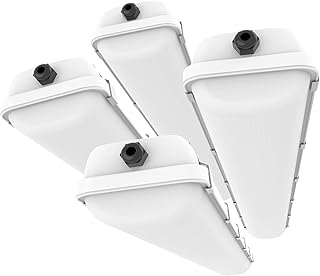
HYPERLITE 4FT LED Vapor Tight Light 40W, 5200LM, Waterproof, 4 Pack
The HYPERLITE 4FT LED Vapor Tight Light is a reliable and energy-efficient lighting solution designed for demanding environments such as car wash bays, barns, garages, and cold storage. With bright 5200 lumens output, easy installation, and a durable, waterproof construction, this fixture delivers long-lasting performance and excellent illumination in harsh settings.
Key Features:
- 40W LED light producing 5200 lumens, offering up to 80% energy savings with 130 lumens per watt efficiency
- Simple surface mount installation completed in 3 to 5 minutes; includes 2 feet wire for easy daisy chaining
- Robust, non-corrosive housing with twelve 304 stainless steel hasps for enhanced durability and impact resistance
- IP65 rated for dustproof and waterproof protection, suitable for use in environments ranging from -30C to 45C
- Lifespan of 50,000 hours operating within a temperature range of -22F to 113F
- Backed by 24/7 technical support and a 36-month warranty for peace of mind
Pros
- Significant energy savings reduce operating costs
- Durable construction suitable for harsh and wet environments
- Easy and quick installation with daisy chain capability
- Bright 5000K daylight color temperature for clear visibility
- Long lifespan minimizes maintenance frequency
Cons
- Wiring may require an electrician for large installations
- Limited to a fixed 4ft length, which might not fit all spaces
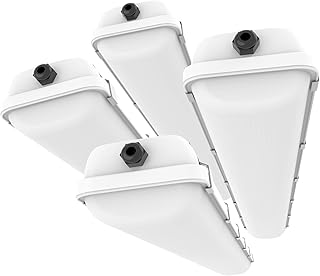
HYPERLITE 4FT LED Vapor Tight Light 60W, 7800LM, Waterproof, 4 Pack
The HYPERLITE 60W 4FT LED Vapor Tight Light Fixture delivers bright, energy-efficient lighting ideal for harsh environments. With 7800 lumens and a 5000K daylight color temperature, it replaces traditional 150W fixtures while saving up to 80% energy. Its durable, corrosion-resistant design and IP65 waterproof rating make it perfect for use in carports, warehouses, cold storage, and outdoor areas. Easy to install with daisy-chaining capability and backed by 24/7 technical support and a 3-year warranty, this light fixture combines reliability and convenience for demanding applications.
Key Features:
- 60W LED light producing 7800 lumens with 130 lumens per watt brightness
- Easy surface mount installation in 3 steps with 2 feet wire for daisy chaining
- Durable, non-corrosive housing with 12 stainless-steel hasps for impact resistance
- IP65 rated dustproof and waterproof, suitable for temperatures from -30C to 45C
- Ideal for carports, freezers, warehouses, parking garages, and food processing areas
- LED chips last up to 50,000 hours
- 24/7 technical support and 36-month warranty
Pros
- Significantly reduces energy consumption by up to 80%
- Robust, weatherproof construction for long-term outdoor use
- Bright, consistent daylight white illumination
- Quick, straightforward installation with daisy chaining capability
- Long lifespan of 50,000 hours minimizes maintenance
Cons
- Wire length may be limiting for some installation setups
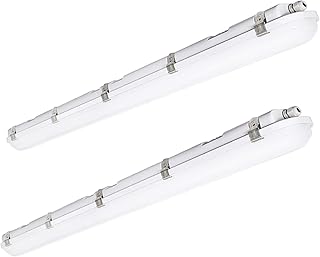
4FT LED Vapor Tight Light Fixture, Power Selectable 5000K, 2-Pack
The DOSILIO 4FT LED Vapor Tight Light Fixture is a versatile and durable lighting solution designed for both indoor and outdoor use. Featuring three selectable wattages, it delivers bright 5000K illumination with an IP65 waterproof rating, making it ideal for garages, workshops, freezers, and more. Its efficient design includes a wide beam angle and frosted diffuser for even light distribution, while its commercial-grade build ensures long-lasting performance. Easy to install and linkable, these fixtures offer a reliable upgrade from traditional fluorescent lights.
Key Features:
- Three wattage options (40W, 50W, 60W) selectable on the LED driver before installation
- Compatible with standard 0-10V dimmers for flicker-free dimming from 10% to 100% (dimmer not included)
- Operates on 100-277V input and produces 6600 lumens of bright 5000K white light with a 120 beam angle
- Built-in frosted diffuser ensures even light distribution
- IP65 rated silicone-sealed design protects against moisture, dust, and dirt
- Surface mount brackets included for easy installation
- Can be daisy-chained to connect up to 8 fixtures
- ETL listed, energy-efficient, and backed by a 5-year warranty
Pros
- Adjustable brightness options to fit different lighting needs
- Waterproof and dustproof design suitable for harsh environments
- Easy to install and link multiple units together
- Provides bright, evenly distributed light with low energy consumption
- Long 5-year warranty for peace of mind
Cons
- Power cable is not included, requiring separate purchase
- Compatible dimmer switches must be purchased separately
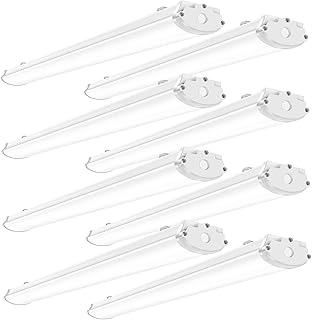
ANTLUX 4FT LED Vapor Tight Light 50W, 5000LM, 8 Pack
The ANTLUX 4FT LED Vapor Tight Light Fixture is a durable and energy-efficient lighting solution ideal for both indoor and outdoor wet environments. Delivering 5000 lumens at 50W, it replaces traditional fluorescent or incandescent lights with superior brightness and lower power consumption. Its IP66 waterproof and dustproof design ensures reliable performance in harsh conditions like parking garages, carports, freezers, and workshops. The fixture features a convenient plug-in design for quick installation without rewiring, making it a practical choice for various commercial and industrial applications.
Key Features:
- IP66 rated waterproof, dustproof, and impact-resistant with silica gel sealing
- Provides 5000 lumens brightness at 50 watts power consumption
- Constructed with high-quality LED chips and rugged aluminum alloy for durability
- Suitable for diverse locations including carports, garages, freezers, warehouses, patios, and tunnels
- Plug-in design with 5-foot power cord allows easy installation without rewiring
- Long lifespan of up to 23 years based on 6 hours daily usage
- Professional after-sales support for customer satisfaction
Pros
- Energy-efficient with bright 5000 lumens output
- Robust IP66 protection suitable for wet and dusty environments
- Quick and simple installation with plug-in design
- Long-lasting LED technology reduces maintenance
- Versatile use across many indoor and outdoor locations
Cons
- May require additional fixtures for very large spaces to achieve uniform lighting
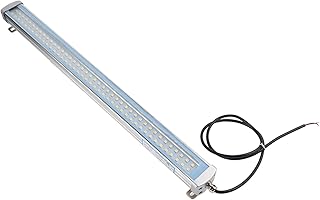
Jectse 40W LED Tri-Proof Light, Anti-Explosion Design
The Jectse 24-36V 40W LED Tri-Proof Light is a durable, anti-explosion linear lamp designed for various industrial and commercial uses such as CNC machines, streets, tunnels, schools, and factories. Constructed with aluminum alloy and tempered glass, it ensures effective heat dissipation and long-lasting performance. Its adjustable bracket allows you to easily change the light angle, while the IP67 rating guarantees waterproof and explosion-proof reliability. This fixture combines robust sealing with oil resistance, making it ideal for harsh environments.
Key Features:
- Made with aluminum alloy and tempered glass for efficient heat dissipation
- Adjustable bracket lets you rotate and change the light angle
- IP67 rated for waterproof and explosion-proof protection
- Anodized finish prevents discoloration and enhances durability
- Sealed structure that is oil-resistant and waterproof
Pros
- Strong heat dissipation due to quality materials
- Adjustable angle increases lighting flexibility
- High protection rating suitable for tough environments
Cons
- Limited wattage options might not fit all lighting needs
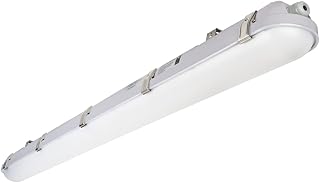
DAKASON 4FT LED Vapor Tight Light 60W, Waterproof, UL Listed
The DAKASON 4FT LED Vapor Tight Light is a durable, energy-efficient lighting solution designed for tough environments. Delivering bright 6600 lumens at 60 watts, it replaces traditional 120-200 watt fixtures while saving energy. Its waterproof and corrosion-resistant build makes it ideal for outdoor and damp areas like parking garages, car washes, warehouses, and more. Easy to install with included mounting hardware, this UL-listed fixture offers long-lasting performance with a 50,000-hour lifespan and a 5-year warranty.
Key Features:
- Energy-efficient 60W LED producing 6600 lumens, equivalent to 120W traditional lighting, with adjustable power settings (60W/50W/40W) to customize brightness
- Waterproof IP65 certified with sturdy polycarbonate housing and stainless steel clips, suitable for wet, damp, and dusty conditions
- Versatile use for car washes, warehouses, barns, walk-in freezers, gas stations, parking garages, industrial kitchens, stairwells, tunnels, and outdoor patios
- Includes mounting bracket and screws for wall installation and a waterproof cable gland; supports suspension mounting with additional accessories
- UL certified with maintenance-free LEDs rated for 50,000 hours and backed by a 5-year warranty
Pros
- Highly energy efficient, saving on electricity costs
- Durable, weatherproof construction ideal for harsh environments
- Adjustable brightness settings for customized lighting
- Easy to install with included hardware and versatile mounting options
- Long lifespan and reliable UL certification provide peace of mind
Cons
- Dimming function requires a compatible dimmer switch which is not included
- Suspension mounting accessories must be purchased separately
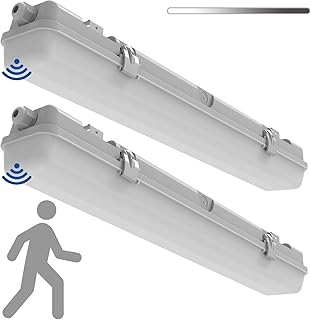
2FT Motion Sensor LED Vapor Tight Light, 10W/20W, Waterproof, 2-Pack
The Walrusled 2FT Tri-Level Motion Sensor LED Vapor Tight Light is a durable, energy-efficient lighting solution designed for both indoor and outdoor use. Featuring a smart tri-level microwave sensor, this light adjusts brightness or turns off automatically when no motion is detected, offering customizable settings to fit your needs. Its waterproof, dustproof, and impact-resistant construction ensures long-lasting performance in harsh environments. With selectable wattages for flexible brightness, easy installation options, and certified safety standards, this fixture is ideal for spaces like garages, workshops, carports, and industrial areas.
Key Features:
- Tri-level microwave motion sensor with adjustable sensing range (up to 33 feet), hold time, standby brightness (20%, 40%, 60%, or 100%), and standby time for efficient automatic dimming and motion detection.
- Waterproof and dustproof polycarbonate housing with stainless steel clips, resistant to impact, corrosion, and extreme temperatures (-4F to 104F), suitable for harsh indoor and outdoor environments.
- Selectable wattages: 10W (1250 lumens) and 20W (2500 lumens) offering soft, uniform light ideal for various settings like garages, utility rooms, warehouses, and workshops.
- Up to 75% energy savings with high lumen efficiency (125lm/W) and a lifespan of over 54,000 hours, including mounting bracket and screws for wall surface installation, waterproof cable gland included, and support for suspension mounting.
- Certified by CE, FCC, SAA & UKCA with a calculated lifespan up to 100,000 hours, backed by a one-year warranty and five years of technical support.
Pros
- Highly customizable motion sensor settings to optimize lighting and save energy.
- Durable, weatherproof design suitable for harsh environments and outdoor use.
- Energy-efficient with long lifespan and multiple mounting options.
Cons
- Installation cable not included, which may require extra purchase.
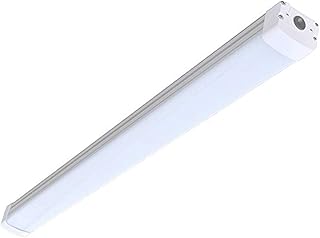
4FT LED Tri-Proof Light 40W, 5000LM, Daylight, 6 Pack
The CHIUER 4ft 40W LED Tri-Proof Light is an energy-efficient lighting solution ideal for various settings. Offering bright 5000 lumens with a daylight color temperature of 5000K, it provides clear and flicker-free illumination. Its tri-proof design ensures it is waterproof, dustproof, damp-proof, and pressure-resistant, making it perfect for both indoor and outdoor use. Certified with UL and DLC Premium, it guarantees safety, reliability, and eligibility for rebates. Backed by a 7-year warranty, this fixture is a durable and cost-effective upgrade to traditional fluorescent lights.
Key Features:
- Bright 5000 lumens output with 125 lumens per watt efficiency
- Compatible with 100-277V AC power supply
- Daylight color temperature of 5000K with 120-degree beam angle for wide, uniform lighting
- IP65 rated for waterproof, dustproof, damp-proof, and pressure-resistant performance
- Can be installed ceiling-mounted, suspended, or connected in series
- UL Listed and DLC Premium certified for safety and rebate eligibility
- 7-year warranty for long-lasting peace of mind
Pros
- High brightness with excellent energy efficiency
- Robust tri-proof design suitable for harsh environments
- Versatile installation options
- Backed by industry certifications and a long warranty
Cons
- May require professional installation for suspended or series connections
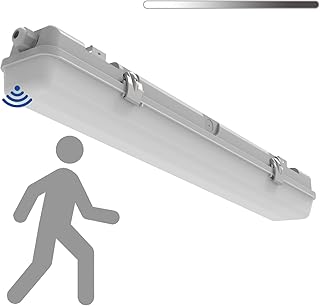
2FT Motion Sensor LED Vapor Tight Light, 10W/20W, Waterproof
The Walrusled 2FT Tri-Level Motion Sensor LED Vapor Tight Light is a durable and energy-efficient lighting solution designed for indoor and outdoor use. Featuring an intelligent tri-level microwave motion sensor, this fixture adjusts brightness or turns off automatically based on detected movement, offering customizable settings for sensing range, hold time, and brightness levels. Its robust polycarbonate housing ensures waterproof and dustproof protection withstanding harsh environments and temperatures from -4F to 104F. With selectable wattages of 10W and 20W, this light provides bright, uniform illumination suitable for a wide range of applications such as garages, warehouses, carports, and stairwells. Easy to install and highly energy-efficient, it saves up to 75% on electricity while delivering over 54,000 hours of maintenance-free performance. Certified and backed by a one-year warranty plus five years of technical support, this fixture is a reliable, long-lasting lighting solution.
Key Features:
- Tri-level microwave motion sensor with adjustable detection range up to 33 feet, customizable hold time, and selectable standby brightness levels (20%, 40%, 60%, or 100%)
- Waterproof and dustproof polycarbonate housing with stainless steel clips, impact-resistant and able to withstand extreme temperatures from -4F to 104F
- Selectable wattages: 10W (1250 lumens) and 20W (2500 lumens) providing uniform light suitable for various indoor and outdoor spaces
- High energy efficiency with 125 lumens per watt, saving up to 75% in energy consumption
- Easy installation with included mounting bracket, screws, and waterproof cable gland; supports surface and suspension mounting
- Certified by CE, FCC, SAA, and UKCA with an estimated lifespan of 100,000 hours
- Includes one-year warranty and five years of technical support
Pros
- Adjustable motion sensor settings for customized lighting control and energy savings
- Durable, waterproof, and dustproof design suitable for harsh environments
- Energy-efficient with significant electricity savings and long lifespan
- Versatile wattage options to fit different brightness needs
- Easy to install with included mounting hardware
Cons
- Cable for waterproof connection is not included
- Motion sensor maximum detection range is limited to 33 feet
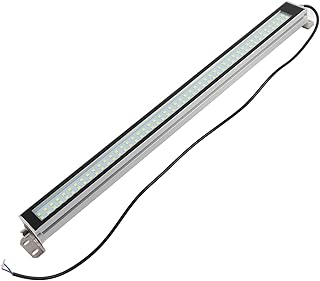
LED Work Light 20W, Industrial Lighting
The Diydeg LED Work Light is a durable and efficient lighting solution designed for industrial environments like workshops, garages, and CNC machining centers. Its explosion-proof and waterproof design ensures safety and reliability in harsh conditions. Crafted from aluminum alloy, this 20W LED tube light delivers bright white illumination while maintaining a compact size and low heat output, making it ideal for precise and detailed work.
Key Features:
- Waterproof and explosion-proof design for safe use in harsh environments
- Aluminum alloy construction for durability and long lifespan
- Bright white LED light with low heat emission
- Easy installation for immediate use
- Suitable for CNC machines, machining centers, product inspection, and dusty conditions
Pros
- Robust build with waterproof and explosion-proof features
- High brightness with energy-efficient low heat emission
- Simple installation process saves time
Cons
- Limited to 20W power, which might be insufficient for larger workspaces
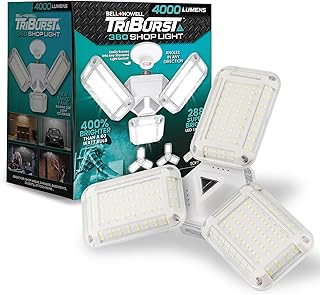
TRIBURST SHOPLIGHT PRO 360 LED Light Bulb, 4000 Lumens
The TRIBURST SHOPLIGHT PRO 360 is a versatile LED garage and shop light featuring three adjustable panels that can be tilted 90 degrees to direct light exactly where needed. It delivers bright illumination with 4000 lumens while consuming only 44 watts for energy efficiency. Installation is simple, just screw it into a standard bulb socket and use your existing wall switch to toggle between three brightness modes: Brilliant, Bright, and Soft. Built with durable, rust-proof materials, this fixture is ideal for garages, workshops, basements, and indoor spaces like bedrooms or living rooms.
Key Features:
- Screws into an existing bulb socket; uses your wall switch to control the light
- Three brightness modes accessed by cycling the wall switch: Brilliant, Bright, and Soft
- Energy efficient 44 watts output providing 4000 lumens brightness
- Adjustable triple LED panels that pivot 90 degrees to direct light as needed
- Durable, rust-proof construction for long-lasting use
- Dimensions: 7.7 x 8.9 x 5.1 inches; light spread of 11 inches at the widest point
Pros
- Easy to install with no additional wiring required
- Multiple brightness settings for customizable lighting
- Energy-efficient with bright 4000 lumen output
- Adjustable panels offer versatile lighting direction
- Sturdy, rust-resistant build ensures durability
Cons
- Brightness modes require cycling the switch, which may be slightly inconvenient
- Panels might be bulky in smaller spaces
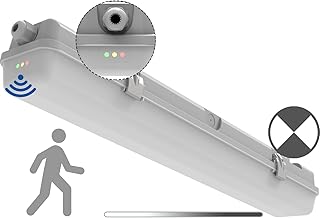
2FT Motion Sensor LED Vapor Tight Emergency Light, IP65, Waterproof
The Walrusled 2FT Tri-Level Motion Sensor LED Vapor Tight Emergency Light is a versatile, energy-efficient lighting solution ideal for both indoor and outdoor use. Featuring a motion sensor with adjustable brightness and timing, an integrated emergency battery backup, and a waterproof, dustproof housing, this fixture delivers reliable illumination in harsh environments such as garages, workshops, carports, and cold storage. With selectable wattages, easy installation options, and certifications ensuring quality and longevity, it's designed to provide consistent, maintenance-free lighting for years.
Key Features:
- Tri-level microwave motion sensor with adjustable sensing range up to 33 feet, hold time from 30 seconds to unlimited, and standby brightness options (20%, 40%, 60%, 100%)
- Built-in emergency battery backup with LiFePO4 6.4V 3000mAh battery providing over 200 minutes of emergency lighting and a test button with indicator lights
- Durable, vapor tight polycarbonate housing with stainless steel clips, rated IP65 and IK08 for waterproof, dustproof, corrosion-resistant, and impact-resistant use in temperatures from -4F to 104F
- Selectable wattages: 10W (1250 lumens) or 20W (2500 lumens) offering soft, uniform light suitable for various spaces including garages, warehouses, workshops, and stairwells
- Certified with CE, FCC, SAA, and UKCA with a lifespan up to 100,000 hours, backed by a 1-year warranty and 5 years of technical support
- Energy efficient with up to 75% energy savings, delivering 125 lumens per watt, includes mounting brackets and screws for wall installation, cable gland for waterproof connection, and supports suspension mounting
Pros
- Adjustable motion sensor settings allow customized lighting control, reducing energy consumption
- Emergency battery backup ensures safety during power outages with a long-lasting lithium iron phosphate battery
- Rugged, vapor tight design suitable for harsh environments, resistant to dust, moisture, and impacts
- Multiple wattage options and wide application versatility make it suitable for various indoor and outdoor locations
- Certifications and long lifespan provide confidence in product quality and durability
Cons
- Requires cable for waterproof connection which is not included
- Emergency battery recharge time of 16 to 24 hours may be lengthy in some scenarios
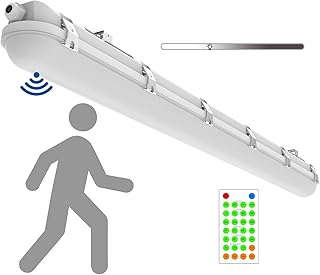
4FT Sensor LED Vapor Tight Light w/Remote, 20W/40W, Waterproof
The Walrusled 4FT Tri-Level Sensor LED Vapor Tight Light is a durable, energy-efficient lighting solution designed for both indoor and outdoor use. Featuring an intelligent tri-level microwave sensor and remote control, this 20W/40W fixture provides customizable brightness and motion detection up to 33 feet. Its rugged, waterproof, and dustproof polycarbonate housing ensures reliability in harsh environments, making it ideal for garages, workshops, carports, and commercial spaces. With up to 75% energy savings and a long 54,000-hour lifespan, this dimmable light fixture combines advanced technology and practical design for versatile lighting needs.
Key Features:
- Tri-level microwave motion sensor with remote control for adjustable brightness (20%, 40%, 60%, 100%) and hold time from 30 seconds to indefinite
- Motion detection range up to 33 feet with settings adjustable via remote
- Waterproof, dustproof, and impact-resistant polycarbonate housing suitable for extreme temperatures (-4F to 104F)
- Two brightness options: 20W (2500 lumens) and 40W (5000 lumens) for flexible lighting applications
- Energy-efficient with 125 lumens per watt, saving up to 75% on power consumption
- Easy installation with included mounting bracket, screws, and waterproof cable gland; supports surface and suspension mounting
- Certified by CE, FCC, SAA, and UKCA with a lifespan up to 100,000 hours
- One-year warranty and five years of technical support with responsive customer service
Pros
- Customizable lighting levels and sensor settings via remote control
- Durable and weather-resistant design suitable for harsh environments
- High energy efficiency with significant cost savings over time
- Versatile installation options and long operational lifespan
- Reliable certifications and strong manufacturer support
Cons
- Cable for waterproof connection not included
- Remote control settings may require initial adjustment for optimal use
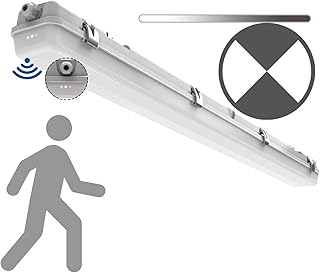
4FT Motion Sensor LED Vapor Tight Emergency Light, 20W/40W, Waterproof
The Walrusled 4FT Tri-Level Motion Sensor LED Vapor Tight Emergency Light offers versatile and reliable lighting for both indoor and outdoor settings. Equipped with an intelligent microwave motion sensor that dims or turns off the light based on activity, this fixture saves energy while providing optimal illumination. Its built-in emergency battery backup ensures continuous operation during power outages, making it ideal for safety-focused environments. Crafted with a durable, waterproof, and dustproof polycarbonate housing, this light withstands harsh conditions and last for years with minimal maintenance. With selectable wattages and dimmable settings, it adapts easily to various applications, from carports and warehouses to workshops and stairwells.
Key Features:
- Tri-level microwave motion sensor with adjustable range up to 33 feet; dims or turns off light based on motion and time settings including hold time and standby brightness levels (20%, 40%, 60%, 100%)
- Built-in LiFePO4 emergency battery backup with over 300 minutes runtime; automatic charging and discharging; integrated test button and indicator light for quick battery status checks
- Durable, waterproof and dustproof polycarbonate housing with stainless steel or PC clips; impact-resistant and suitable for temperatures from -4F to 104F; ideal for harsh indoor and outdoor environments
- Two brightness options: 20W (2500 lumens) or 40W (5000 lumens) with soft, uniform light distribution; perfect for a wide range of locations including garages, basements, workshops, and parking areas
- High energy efficiency with 125 lumens per watt, saving up to 75% energy; includes mounting bracket and screws for wall surface installation, with support for suspension mounting and waterproof cable connection
- Certified by CE, FCC, SAA, and UKCA; rated lifespan of up to 100,000 hours; backed by a one-year warranty and five years of technical support
Pros
- Energy-saving motion sensor with customizable dimming and sensing options
- Reliable emergency battery backup for extended power outage operation
- Durable, weatherproof design suitable for multiple harsh environments
Cons
- Cable not included for waterproof connection, requiring separate purchase
- Emergency battery requires 16 to 24 hours to fully recharge
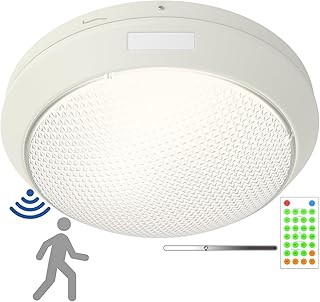
12 Inch Sensor LED Canopy Light w/Remote, 30W, Waterproof, Dimmable
The Walrusled 12 Inch Tri-Level Sensor LED Canopy Light is a versatile and durable lighting solution designed for both indoor and outdoor use. Featuring a tri-level microwave motion sensor with remote control, it offers customizable brightness levels and sensing ranges to suit various environments. Built with a sturdy steel housing and impact-resistant polycarbonate diffuser, this waterproof and dustproof fixture withstands harsh conditions while delivering energy-efficient, bright illumination. Ideal for spaces like garages, stairwells, warehouses, and utility rooms, it combines easy installation with long-lasting performance backed by comprehensive certifications and warranty support.
Key Features:
- Tri-level microwave motion sensor with remote control for adjustable brightness (20%, 40%, 60%, 100%), hold time (30 seconds to infinite), sensing distance up to 33 feet.
- Waterproof and dustproof construction with steel housing and impact-resistant polycarbonate diffuser, suitable for extreme temperatures from -4F to 104F.
- Two wattage options: 15W (1875 lumens) and 30W (3750 lumens) offering soft, uniform light for various indoor and outdoor applications.
- Energy efficient with 125 lumens per watt, saving up to 75% on electricity costs and providing over 54,000 hours of maintenance-free use.
- ETL, CE, FCC, SAA, and UKCA certified for safety and reliability, backed by a one-year warranty and five years of technical support.
Pros
- Customizable motion sensor settings with remote control for convenience and energy savings.
- Durable, weather-resistant design ideal for harsh indoor and outdoor environments.
- High energy efficiency reduces electricity costs significantly.
Cons
- Remote control and sensor setup may require some initial time to customize according to user preferences.
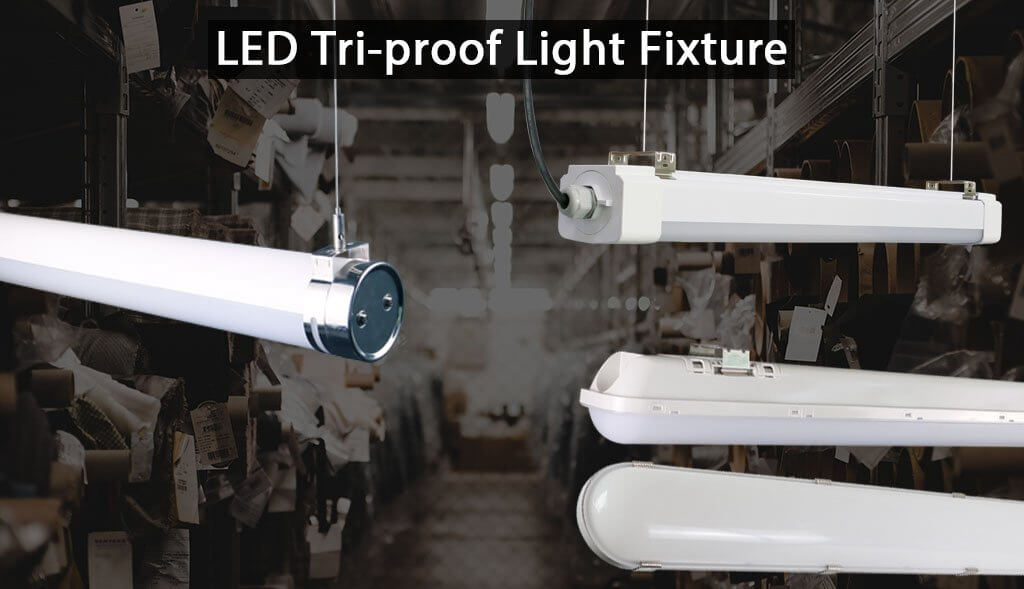
Let's Talk LED Tri-Proof Lights: Why They Matter
By the way, It's easy to overlook the humble overhead light, until water drips from it or dust clogs the lens. That's exactly when a tri-proof fixture becomes a lifesaver. Designed to shrug off moisture, grit, and corrosion, these lights keep your space bright and your wallet happy.
Imagine your basement workshop or the garage where you tinker on weekends. A regular tube can flicker or blacken when humidity spikes. But a well-sealed LED tri-proof light? It just glows on, rain or shine.
Breaking Down the Must-Have Features
Here's the thing: not all tri-proof lights are created the same. You'll want to keep an eye on several specs:
- IP Rating: Usually IP65 or higher. That tells you the fixture can handle jets of water plus fine dust, no compromises.
- Lumens & Brightness:
Reviews you may find interesting:
7 Best Bike Lights (2026 Review Guide)
20 Best Edison Light Bulbs (2026 Review Guide)
20 Best Range Rover Aftermarket Headlights (2026 Review Guide)
For most workspaces aim for 3,000, 10,000 lumens. Simple math: multiply square footage by about 30, 50 lumens. - Color Temperature: Measured in Kelvins. Cooler light (~5000K) mimics daylight; warmer (~3000K) feels cozier. Pick what matches your vibe.
- CRI (Color Accuracy): A CRI above 80 makes colors pop, important in studios or display areas.
- Power Draw & Efficiency: Look for 120, 140 lumens per watt. That's where true savings kick in.
- Lifespan: Expect 50,000+ hours. That's over 11 years if you run them eight hours a day.
- Mounting Options: Surface mount, suspension kit, even magnetic clips, choose whichever suits your ceiling or support rails.
- Warranty & Support: A solid 3, 5 year pledge shows the brand stands behind its seals and drivers.
Where to Use Them (and Why They Shine)
Maybe you're upgrading a cold storage room or outfitting an assembly line, either way, tri-proof lights handle harsh conditions like pros handle multi-tasking. Here are some popular spots:
- Parking Garages: Dust, exhaust and occasional drips from drainage systems? No problem.
- Industrial Workshops: Sawdust, metal shavings, spilled cleansers, bring it on.
- Cold Rooms & Freezers: A sealed lens means no condensation fogging or frost buildup.
- Car Service Bays: Oil splatter and high-pressure washers stay outside.
- Agricultural Buildings: Feed dust and moisture from daily chores can't touch these fixtures.
Installation Tips: Keep It Simple (But Safe)
Honestly, installing a tri-proof light isn't rocket science. A little planning saves headaches:
- Map your layout: Space fixtures evenly for uniform illumination. A quick sketch helps.
- Turn off power: Safety first, double-check your breaker panel.
- Mount brackets or clips: Most lights come with hardware; just follow the included guide.
- Secure wiring: Use waterproof connectors if your area sees high humidity.
- Test before sealing: Turn power on briefly to confirm everything lights up.
If you're not 100% confident with electrical work, you might bring in an electrician. It's a one-hour job, but it'll give you total peace of mind.
Maintenance Made Easy
You might think sealed means no upkeep, but a little TLC goes a long way. Every six to twelve months:
- Power down and dust off the housing.
- Wipe the lens with a damp, lint-free cloth (avoid harsh chemicals).
- Check the gasket: If it's cracked or worn, swap it out to keep moisture at bay.
- Inspect drivers and wiring for any signs of wear or corrosion.
One odd sensory note: ever catch a faint chemical smell when a fixture ages? It's usually the driver. Replace it quickly, the glow dims before you know it.
Environment & Cost: A Winning Combination
Here's a mild contradiction, these lights cost more upfront but slash energy bills over time. How so? LEDs convert nearly all power into light, not heat. That means:
- Lower electricity costs (think 50, 70% savings versus fluorescents).
- Reduced HVAC load, less heat means your AC doesn't work as hard.
- Fewer replacements, less waste heading to the landfill.
Plus, if you live where rebates or tax credits apply, you might snag a break on the purchase price. Not bad, right?
Choosing the Right Fixture for Your Space
It's tempting to pick the brightest LED tube available, but overshooting can cause glare, hard on the eyes. Instead:
- Calculate your target lumens: Multiply area (sq ft) by the desired lumens per square foot.
- Match IP rating to environment: IP65 for most; IP67 if you've got pressure washers or direct spray.
- Consider beam angle: Narrow beams (30, 60) focus light; wide beams (120) flood evenly.
- Mind the ambient temp: Some drivers slow down below , 10C or above 40C. Choose a fixture rated beyond your extremes.
Seasonal Lighting Notes
Hey, did you notice shorter days creeping in as autumn arrives? Cooler temperatures can actually make LEDs brighter. That crisp morning glow? That's real. Just make sure your lens stays clean, fallen leaves and pollen can dull output over time.
Real-World Metaphor: Lighting Like a Swiss Army Knife
Think of a tri-proof light as a Swiss Army knife of illumination, compact, versatile, made for rough use yet surprisingly refined. It's not all flash; it's got useful bits hidden inside, drivers that regulate current, diffusers that even out rays, and housings tough enough to laugh off environmental mischief.
Pulling It All Together: Final Thoughts
All this info might seem like a mountain of details, but trust me, once you nail down the basics, it's pretty smooth sailing. You'll end up with a fixture that:
- Survives harsh conditions without complaint.
- Saves energy and trims your monthly bill.
- Lasts years on end, no flicker, no fuss.
Give your space that reliable glow. Your eyes, your wallet, and heck, even your maintenance crew, will thank you.
Ready to review the list you already have? Check your notes, compare specs, and pick the model that fits both your budget and the area's demands. Then, just sit back and enjoy bright, worry-free lighting for years.
So, what are you waiting for? Let those shadows retreat and bring in a steady, efficient glow that works as hard as you do.