10 Best LED Vapor-tight Lights (2026 Review Guide)
The Best Ranked LED Vapor-tight Light
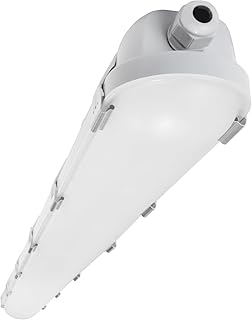
HYPERLITE 65W LED Vapor Light, 8645lm, Waterproof, 4-Pack
The HYPERLITE 65W 4FT LED Vapor Light is a versatile, energy-efficient lighting solution designed for wet and demanding environments like garages, car washes, warehouses, and more. Offering selectable brightness levels and color temperatures, this waterproof fixture delivers powerful illumination with up to 8645 lumens, all housed in a durable, moisture-resistant casing. Installation is straightforward with pre-wired cables and included mounting brackets, making it an excellent choice for both commercial and residential spaces that need reliable, bright lighting.
Key Features:
- Energy-efficient 4ft LED vapor tight fixture delivering up to 8645 lumens with AC100-277V support. ETL certified with a sturdy metal latch protecting against dust and moisture.
- Selectable wattage (45W, 55W, 65W) and color temperature (4000K, 5000K, 6000K) via driver switch. Compatible with most 1-10V dimmers (not included) for adjustable brightness.
- IP65 waterproof rating with durable polycarbonate housing, silicone gaskets, metal latches, and waterproof cables for protection against moisture and pests.
- Easy installation with pre-wired cables, flip-latch connectors, and included mounting bracket for ceiling or wall mounting.
- 24/12 premium customer service with 24-hour email and 12-hour phone support, plus a 36-month quality assurance warranty.
Pros
- Flexible lighting options with adjustable wattage and color temperatures.
- Highly durable and waterproof, suitable for wet and harsh environments.
- Simple installation process with pre-wired connectors and mounting hardware.
Cons
- 1-10V dimmer compatibility requires a separate dimmer purchase.
- May be brighter than needed for small residential spaces.
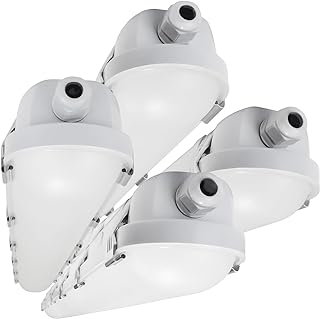
HYPERLITE 65W LED Vapor Proof Light, 8645lm, 4-Pack
The HYPERLITE 65W 4-pack LED Vapor Proof Lights deliver powerful, adjustable illumination ideal for various commercial and industrial settings. Featuring a sealed construction with IP65 waterproof rating and durable materials, these fixtures resist dust, moisture, and pests, making them perfect for tough environments like car washes, freezers, and garages. With selectable wattage and color temperature options, plus easy installation, they provide versatile, energy-efficient lighting solutions with reliable support.
Key Features:
- Energy-efficient 4-foot LED vapor proof light with up to 8645 lumens output, compatible with AC100V-277V and ETL certified.
- Selectable wattage (45W, 55W, 65W) and color temperature (4000K, 5000K, 6000K) via driver switch; compatible with most 1-10V dimmers (not included).
- IP65 rated with polycarbonate housing, silicone gaskets, metal latches, and waterproof cables for moisture and pest resistance.
- Pre-wired for easy connection and installation with included mounting brackets suitable for ceiling or wall.
- 24/12 premium customer support with 36 months quality assurance and prompt technical assistance.
Pros
- Highly customizable lighting intensity and color to suit different environments.
- Durable, weatherproof design ideal for wet and harsh locations.
- Simple installation with pre-wired cables and mounting hardware included.
Cons
- Dimmer compatibility requires separate purchase as dimmer is not included.
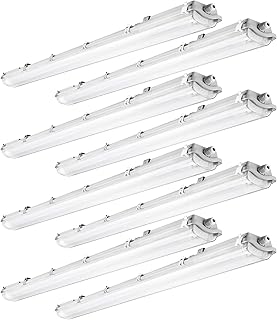
BRILLIHOOD 4FT LED Vapor Tight Fixtures, 48W, 4200LM, 8-Pack
The BRILLIHOOD 4Ft LED Vapor Tight Light Fixtures offer bright, energy-efficient lighting with durable waterproof construction. Delivering 4200 lumens of clear, daylight 6500K light, these fixtures are designed for both indoor and outdoor use in garages, car washes, basements, and more. Easy to install with multiple mounting options, they feature replaceable bulbs and a durable design that withstands wet and dusty conditions.
Key Features:
- Includes 2 replaceable 24W LED bulbs per fixture, totaling 48W and 4200 lumens with bright 6500K daylight color
- IP65 waterproof rating ensures reliable use in wet and dusty environments
- Energy-efficient design with milky covers that provide even, no-glare light
- Simple installation with mounting clips for ceiling or wall; can also be suspended with a hanging rope (not included)
- Suitable for garages, car washes, basements, workbenches, storage areas, and other indoor or outdoor spaces
Pros
- Bright and energy-saving LED lighting with 4200 lumens output
- Durable waterproof design ideal for harsh or wet environments
- Versatile mounting options for easy installation
Cons
- Hanging rope not included for suspension installation
- Light fixtures may be bulkier compared to slim fluorescent alternatives
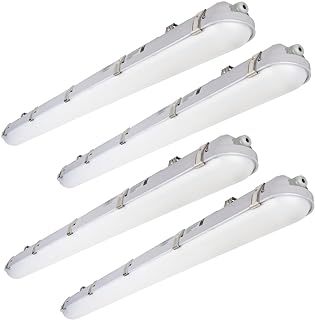
DAKASON 4FT LED Vapor Tight Light, 60W, 6600lm, IP65, 4-Pack
The DAKASON 4FT LED Vapor Tight Light is a durable and energy-efficient lighting solution designed for wet and dusty environments. Delivering bright illumination equivalent to 120W traditional fixtures using only 60 watts, it offers adjustable brightness and reliable waterproof construction. Ideal for various commercial and industrial settings such as parking garages, car washes, warehouses, and outdoor areas, this UL-listed fixture ensures long-lasting performance backed by a 5-year warranty.
Key Features:
- Energy-efficient 60W power consumption producing 6600 lumens, replaceable for 120-200W metal halide or fluorescent fixtures with adjustable brightness at 60W, 50W, and 40W.
- Waterproof IP65-rated polycarbonate housing with stainless steel clips, suitable for wet, damp, and dusty environments; supports 0-10V dimming with compatible dimmers (dimmer not included).
- Versatile for use in car washes, warehouses, barns, walk-in freezers, gas stations, parking garages, industrial kitchens, stairwells, tunnels, and outdoor patios where moisture is present.
- Easy installation with included mounting bracket, screws, and waterproof cable gland (cable not included) for secure surface mounting.
- UL certified with maintenance-free LEDs rated for 50,000 hours of operation and a 5-year warranty for reliable long-term use.
Pros
- Highly energy-efficient with adjustable brightness settings.
- Robust waterproof and dustproof design suitable for various challenging environments.
- Long lifespan of 50,000 hours and backed by a 5-year warranty.
Cons
- Dimming function requires a compatible commercial dimmer switch, which is not included.
- Power cable must be purchased separately.
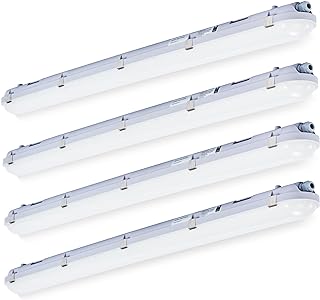
4FT LED Vapor Tight Lights, 40W 4800 LMS, IP65, 4-Pack
The Geperll 4FT LED Vapor Tight Lights are energy-efficient and durable fixtures designed for both indoor and outdoor use. With 40W power delivering 4800 lumens at a daylight 5000K color temperature, these lights provide bright, clear illumination suitable for warehouses, cold storage, parking garages, and more. Built with a tough PC housing and stainless steel clips, these IP65-rated fixtures resist water, dust, shocks, and corrosion. They feature 0-10V dimmable functionality and easy installation, backed by a 5-year warranty for reliable performance.
Key Features:
- 40W LED delivers 4800 lumens at 5000K daylight white, replacing traditional 100W fixtures and saving up to 60% on energy
- 0-10V dimmable to adjust brightness according to different needs
- Constructed with durable PC housing, stainless steel clips, and silicone gasket for waterproof, shockproof, and corrosion-resistant performance
- IP65 rated for dustproof and waterproof protection
- Suitable for indoor and outdoor use including cold storage (-30C to 45C), parking garages, food facilities, tunnels, and stairwells
- Simple installation using included screws and clips, typically completed in 15 minutes
- 5-year warranty and responsive customer service
Pros
- Energy-efficient with up to 60% electricity savings
- Durable and weather-resistant design ideal for harsh environments
- Easy to install with all mounting hardware included
- Dimmable to customize lighting levels
Cons
- May require a compatible 0-10V dimmer switch for brightness adjustment
- Brightness might be intense for sensitive areas without dimming
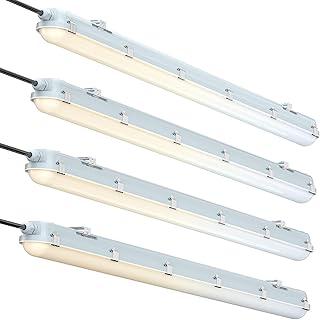
4FT LED Vapor Tight Fixtures, 4-Pack, 7800LM, IP65 Waterproof
The JC-LGL 4FT Vapor Tight LED Fixture offers versatile, high-performance lighting ideal for garages, warehouses, workshops, and other industrial or commercial spaces. With adjustable wattage and color temperature options, this waterproof and dustproof fixture delivers bright, energy-efficient illumination while ensuring durability and ease of installation.
Key Features:
- 4-foot LED fixture with adjustable wattage (30W, 40W, 50W, 60W) and color temperatures (3000K to 6500K)
- Provides up to 7800 lumens of bright, energy-saving light, reducing power consumption by up to 60% versus fluorescent fixtures
- IP65 rated waterproof and dustproof sealed housing for reliable use in wet, dusty, or humid environments
- Flicker-free, noise-free illumination with a premium LED driver to reduce eye strain and increase workplace safety
- Durable polycarbonate housing with excellent heat dissipation and impact resistance, offering over 50,000 hours of operation
- Includes mounting hardware for ceiling or wall installation and is ETL certified for safety, backed by a 5-year warranty
Pros
- Customizable brightness and color temperature to fit various environments
- Energy-efficient with significant cost savings over time
- Weatherproof and dustproof design suitable for harsh conditions
- Long lifespan minimizes maintenance needs
- Easy to install with included hardware and safety certification
Cons
- No integrated motion sensor for automatic operation
- Limited to 4-foot fixture size, which may not suit larger spaces
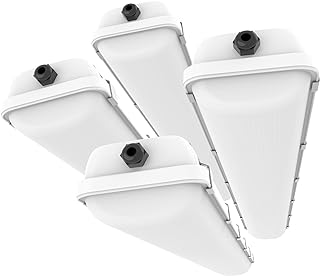
HYPERLITE 60W 4FT LED Vapor Tight Light, 7800LM, IP65, 4-Pack
The HYPERLITE 60W 4ft LED Vapor Tight Light Fixture delivers powerful, energy-efficient lighting with 7800 lumens and a daylight-bright 5000K color temperature. Designed for durability and versatility, it features a waterproof and dustproof IP65-rated housing ideal for harsh environments like carports, freezers, warehouses, and outdoor docks. Installation is straightforward and quick, with a daisy-chain capable wiring system, making it an excellent upgrade for industrial and commercial lighting needs.
Key Features:
- 60W LED light with 7800 lumens brightness, offering up to 80% energy savings compared to traditional lighting
- Simple surface mount installation completes in under 5 minutes, includes 2-foot wiring for easy daisy chaining
- Durable construction with corrosion-resistant housing and stainless-steel fasteners, designed to retain color and resist impacts
- IP65-rated dustproof and waterproof suitable for extreme temperatures from -30C to 45C, ideal for various indoor and outdoor applications
- Offers a long lifespan of 50,000 hours and comes with 24/7 technical support and a 36-month warranty
Pros
- Significant energy savings and increased brightness
- Robust and weatherproof design for various environments
- Easy and quick installation with daisy chain capability
- Long service life backed by responsive customer support
Cons
- Wiring length might be limiting for larger setups without additional wiring
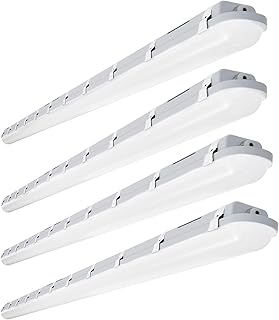
JTT 8FT LED Vapor Tight Light, 120/100/80W, 18000lm, ETL Listed
The JTT 8FT LED Vapor Tight Light is a versatile, energy-efficient lighting solution designed for both indoor and outdoor industrial spaces. With selectable wattage and color temperature options, it delivers bright and customizable illumination while saving up to 75% on energy costs. Its durable IP66-rated, waterproof and impact-resistant design ensures reliable performance even in harsh environments. Ideal for garages, warehouses, car washes, and more, this fixture offers easy installation and long-lasting use backed by a 5-year warranty.
Key Features:
- Selectable wattage: 120W, 100W, or 80W delivering 18000, 15000, or 12000 lumens respectively
- Three color temperature settings: 5000K (cool white), 4000K (neutral white), and 3000K (warm white)
- IP66 waterproof rating with sealed polycarbonate lens and corrosion-resistant body
- Compatible with 0-10V dimmers (dimmer not included)
- Lifespan up to 50,000 hours, operating between -40F to 122F
- Suitable for a variety of environments including garages, parking areas, car washes, basements, tunnels, and food processing facilities
- Easy surface mount installation with included mounting bracket and screws
- Cable gland included for waterproof cable connection (cable not included)
- ETL certified with 5-year warranty
Pros
- Energy-efficient with up to 75% savings and selectable wattage levels
- Multiple color temperature options to customize lighting ambiance
- Highly durable and waterproof design ideal for tough environments
- Long lifespan reducing maintenance and replacement costs
- Quick and simple installation process
Cons
- Dimmer switch sold separately and might require additional purchase
- Cable for waterproof connection is not included
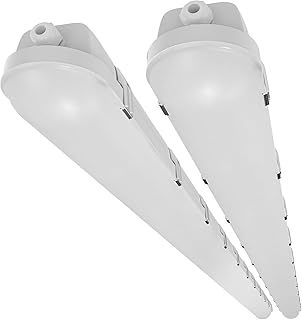
HYPERLITE 8FT LED Vapor Tight Light, 15600LM, IP66, 2-Pack
The HYPERLITE 8FT LED Vapor Tight Light Fixture offers a versatile and durable lighting solution ideal for harsh environments such as car washes, warehouses, freezers, and more. With adjustable wattage and color temperature, waterproof and dustproof construction, and smooth dimming capabilities, it delivers bright, energy-efficient lighting that can be tailored to your specific needs. Easy to install and backed by ETL certification and a 5-year warranty, this fixture combines reliability with superior performance.
Key Features:
- Adjustable wattage options: 120W, 100W, or 80W with color temperatures of 3000K, 4000K, or 5000K, producing up to 15,600 lumens for efficient lighting.
- IP66 rated waterproof and dustproof design with durable polycarbonate housing, silicone gaskets, metal fasteners, and waterproof cables suitable for wet or dusty locations.
- Supports 1-10V dimming for smooth brightness control from 10% to 100%, adaptable to various lighting needs.
- Easy installation with pre-wired cables, mounting brackets, and quick-connect clips for ceiling or wall mounting.
- ETL certified with strict quality inspections, backed by a 5-year warranty and responsive 24-hour customer support.
Pros
- Customizable brightness and color temperature for diverse applications
- Robust waterproof and dustproof construction ideal for extreme environments
- Smooth dimming capability allows versatile lighting control
- Simple installation process with included hardware
Cons
- May require professional assistance to adjust wiring or dimming setup for some users
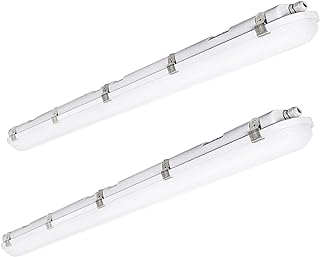
4FT LED Vapor Tight Light, 60W-50W-40W Selectable, 4-Pack
The DOSILIO 4FT LED Vapor Tight Light Fixture is a versatile and durable lighting solution designed for industrial and commercial use. With selectable wattage options, high brightness output, and an IP65 waterproof rating, it ensures reliable performance in a variety of environments such as garages, carports, freezers, and workshops. The fixture offers easy installation with surface-mount brackets and supports linking multiple units together for extended coverage. ETL listed and backed by a 5-year warranty, it serves as an excellent upgrade to traditional fluorescent lighting.
Key Features:
- Selectable wattage options: 60W, 50W, and 40W adjustable on the LED driver before installation
- Compatible with standard 0-10V dimmers for flicker-free dimming from 10% to 100% (dimmer not included)
- Operates on 100-277V input and delivers 6600 lumens of bright 5000K white light with a 120 beam angle
- Built-in frosted diffuser ensures even light distribution
- IP65 rated waterproof design with silicone sealing protects against moisture, dirt, and dust
- Includes surface-mount brackets and supports linking up to 8 units in a daisy chain
- ETL listed for safety and quality, ideal for commercial environments
- 5-year warranty with customer support
- No power cable included
Pros
- Adjustable wattage to customize brightness and energy use
- High lumen output with even light distribution for bright, clear illumination
- Robust IP65 rating protects against harsh conditions and makes it suitable for indoor and outdoor use
- Easy surface installation and daisy chain capability allows flexible setup
- Long-lasting and energy-efficient with a reliable 5-year warranty
Cons
- Does not include a power cable, which needs to be purchased separately
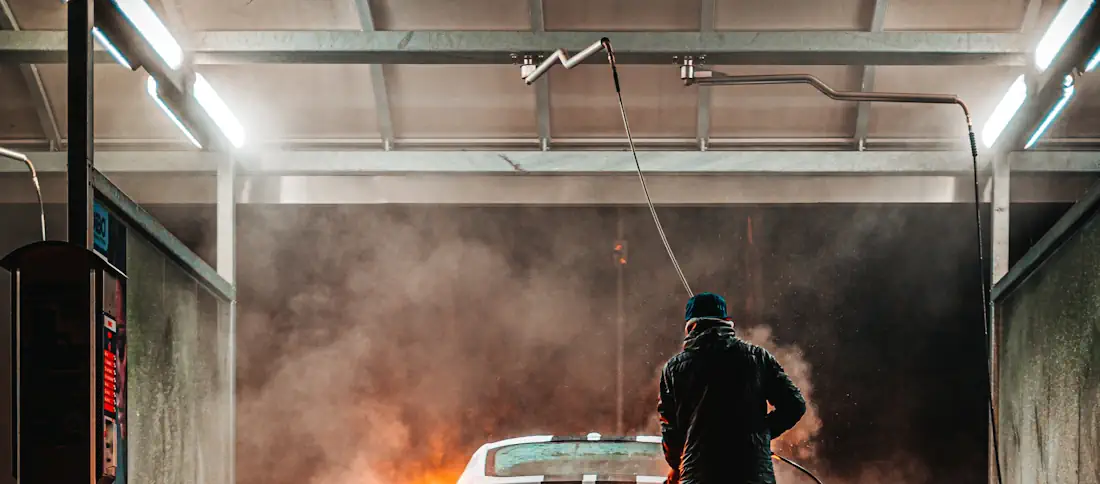
Picture this: you're in the basement, searching for a missing toolbox, stumbling over boxes in the dim glow of a single, flickering bulb. Frustrating, right? By the way, This is a story as old as clutter itself. But it doesn't have to be your story. Let's chat about LED vapor-tight lights, those rugged luminaires that guard against moisture, dust, and downright neglect, so you can finally bring clarity (and brilliance) to every corner.
Why Vapor-Tight Fixtures Are Game Changers
Here's the thing: ordinary lights will fail when the environment gets dirty or damp. A few splashes or a heavy dust storm, and you're back to square one. Vapor-tight fixtures act like armor. They seal out anything that could corrode the internals, water, dirt, bugs (yes, bugs), and keep your LED chips shining bright year after year. Think of them as a submarine hatch for your lighting: watertight, dependable, and ready for whatever comes your way.
What Makes a Great LED Vapor-Tight Light?
Reviews you may find interesting:
7 Best Kitchen Island Lights (2026 Review Guide)7 Best Motion Sensor Lights (2026 Review Guide)
7 Best LED Moving Stage Lights (2026 Review Guide)
Not all vapor-tight fixtures carry the same level of toughness. You'll see a bunch of jargon, IP ratings, CRI, lumen per watt, impact ratings. Let's peel back the curtain.
- IP Rating: Short for Ingress Protection. The first digit (0, 6) covers solids like dust; the second (0, 9K) covers water exposure. If you want garage-ready, IP65 is a solid start. For freeze-thaw conditions, aim for IP67.
- Lumen Output & Efficiency: Lumens measure brightness, think of it as how many candles you've got lighting up a space. Higher lumens at lower wattage mean you're saving energy. Aim for 100, 130 lumens per watt if you like wallet-friendly bills.
- Color Rendering Index (CRI): This one's subtle but matter-of-fact: it tells you how true colors look under the light. A CRI above 80 is generally pleasing; if you're working on color-critical tasks, shoot for 90+.
- Color Temperature: Measured in Kelvins. Cool whites (4000, 5000K) mimic midday sun, great for detail work. Warm whites (3000, 3500K) feel cozier, like that morning caf vibe.
- Impact Rating: Look for IK ratings (0, 10). If your space sees heavy machinery or the possibility of stray tools, IK08 or higher means the lens laughs off knocks and bumps.
- Shatterproof Cover: Polycarbonate or acrylic lenses resist cracking. A small investment here prevents those dramatic "clang" moments when something slips and hits your fixture.
Honestly, reading specs can feel like alphabet soup. But once you know what each code stands for, it's like reading a menu, just pick what suits your environment.
Seasonal Shifts and Lighting Needs
As the warm months roll in, you might lean on natural light. But when winter drags its feet and daylight hours shrink, you need your fixtures to fill the gap. Vapor-tight LEDs handle temperature swings better than fluorescents, they don't flicker or struggle when it's chilly. So whether you're mid-winter tuning an engine or stowing holiday gear in the attic, you'll have crisp, steady illumination.
Where and When to Use Them, Spoiler: Lots of Places
You probably picture industrial warehouses or large commercial kitchens when you hear "vapor-tight." While they excel there. But these gems also shine, no pun intended, in:
- Home Garages: For the weekend mechanic or DIY enthusiast uncovering that next big project.
- Basements & Crawl Spaces: Perfect for laundry rooms or storage nooks where condensation lurks.
- Cold Storage & Freezers: They laugh in the face of sub-zero temps (if rated accordingly).
- Agricultural Settings: Barns, greenhouses, moisture? Check. Dust? Double check.
- Parking Garages & Carports: Great for weather-exposed structures you want brightly lit without constant bulb swaps.
Each scenario has its little quirks. In a greenhouse, for example, you're balancing moisture resistance with the right spectrum for plant health. In barns, you might even joke that these lights are tougher than your work boots, but you'll come to appreciate having that constant glow during late-night chores.
Installation Tips Without Breaking a Sweat
Installing vapor-tight fixtures isn't brain surgery, but a few pointers make it painless:
- Kill the power. Seriously, flip that breaker and verify with a tester.
- Prepping the area: clean the mounting surface. Dust and debris can compromise that weather seal.
- Choose your mounting style: chain, bracket, or surface mount. Ceilings that slope? Chain mounts let you adjust angles.
- Wire it up: ground wire first, then neutral (white), then hot (black). Use push-in connectors if you dislike twisting wires, instant pro vibes.
- Seal the entries: Every hole is a potential leak. Silicone caulk around conduit fittings keeps moisture out.
- Test and tweak: Power on, test circuits, then lock down any loose screws. Take a step back, does it light up evenly? If not, adjust positioning.
You might pause, stare at the flicker, and think, "Is it worth all this fuss?" Trust me, the upfront care pays dividends down the road.
Maintenance Hacks to Keep Them Glowing
Routine care is like changing your car's oil, essential but easy if you set reminders. Here's your quarterly checklist:
- Dust off the lens with a soft, damp cloth. Mild soap is fine if it's grimy.
- Inspect gaskets and O-rings. Sunlight or cold can make them brittle, swap them out if they crack.
- Tighten mounting brackets and hardware; vibrations can loosen things over time.
- Run a quick power-cycle test after storms or extreme temperature swings.
Don't skip these steps. A neglected seal is basically an invitation for corrosion, nobody wants that drama.
Common Pitfalls (and How to Dodge Them)
Even robust fixtures can underperform if they face avoidable mistakes. Watch for:
- Underestimating IP Needs: A "moisture-resistant" tag doesn't equal "spray ready." Double-check that second IP digit.
- Voltage Overdrive: Running LEDs above rated voltage might seem tempting but kills lifespan, stick to spec.
- Ignoring Temperature Specs: Some LEDs dim or fail in freezing temps if not rated for it. Check manufacturer details.
- Rushed Sealing: Skipping caulk or using the wrong type invites moisture, use industrial-grade silicone.
Address these and your fixtures will keep shining without surprise meltdowns.
Looking Ahead: Future Trends in Vapor-Tight Lighting
You know, lighting tech never really sleeps. Smart controls are weaving into vapor-tight designs so you can dim, schedule, or even sync with sunrise and sunset. Some new models boast motion sensors that adjust brightness when you enter, saving energy, like having a butler for your light switch. If you're renovating soon, it's worth eyeballing these extras.
Our Takeaway: Bringing It All Together
By you've got a toolbox of know-how: how to read specs, where to mount these fixtures, and how to keep them in tip-top shape. Whether you're brightening a drafty basement or lighting up a busy workshop, LED vapor-tight lights deliver consistent performance, energy savings, and peace of mind. And, honestly, that's just straight-up satisfying.
So next time you flip on the switch and everything glows evenly, no buzz, no drip, no dust, give yourself a pat on the back. You've earned it. Now roll up your sleeves and enjoy the clarity.
Quick Pro Tip
If you're stacking multiple fixtures in a long bay, look into linking kits. They snap together seamlessly, reducing wiring clutter. Neat, right? A tidy installation feels almost as good as the light itself.